Commercial Solar and Battery Rebates in Victoria
What your business actually qualifies for, and what we handle for you.

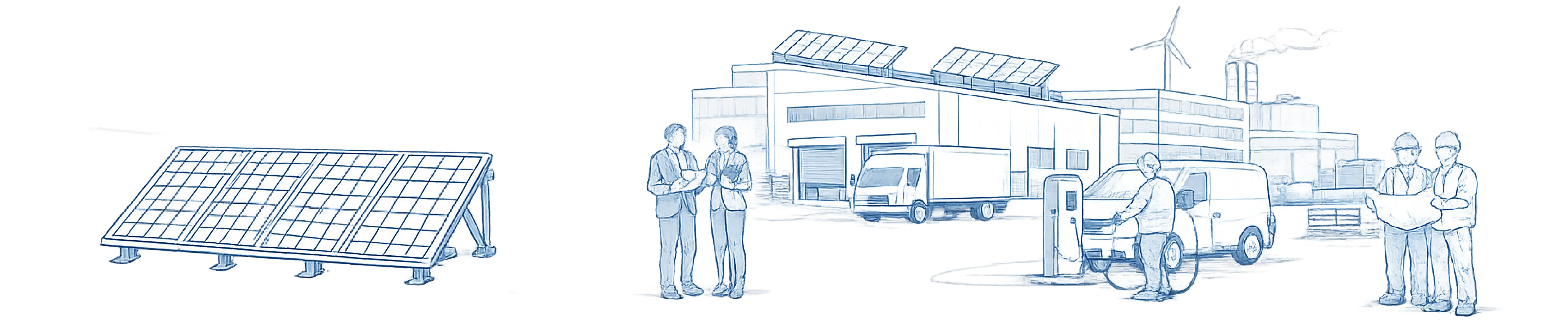

There are three separate rebate schemes a Victorian business can use on a solar or battery project, and they work in completely different ways. One is a Victorian scheme, two are federal, and some of them stack. Most businesses do not find out which ones apply until a quote lands in front of them.
This page sets out what exists right now, what is changing on 1 October 2026, and which of it your site is likely to qualify for. If you would rather skip to the numbers for your own building, we will confirm all of it as part of your quote.
Get a commercial rebate assessmentStart here
Three schemes, three different mechanisms
| Scheme | Who runs it | System size | How you receive it |
|---|---|---|---|
| Victorian Energy Upgrades (VEU) commercial and industrial solar | Victorian Government, administered by the Essential Services Commission | 30kW to 200kW | Upfront discount applied at the point of installation |
| Small-scale Technology Certificates (STCs) | Federal, Clean Energy Regulator | Up to 100kW, rising to 1MW from 1 October 2026 | Upfront discount taken off your quote |
| Large-scale Generation Certificates (LGCs) | Federal, Clean Energy Regulator | Above the small-scale threshold | Created annually on actual generation, then sold or traded. No upfront discount |
The practical difference is timing. VEU and STCs come off the price you pay on day one. LGCs are an ongoing revenue stream that requires your system to be registered as an accredited power station and the certificates to be created and sold each year. A business comparing two quotes needs to know which one it is being offered.
Victorian Energy Upgrades
A Victorian discount built for the size most businesses install
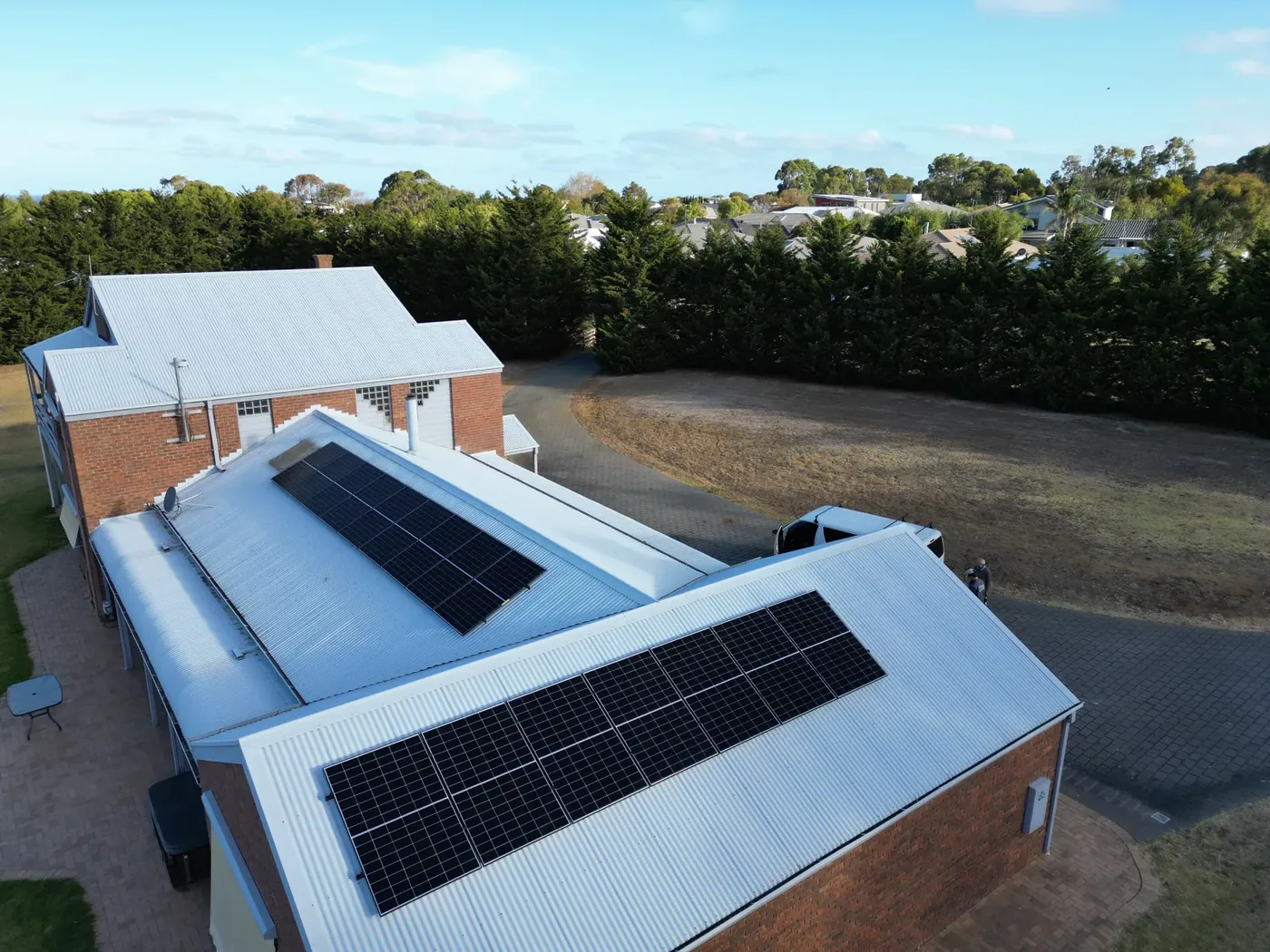
Since 29 September 2025 the Victorian Energy Upgrades program has included a dedicated commercial and industrial solar activity. It covers systems between 30kW and 200kW, a band the Victorian Government has targeted deliberately because far fewer businesses than homes have gone solar.
The incentive is delivered as an upfront discount at the point of installation rather than a rebate you claim back later. Under the program rules the installation must be carried out by an installer holding current Solar Accreditation Australia accreditation, and all electrical work must be done by an A Grade licensed electrician.
It also stacks. A system that qualifies for VEU certificates can still claim federal STCs or LGCs where it is eligible for them, which is where the strongest commercial numbers come from.
Federal, small-scale
The upfront federal discount is about to cover much larger systems
Small-scale Technology Certificates are the mechanism behind what most people call the solar rebate. Your installer creates the certificates, sells them, and the value comes straight off your quote. Until now they have only been available on systems up to 100kW.
On 5 August 2026 the federal government announced it will lift that ceiling to 1MW. The change is intended to apply to systems installed from 1 October 2026 and remains subject to the regulations being finalised. The government has estimated it will take roughly 20 per cent off the upfront cost of an eligible system.
For businesses in Geelong and regional Victoria this matters for one specific reason. Sites with genuinely large daytime loads, cold stores, factories, packing sheds and irrigation operations, have often been designed down to 100kW purely to stay inside the small-scale scheme. That constraint is being removed.
What this means if you are planning a project now
- If your site suits a system under 100kW, nothing changes. STCs already apply.
- If your site could justify more than 100kW, the timing of your installation date is now a genuine commercial decision worth discussing.
- The number of certificates a system creates falls every year as the scheme winds down towards 2030, so waiting has a cost as well.
We will not push you into a rushed decision on this. We will show you both scenarios and let the numbers make the case.
Which scheme, at which size
Where your system lands
Solar system size in kW, not to scale. The battery rebate is assessed separately, by kWh of storage.
The 1MW ceiling is subject to the regulations being finalised. Until then, LGCs apply above 100kW.
Federal, large-scale
When your system is large enough to generate LGCs
Above the small-scale threshold, systems fall under the Large-scale Renewable Energy Target and create Large-scale Generation Certificates instead. LGCs work on a different principle. Rather than a fixed upfront amount, they are created against the electricity your system actually generates, year after year.
That means no discount on the invoice, registration of the system as an accredited power station with the Clean Energy Regulator, dedicated metering, and certificates created and traded on an ongoing basis. It can be worthwhile on the right project. It is a different financial shape to an upfront discount, and it needs to be modelled rather than assumed.
Existing accredited large-scale systems continue under current arrangements.

Federal, batteries
The battery discount is not just for households
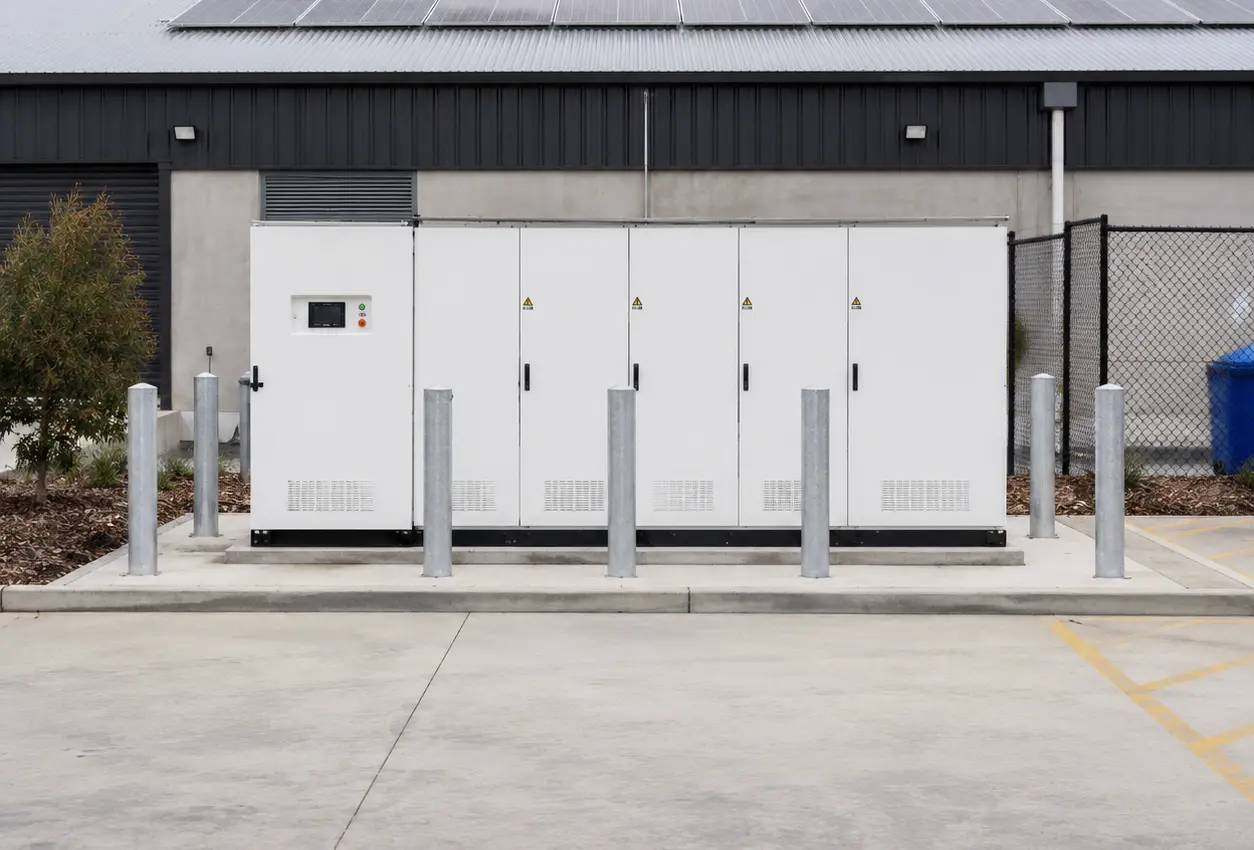
Despite the name, the Cheaper Home Batteries Program is open to businesses and community organisations as well as households. Eligible systems run from 5kWh to 100kWh nominal capacity, with certificates created on the first 50kWh of usable capacity.
The program changed on 1 May 2026. The rate is now tiered by size, with the full rate applying to the first 14kWh of usable capacity, a reduced rate from 14kWh to 28kWh, and a lower rate again from 28kWh to 50kWh. The rate itself is reviewed periodically and steps down over time as battery prices fall, which means the discount your project receives is set by the date your battery is installed, not the date you sign.
For a business, the case for storage usually rests on peak demand charges rather than the rebate alone. If your bill is dominated by demand charges, a battery can shift load out of the expensive window, and that is the number we model for you.
Combining incentives
The schemes are not mutually exclusive. A solar system in the VEU size band can claim Victorian certificates and federal certificates where it meets the rules for both. A battery installed alongside solar is assessed separately again under the battery program.
On top of the certificate schemes, your solar system is a business asset. Your accountant can depreciate it to reduce taxable income. We are not tax advisers and we will not model that part for you, but it belongs in the conversation you have with them.
Our Process
You should not have to become an expert in certificate schemes
We review your smart meter (interval) data and recent bills, so the system is sized to how your site actually uses power rather than to a rebate threshold.
We confirm which schemes your project qualifies for and show you the value of each one separately, so you can see what is a discount and what is an ongoing return.
We prepare and lodge the certificate paperwork, and coordinate the grid connection application with your network provider (DNSP) alongside it.
We schedule the installation around your trading hours, including switchboard shutdowns outside business hours where they are needed.
We commission the system and monitor it from day one so you can see it performing against what we quoted.
Every system is designed by SAA accredited designers and installed by our own licensed electricians from our Moolap workshop. We do not subcontract the install.
Honest limits
What we will not tell you
We will not quote you a payback period before we have seen your consumption data. We will not tell you a rebate is guaranteed before your project has been assessed against the scheme rules. And where a scheme is announced but not yet legislated, as the 1MW expansion currently is, we will say so rather than quote it as certain.
Rebate values change. The figures that apply to your project are the ones current on the day your system is installed, and that is what we build your quote around.
Commercial Rebate FAQ
Common Questions
Is there a commercial solar rebate in Victoria?
Yes. The Victorian Energy Upgrades program includes a commercial and industrial solar activity covering systems from 30kW to 200kW, delivered as an upfront discount at installation. Federal certificates may also apply to the same system.
Can a business claim the federal solar rebate?
Yes. Small-scale Technology Certificates are available to businesses, not just households. The current ceiling is 100kW, rising to 1MW for systems installed from 1 October 2026, subject to regulations.
Do the Victorian and federal schemes stack?
They can. A system eligible under the VEU commercial and industrial solar activity can also create federal certificates where it meets those rules. We confirm the combination that applies to your project.
Can my business get the battery rebate?
Yes. The Cheaper Home Batteries Program covers businesses and community organisations as well as households, for systems from 5kWh to 100kWh nominal, with certificates created on the first 50kWh of usable capacity.
How much will the rebates take off my quote?
It depends on system size, the scheme you qualify for and the certificate value on your installation date. We itemise every incentive separately in your proposal rather than folding it into a single headline discount.
Do you handle the paperwork?
Yes. We prepare and lodge the certificate documentation and coordinate the network connection application as part of our EPC delivery.
Find out what your site qualifies for
Send us a recent bill and we will tell you which schemes apply to your building, what each one is worth, and what it means for your payback. No obligation, and no pressure to install before a deadline that does not apply to you.
Servicing Geelong, the Bellarine, the Surf Coast and regional Victoria from our Moolap workshop. SAA accredited. 10 year workmanship warranty.