Commercial Solar Battery Systems in Geelong & Regional Victoria
Peak demand reduction and installation for business


Peak Demand Management
The Most Expensive 15 Minutes on Your Bill
For many businesses, the biggest cost on the electricity bill isn't total consumption. It's peak demand charges. These are based on the highest power draw recorded during a billing period, even if that spike only lasts 15 to 30 minutes.
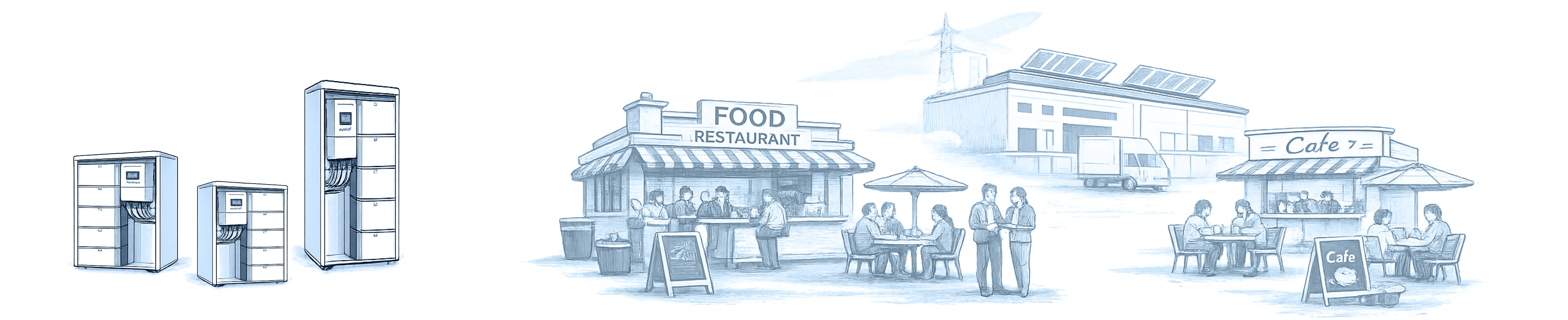
Think about a cafe at 8am: the espresso machine, the oven, the aircon, and the dishwasher all running at once. Or a medical centre when the imaging equipment kicks in alongside the HVAC. That single spike sets your demand charge for the entire month. A battery system eliminates that spike by discharging stored energy the moment your grid draw exceeds a set threshold.

How It Works
Peak Shaving, Explained Simply
Battery charges
During low demand periods or from your solar system, the battery charges up and stores energy ready for when it's needed.
Demand spikes
When your building's power draw starts climbing towards the peak threshold, the system detects it in real time.
Battery responds
The battery automatically discharges to supplement grid power, keeping your total grid draw below the limit.
Bill drops
Your recorded peak demand is lower, your demand charges drop, and the savings repeat every billing cycle.
It Depends on Your Business
Not Every Business Benefits the Same Way
A battery doesn't make sense for everyone, and we'll tell you that upfront. How much a battery saves you depends entirely on your demand profile, which is different for every business.
A restaurant that runs at a steady load for 6–8 hours probably doesn't have massive demand spikes. A battery will help, but maybe not dramatically. A workshop that fires up heavy equipment for short bursts? That startup current is setting your demand charge through the roof, and a battery can make a real difference.
We only know this by looking at your interval data: the actual 15-minute load recordings from your meter. That's where we start, and that's what determines whether a battery is worth it for your specific situation.
Advantages
Beyond Peak Shaving
Demand Charge Reduction
The primary financial benefit. Even a small reduction in your peak demand can take hundreds off your monthly bill when demand charges make up a large portion of what you pay.
Solar Self-Consumption
Store excess solar generation during the day and use it during peak tariff periods or after hours, instead of exporting at low feed-in rates.
Energy Arbitrage
Charge from the grid during cheap off-peak periods and discharge during expensive peak windows. The tariff difference is your saving.
Backup Power
Maintain operations during grid outages for your critical loads, including EFTPOS, refrigeration, servers, and lighting. Whatever can't go down stays on.
Future Proofing
Grid costs rise and tariff structures change. Battery flexibility becomes more valuable over time, not less.
Fully Automated
The system monitors your load in real time and responds automatically. No manual intervention, no staff time, no complexity for your team.

Assessment
How We Determine if a Battery Makes Sense
We don't sell batteries to businesses that won't benefit from them. Here's what we look at before recommending a system:
Interval Data Analysis
Your meter records power consumption in 15-minute intervals. We analyse this data to identify your peak demand events, when they occur, how long they last, and whether a battery can meaningfully reduce them.
Tariff Structure
Not all commercial tariffs have significant demand charges. We review your rate structure to determine where the real savings are: demand charges, time-of-use rates, or both.
Business Type & Load Profile
A cafe with steady daytime load is very different from a workshop with short heavy-draw bursts. We model your specific usage patterns to size the battery correctly and project realistic savings.
For SME-scale projects, this assessment is included as part of our standard consultation. For larger commercial and industrial projects, a paid feasibility study is required, involving electrical engineering analysis, complex modelling, and detailed financial projections.
Better Together
Paired With Commercial Solar
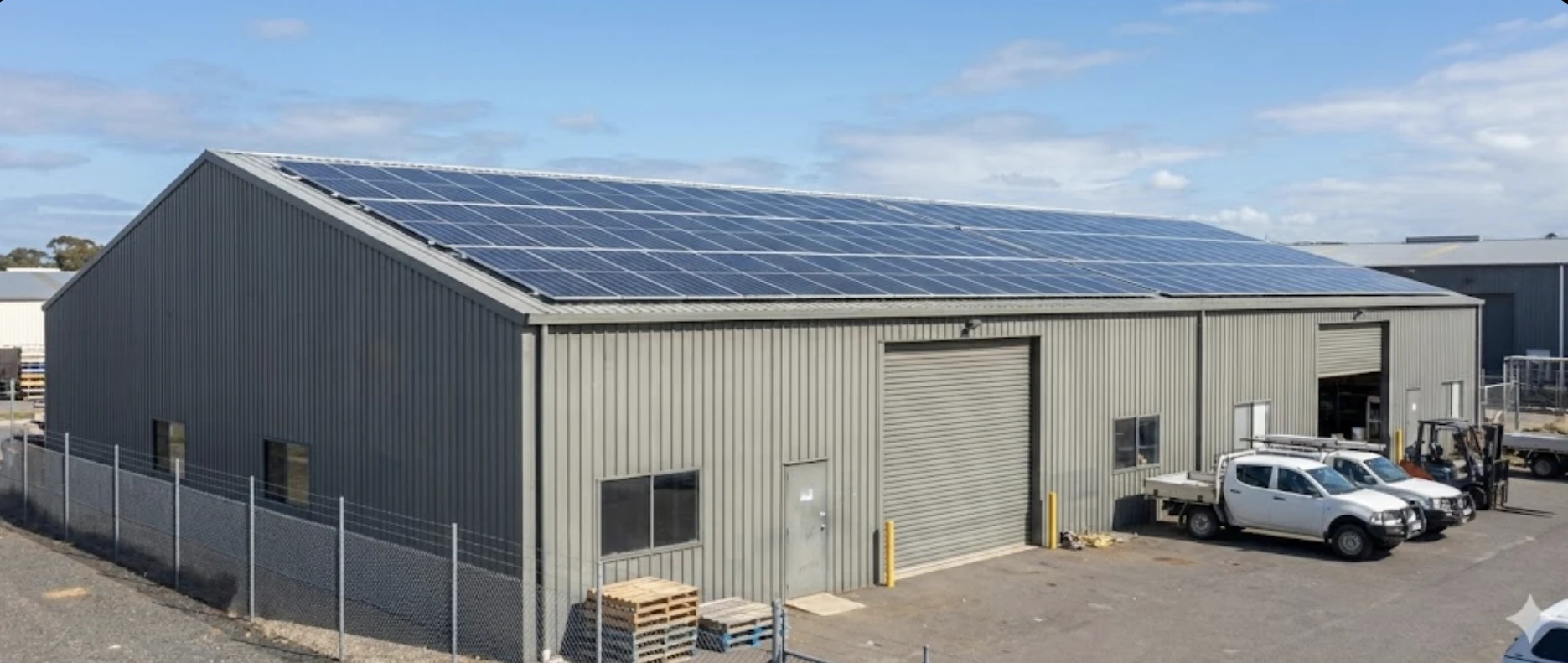
Battery storage delivers the best return when paired with an appropriately sized solar system. Solar provides free daytime energy to charge the battery, and the battery extends those savings into evening and peak tariff periods.
Together, they cover the full cycle: generate during the day, store the excess, shave your demand peaks, and reduce the amount you buy from the grid after hours.
Learn About Commercial Solar
Builders & Architects
We Work Alongside High-End Builders and Architectural Firms
We have long-standing relationships with quality builders and architects, integrating our work into every stage of the build. Because we work to the builder's timeline, we get every cable and conduit hidden before the plastering stage, while scaffold and edge protection are still up, for the neatest possible finish and no cost to retrofit solar and battery infrastructure once the build is complete.
Pre-Wire
Cabling and conduit run and concealed before lining, mapped to the electrical and roof plan so nothing is left exposed later in the build.
Solar Panel Laying
Mounting and array installation scheduled to the build program and coordinated with roofing and the other trades working on site.
Inverter & Battery Commissioning
Inverters and battery storage set up and tested in sequence, ready for connection as the build reaches lock-up.
Site Energisation & Commissioning
Third-stage energisation, final testing and handover, delivered on time so it never holds up practical completion.
Our Process
From Assessment to Commissioning
We review your electricity bills, interval data, demand profiles, and tariff structure to identify where battery storage will deliver the best return for your business.
Battery capacity, inverter sizing, and control strategy are engineered for your specific load profile and peak demand patterns.
Structural assessment, electrical protection design, DNSP coordination, and all permit paperwork handled by us.
Scheduled entirely around your operations. Switchboard integration and commissioning planned to minimise disruption to your business and customers.
Every system is monitored from day one. We track performance, respond to issues, and ensure the system is delivering the savings it was designed for.
Commercial Battery FAQ
Common Questions
How much does a commercial battery system cost?
Commercial battery pricing scales with capacity (typically 50 to 250 kWh for SME sites) and the switchgear and controls your site needs. Because the value comes largely from cutting peak demand charges, we start from your interval data and demand profile, then provide an itemised proposal. For larger projects this may follow a paid feasibility study so the sizing and return are precise.
What is the payback on a commercial battery?
It depends heavily on your demand charges and tariff. For businesses with sharp, short demand peaks, a battery that shaves those peaks can deliver a strong return; for flat-load businesses the case is weaker. We are upfront about this, and only recommend a battery where your data shows it will genuinely pay. We model the numbers before you commit.
What size battery does my business need?
Commercial batteries are sized to your peak demand and load profile, not just total consumption. We analyse the highest 15 to 30 minute demand spikes on your bill and size the system to shave them. SME installations typically fall in the 50 to 250 kWh range, confirmed against your interval data.
Does a commercial battery work without solar?
Yes. A commercial battery can charge from cheaper off-peak grid power and discharge during expensive peak-demand windows, so it delivers value on demand-charge reduction alone. Pairing it with commercial solar adds self-consumption and further savings, which is why we usually assess the two together.
What are peak demand charges, and how does a battery reduce them?
Many business bills include a demand charge based on the single highest power draw in a billing period, often set by a spike lasting just 15 to 30 minutes. A battery discharges to cover those spikes so your recorded peak stays low, a technique called peak shaving. Because the charge is driven by your worst moment, flattening it can meaningfully cut the bill.