Hydronic Heating & Cooling in Geelong & Surrounds
Comfort conditioning for the Bellarine and beyond

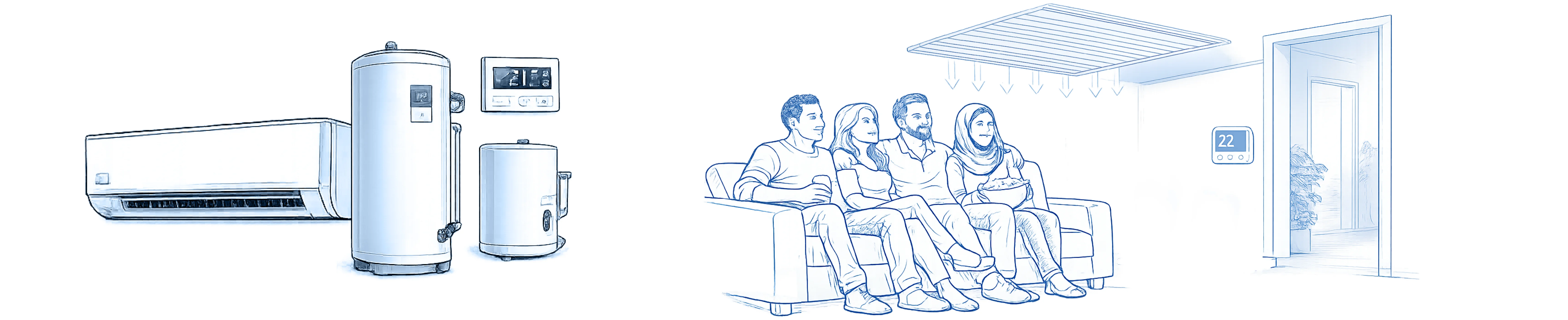

What Is Hydronic Heating?
One Silent System
That Replaces
Everything Else
"Hydronic" just means using water instead of air. Rather than blowing hot or cold air around your home, a hydronic system pumps warm or cool water through tubes to heat or cool a space.
Water moves heat much better than air, so the system uses about a third of the energy. And because there are no fans running inside the room, it is completely silent.
Most hydronic systems run through the floor or wall radiators. We do it differently. We put the panels in the ceiling, and there is a good reason for that based on our research in our in house testing facility.
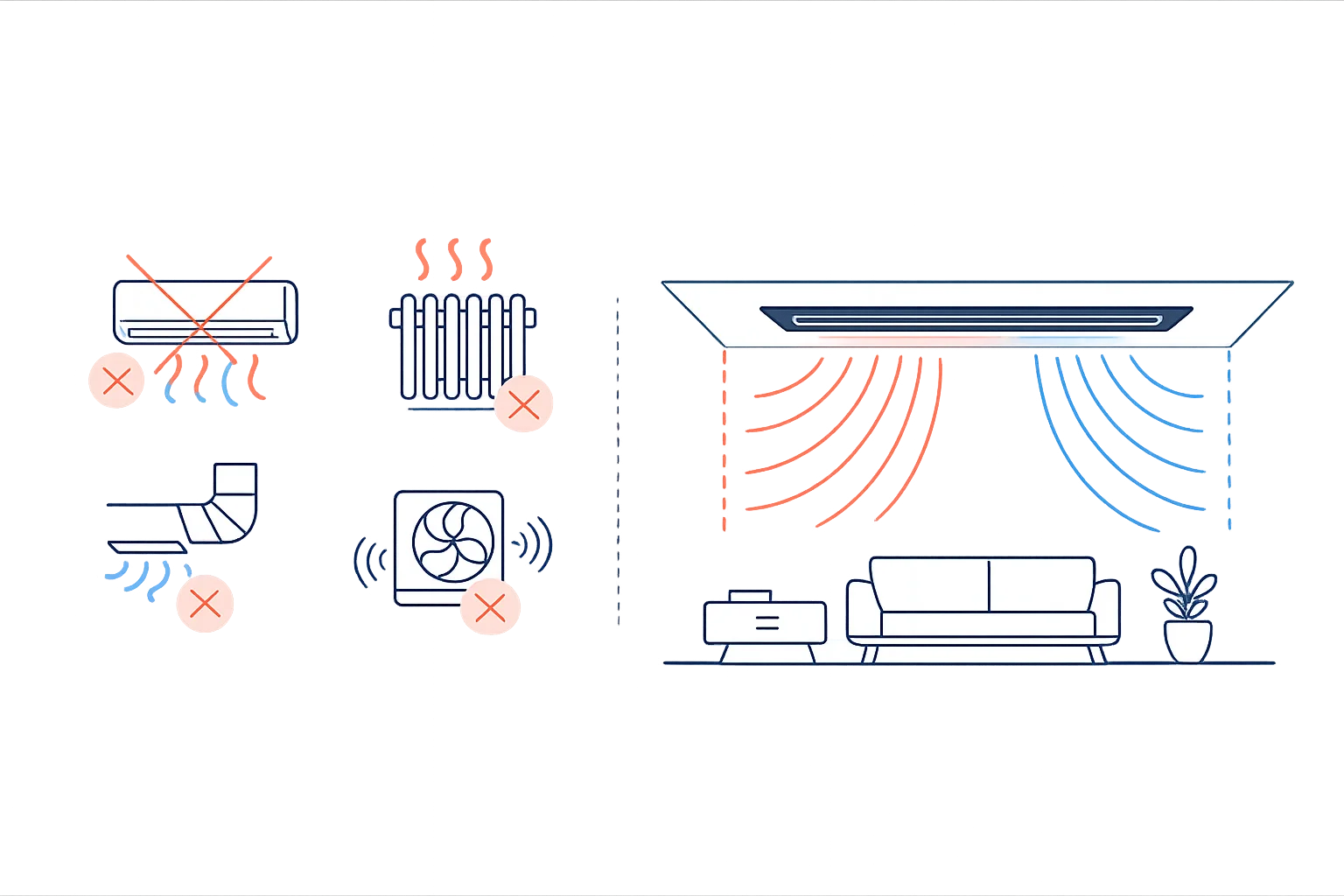
Our Patented Product
We're Different. Our Hydronic System Conditions Your Home From the Ceiling. Here's What Our Research Shows.
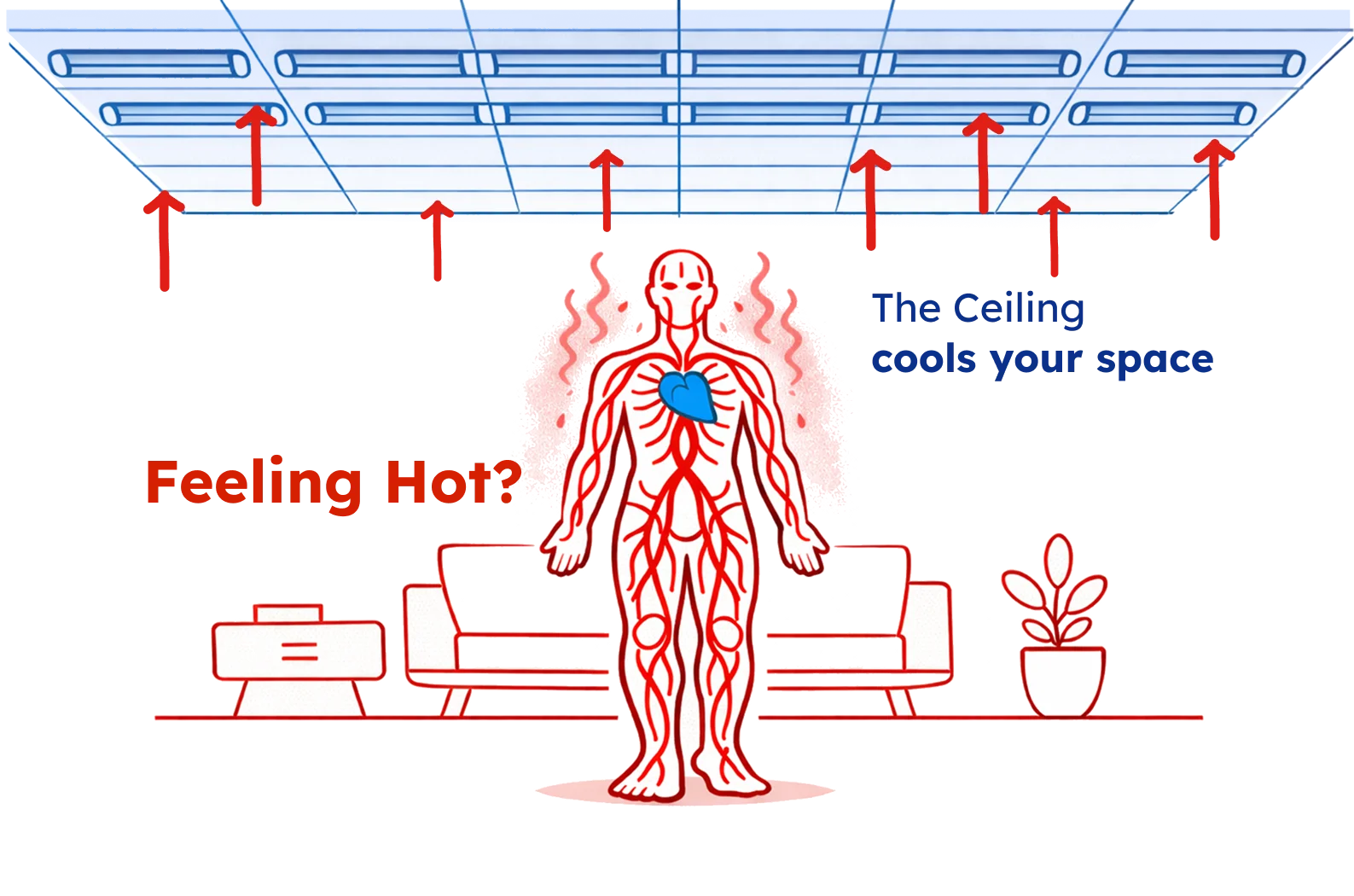
Cooling Mode
On a hot day, chilled water circulates through the ceiling panels. The panels absorb radiant heat from your body and the room, pulling warmth upward and away. You will feel the difference in about 7 minutes, compared to 2 to 3 hours with conventional underfloor systems.
It works the same way as standing in the shade on a hot day. You feel cooler because you are no longer absorbing radiant energy from above. No fans blowing cold air. No draughts. No dry eyes. Just an even, gentle cooling across the entire room.
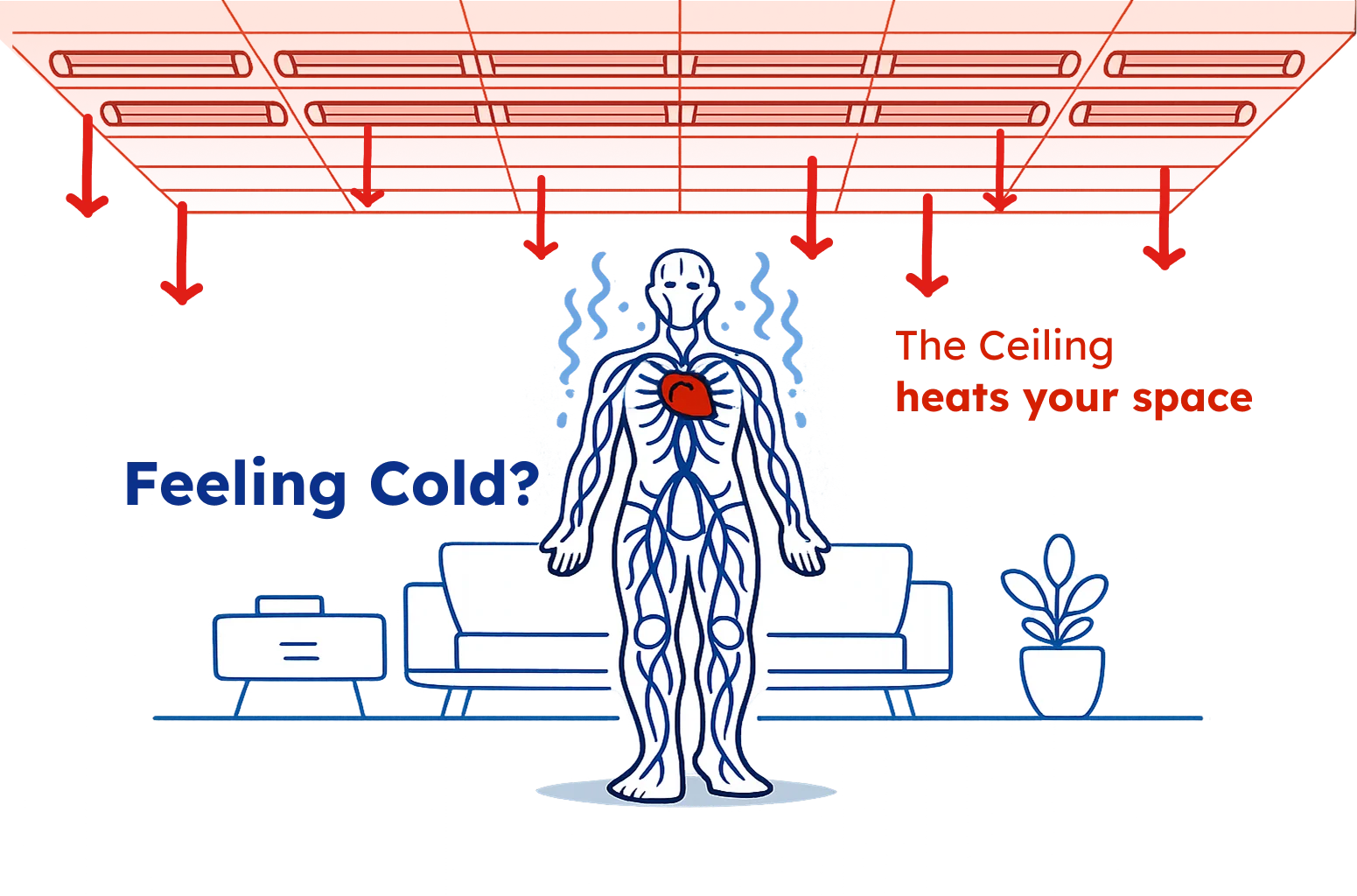
Heating Mode
In winter, warm water from a heat pump flows through the same panels. They radiate gentle warmth downward, the same way the sun warms the earth. The heat reaches you directly instead of blowing past you as hot air. Again, you will feel the room warming within about 7 minutes.
No dust circulating. No hot spots near vents and cold corners elsewhere. Every part of the room feels the same comfortable temperature.
Proven Performance
This Is What Our Research Shows
Tested in our purpose-built simulation room. Thermal imaging confirms uniform surface temperature distribution in both heating and cooling modes.
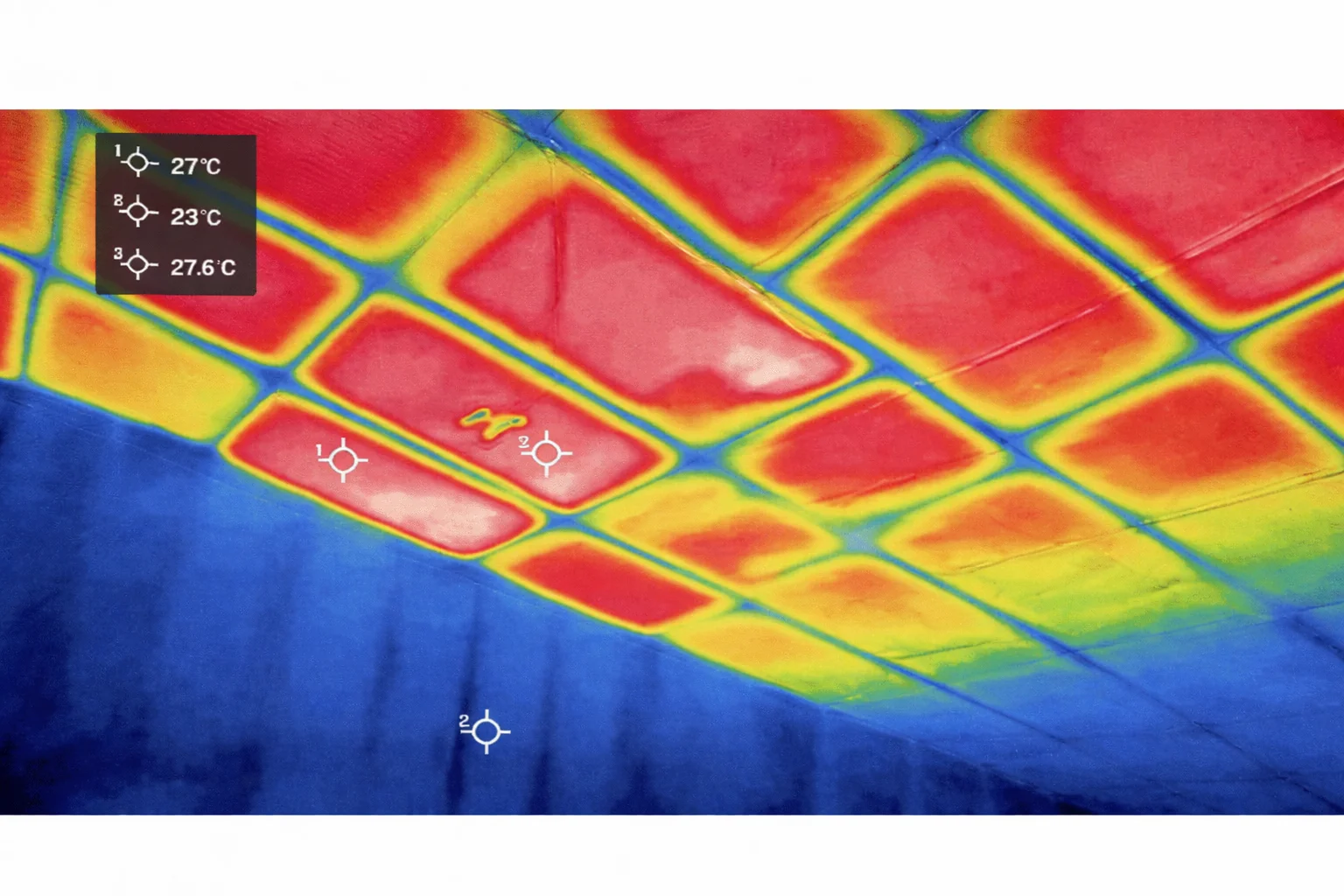
This thermal camera image shows our panels radiating warmth evenly across the whole ceiling. For you, that means every corner of the room feels warm. No cold spots by the window. No huddling near a heater. Just comfortable warmth wherever you stand or sit.
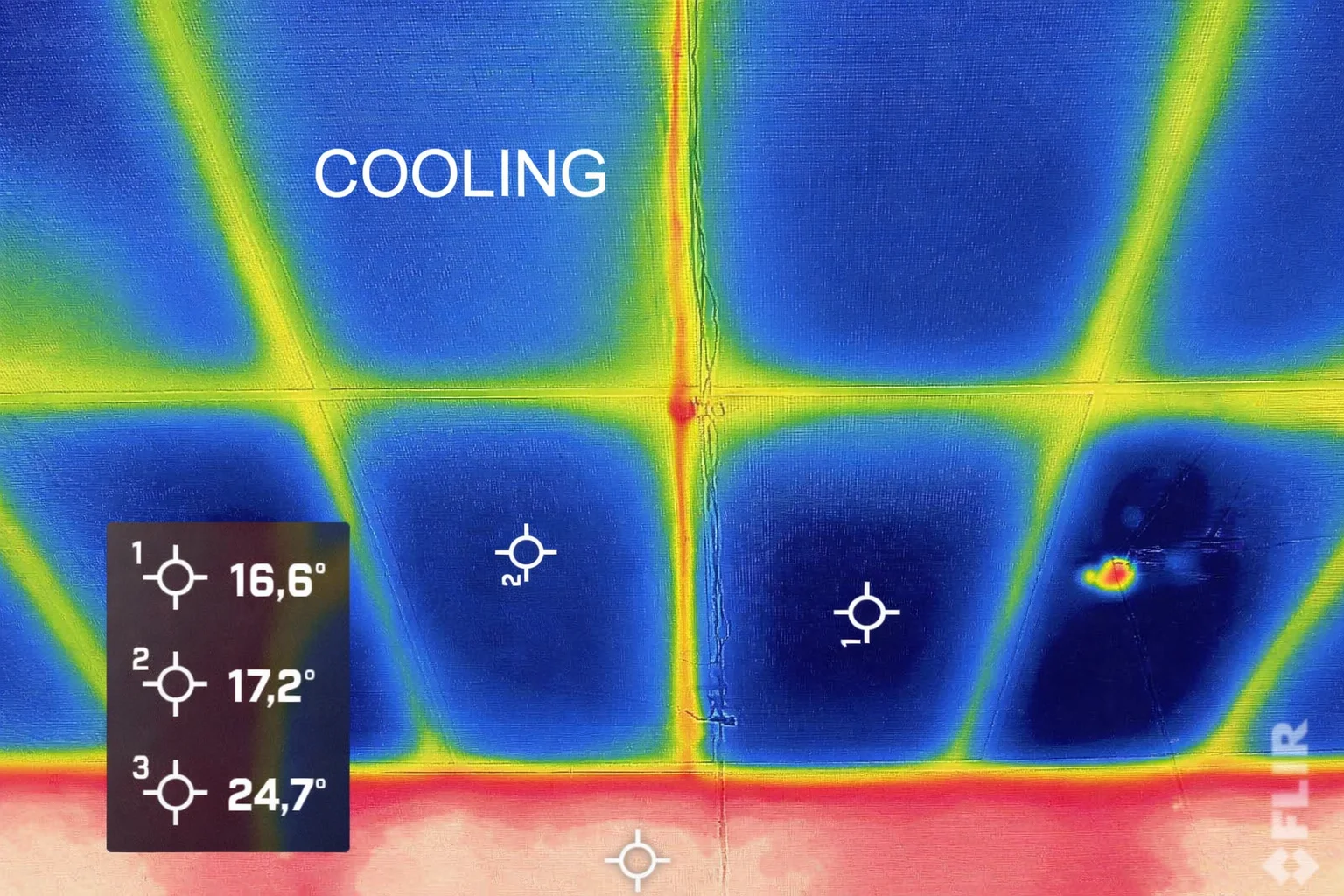
Same panels, now cooling. The blue shows the ceiling is pulling heat away from you and the room. You feel cooler without any air blowing on you. No dry eyes, no noise, no draughts. We tested this to prove that one system can do both, and do it silently.
See the full test data, performance graphs, and panel engineering on our Hydronic Ceiling Panels research page.
Need the panels, PPR piping and fittings for a project? Order hydronic panels & components →
The Real Thing
Our Hydronic Ceiling Panels
What You Actually Get
3 Features in 1 Panel = Cost Saving
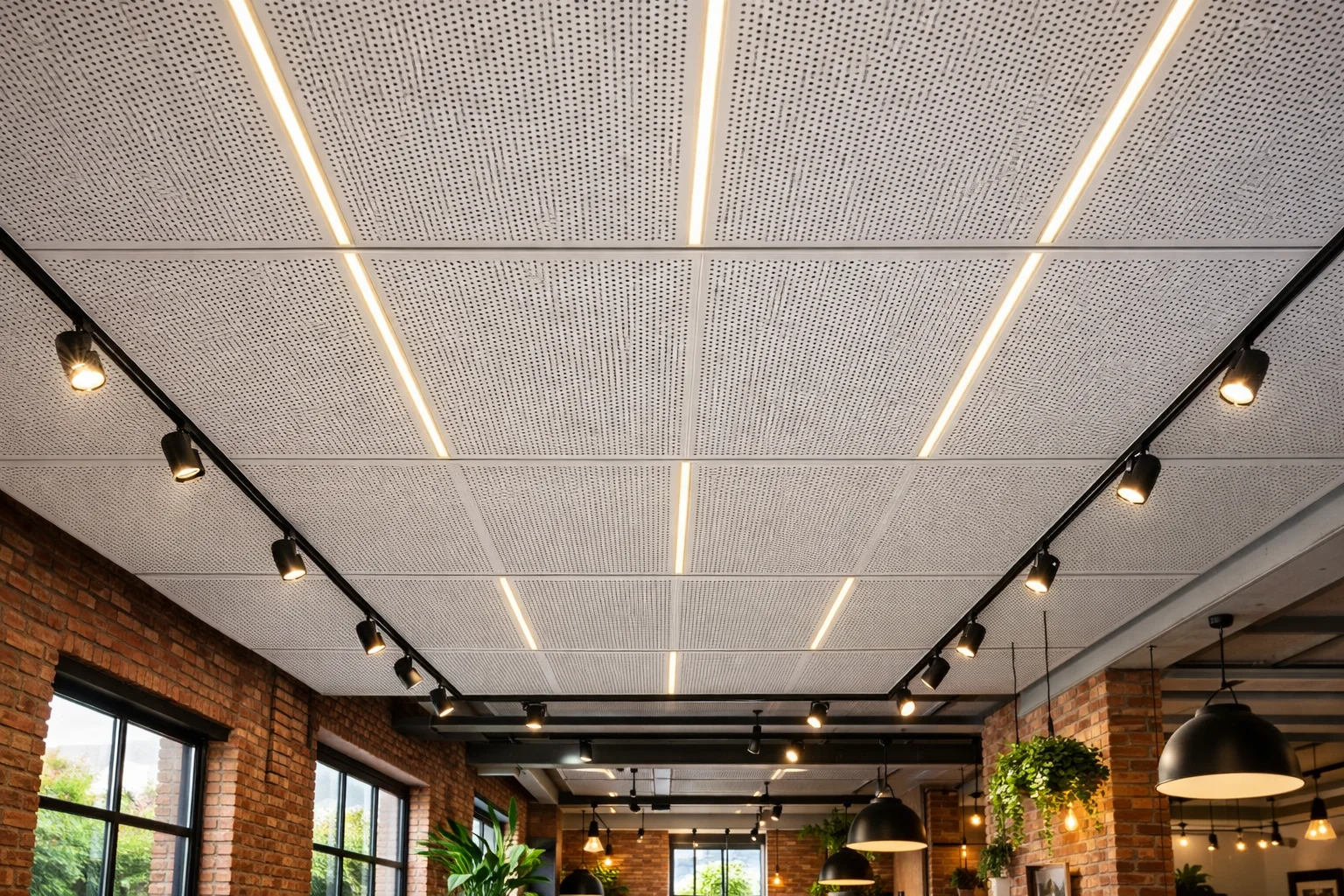
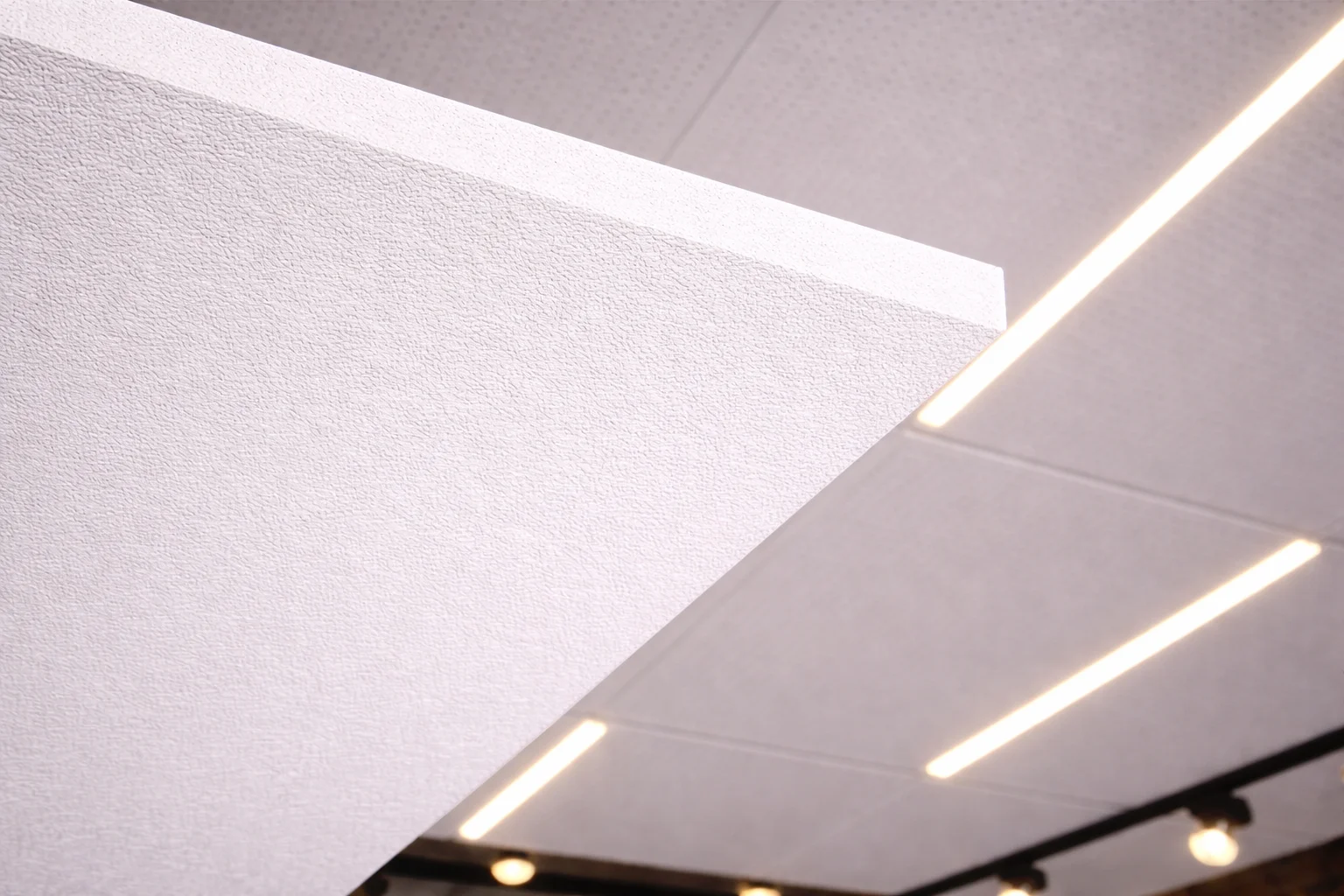
Every panel we install is a complete building element. Not just a heating system bolted onto a ceiling, but a finished, insulated, conditioned ceiling in a single product.
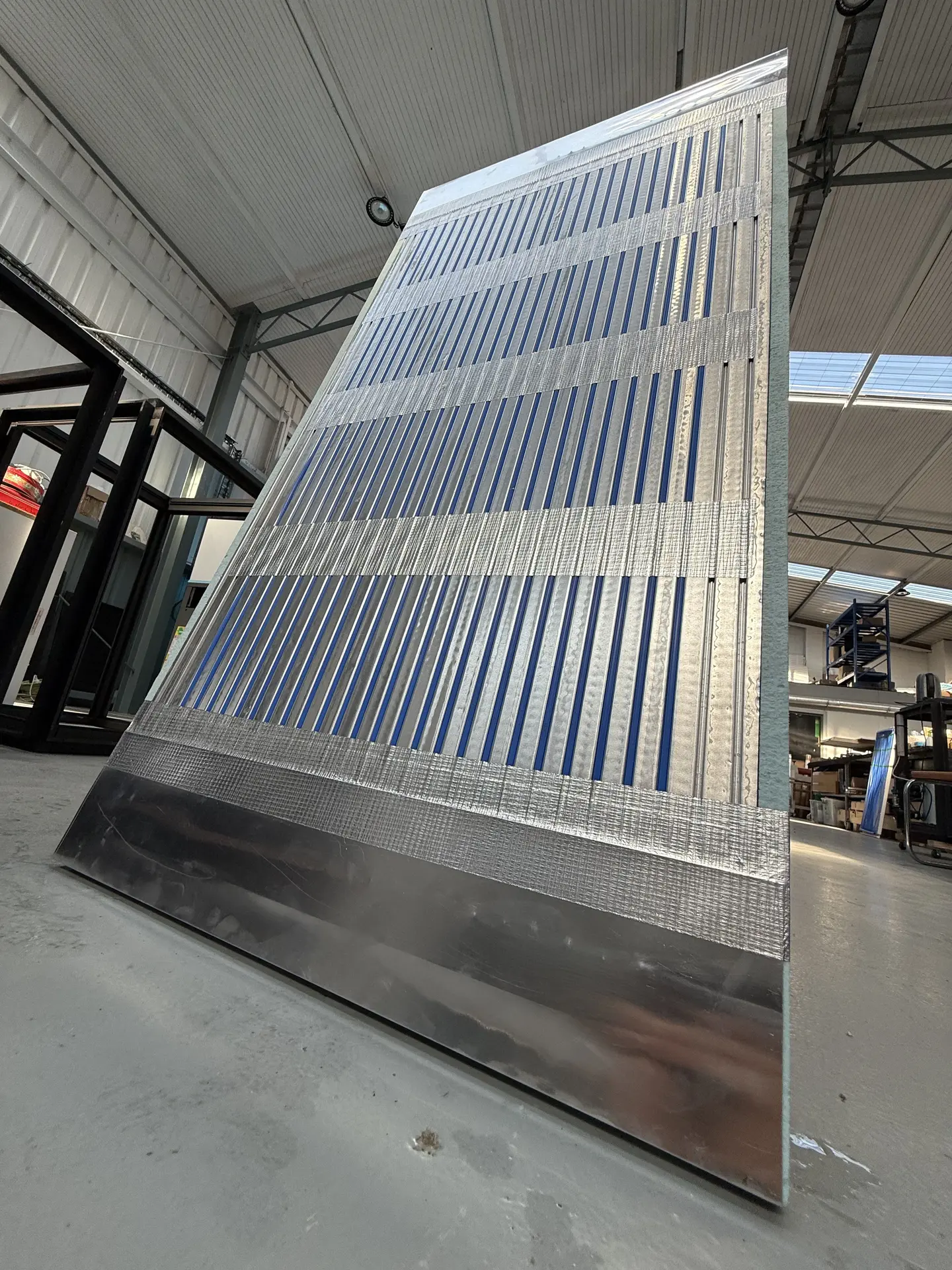
Insulation Layer
Each panel includes a high-performance PIR or XPS insulation backing. This keeps heat where it belongs and eliminates the need for a separate insulation install above the ceiling.
Finished Ceiling Surface
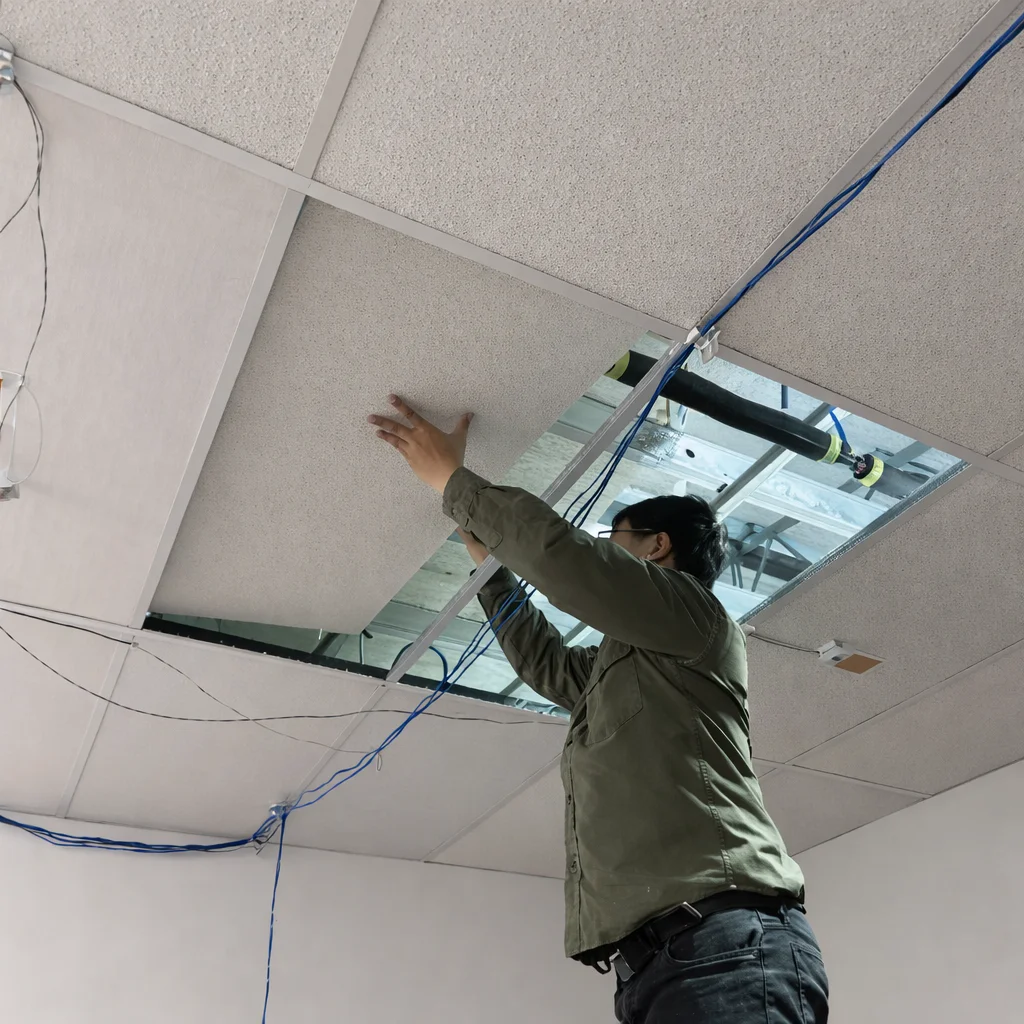
The panel is the ceiling. It drops into a standard suspended ceiling grid just like a regular ceiling tile. No plasterboard, no plastering, no painting. It arrives ready to install.
Heating & Cooling System
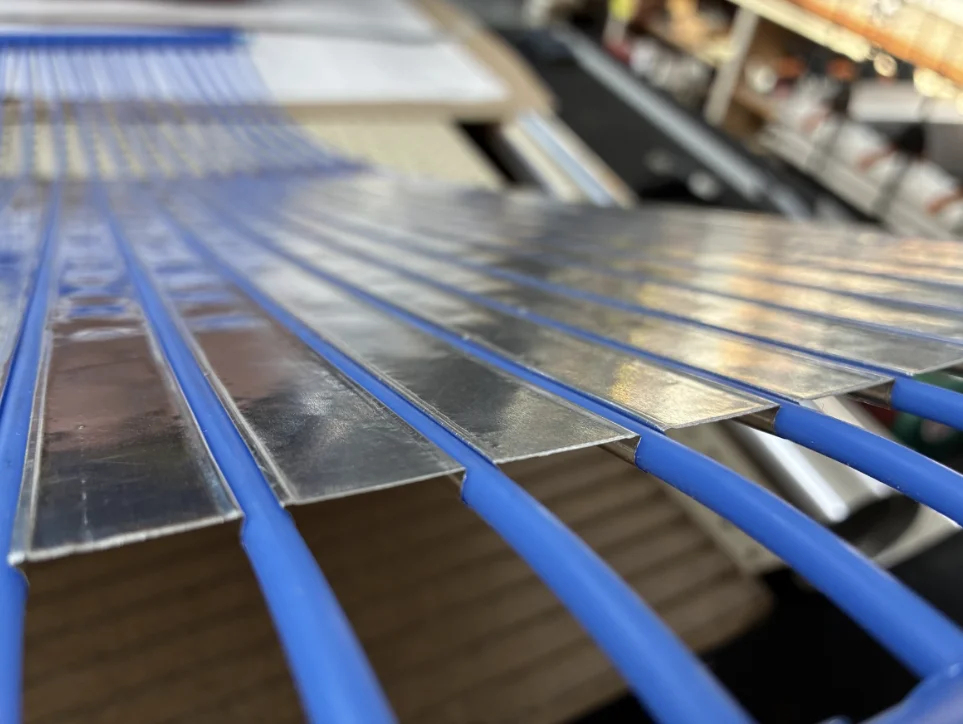
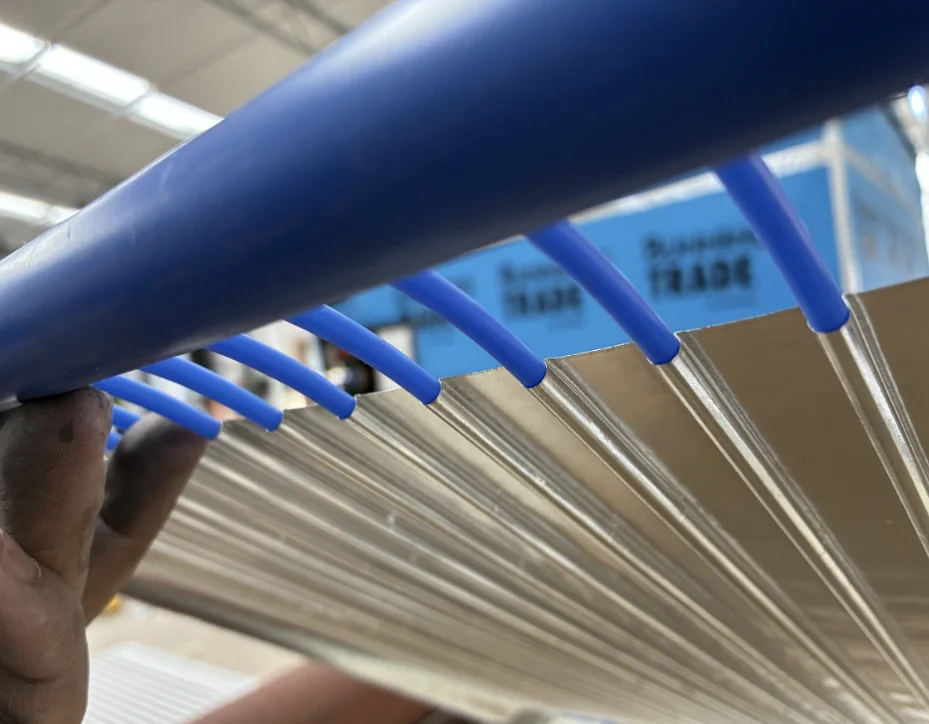
The capillary tube network inside every panel provides both radiant heating and cooling. One panel, one install, both seasons covered.
All three in a single panel. That's not just a heating system, it's an insulated, finished ceiling with built-in climate control.
Applications
Where These Panels Are Used
Designed primarily for suspended ceiling retrofits in commercial and institutional buildings, anywhere a standard ceiling grid exists.
Offices & Workplaces
Silent, draught-free conditioning. No wall units, no ductwork, no ceiling space lost to bulky equipment.
Schools & Universities
Healthier indoor air with no dust circulation or dry forced-air. Ideal for classrooms and lecture halls with suspended ceilings.
Healthcare Facilities
Hygienic radiant conditioning with no moving air. Reduces airborne particle circulation, critical for hospitals and aged care.
Retail & Hospitality
Invisible conditioning that doesn't compete with interior design. Restaurants, shops, and hotels benefit from the silent, even comfort.
Government Buildings
Retrofit-friendly for heritage and older buildings with existing suspended ceilings. Meets energy efficiency targets without major structural work.
Residential
Premium whole-home comfort for new builds and renovations. Pairs with heat pump systems to replace gas heating entirely.

Heating Systems Compared
Compare Hydronic to Traditional Heating and Cooling Systems
Gas Ducted HeatingBlows heated air through ceiling ducts. Common in older homes but noisy, dusty, and increasingly expensive with rising gas prices. Best for: Existing gas homes | Reverse Cycle ACElectric split or ducted system that heats and cools by moving refrigerant. Efficient but creates draughts and uneven temperatures. Best for: Budget retrofits | Premium Comfort Hydronic Radiant PanelsCeiling-mounted panels that radiate warmth or cooling silently from above. Powered by a heat pump and solar for near-zero running costs. Best for: Premium comfort | |
|---|---|---|---|
| Feature | Gas Ducted Heating | Reverse Cycle AC | Hydronic Radiant Panels |
| Running Cost | High (gas + connection fee) | Medium (electricity) | Low (heat pump + solar) |
| Noise Level | Moderate (fan + ductwork) | Moderate (compressor + fan) | Silent (no moving parts) |
| Air Quality | Poor (circulates dust & allergens) | Moderate (filters help) | Excellent (no airflow) |
| Temperature Evenness | Poor (hot spots near vents, cold corners) | Moderate (better with zoning) | Excellent (even radiant distribution) |
| Solar Compatible | No (gas) | Yes (runs on electricity) | Yes (heat pump + solar) |
| Maintenance | High (duct cleaning, gas servicing) | Medium (filter changes, refrigerant) | Low (no filters, no ducts, no servicing) |
Gas Ducted Heating
Blows heated air through ceiling ducts. Common in older homes but noisy, dusty, and increasingly expensive with rising gas prices.
Best for: Existing gas homes- Running Cost
- High (gas + connection fee)
- Noise Level
- Moderate (fan + ductwork)
- Air Quality
- Poor (circulates dust & allergens)
- Temperature Evenness
- Poor (hot spots near vents, cold corners)
- Solar Compatible
- No (gas)
- Maintenance
- High (duct cleaning, gas servicing)
Reverse Cycle AC
Electric split or ducted system that heats and cools by moving refrigerant. Efficient but creates draughts and uneven temperatures.
Best for: Budget retrofits- Running Cost
- Medium (electricity)
- Noise Level
- Moderate (compressor + fan)
- Air Quality
- Moderate (filters help)
- Temperature Evenness
- Moderate (better with zoning)
- Solar Compatible
- Yes (runs on electricity)
- Maintenance
- Medium (filter changes, refrigerant)
Hydronic Radiant Panels
Ceiling-mounted panels that radiate warmth or cooling silently from above. Powered by a heat pump and solar for near-zero running costs.
Best for: Premium comfort- Running Cost
- Low (heat pump + solar)
- Noise Level
- Silent (no moving parts)
- Air Quality
- Excellent (no airflow)
- Temperature Evenness
- Excellent (even radiant distribution)
- Solar Compatible
- Yes (heat pump + solar)
- Maintenance
- Low (no filters, no ducts, no servicing)
The Real Cost Question
Is Hydronic Conditioning More Expensive Than Traditional?
The biggest concern people have with hydronic systems is cost. Let's address it head on with a real example.
Case Study: A 100m² Space
At first glance, our hydronic radiant system looks more expensive. But when you compare what's actually included, the picture changes.
Traditional Build
Base heating install only- Ducted heating & cooling system
But you still need to add:
- Plasterboard ceiling + plastering + painting
- Ceiling insulation (separate install)
- Labour for all of the above
Our Hydronic System
Complete install- Heating and cooling (dual mode)
- Finished ceiling surface (no plasterboard)
- Built-in insulation (PIR/XPS)
- Silent operation, no ductwork
When you factor in what a traditional build actually requires, the true cost difference narrows significantly. Our initial install may appear 5 to 10% higher, but that includes a finished ceiling, insulation, and both heating and cooling. With traditional systems, those are all separate costs on top. And our system runs at roughly a third of the energy cost year after year. The difference pays for itself, and then keeps saving you money for the life of the system.
Why Choose Our System
Technical Product Advantages
Lightweight Modular Design
80% lighter than heavy TABS systems. Installation takes about a third of the time compared to industry average.
Anti-Condensation & Efficiency
60% higher thermal radiation thanks to our aluminium and granular-aggregate composite. Zero condensation risk, tested across 90% humidity levels.
Cost Advantage
Less than half the industry average cost per square metre. On average, our calculated cost savings are 30 to 100% over competing systems. Built to last 20 years, compared to the typical 8-year lifespan of alternatives.
Rapid Response Time
Heats or cools 10x faster than underfloor systems. You will feel the difference in about 7 minutes, compared to 2 to 3 hours with conventional systems.
Dual Conditioning
Both cooling and heating from one system. Combines radiant and convective energy transfer for balanced, efficient climate control, not just blowing air around.
Enhanced Thermal Comfort
Consistent warmth or cooling across the whole room. No hot spots, no cold corners. Just turn on a ceiling fan to fine-tune airflow if you want.
Our Fabrication Process
The Superior Aluminium OMEGA Formed Hydronic Panel
Our fabrication process relies on producing the encapsulation of multiple capillary tubes through an 'omega' shaped moulding. This unique achievement accounts for the tremendous success in the delivery of a completely uniform surface temperature.
It also accounts for the rapid response time of our conditioning system.
Replacing Gas Heating
The Last Big Gas Appliance in Most Homes
For a lot of households, the gas ducted heater is the biggest reason they're still connected to gas. Once the hot water has been switched to a heat pump and the cooktop has gone to induction, the heater is the last thing keeping that $1.40 per day gas connection fee on your bill.
Switching to hydronic ceiling panels powered by a heat pump and solar removes that final appliance. This is what makes it so different from gas. With gas, you pay for fuel no matter how much solar you have. With hydronic, your heating becomes part of your solar system. At that point, you can disconnect from gas entirely and save over $500 a year on the connection fee alone, before you even count what you were spending on gas usage.
We design your solar and battery system with this future in mind from day one. Even if you're not ready to switch to hydronic heating yet, we size everything so it's ready when you are.
The Bigger Picture
How Does This Tie In With Solar?
A hydronic system runs on electricity, not gas. That means the energy to heat and cool your home can come straight from your roof.
Solar generates electricity
Your panels produce free electricity during the day. This is the starting point for everything else in the system.
Your home uses it first
Everything running in your home gets powered by solar first. Lights, appliances, and your heat pump all draw from what the panels are producing right now.
This is what makes it so different from gas. With gas, you pay for fuel no matter how much solar you have. With hydronic, your heating becomes part of your solar system.
Heat pump warms or cools water
A solar powered heat pump heats water for winter or chills it for summer. One appliance, both seasons, running on free energy from your roof.
Hydronic ceiling panels condition your home
Warm or cool water flows through panels in your ceiling, radiating comfort into every room. No fans, no noise, no gas bill.
When you combine solar, a battery, a heat pump, and hydronic ceiling panels, your home's heating, cooling, and hot water all run on renewable energy. That is the complete system we design.
Radiant vs Forced Air
Why This Is Better Than What You Have Now
No dust, no dry air, no noise
Forced air systems blow dust and allergens around your home, dry out the air, and generate constant fan noise. Radiant panels do none of this. They sit in the ceiling and silently radiate warmth or cooling.
Even temperature, everywhere
Ducted systems create hot spots near vents and cold spots in corners. Radiant panels distribute energy evenly across the ceiling, so the whole room feels the same temperature. No draughts, no dead zones.
A third of the running cost
Hydronic systems move water, not air. Water carries heat far more efficiently than air, which means less energy to get the same result. When powered by solar, the cost drops to nearly nothing.
Nothing to clean or maintain
No filters to replace. No ducts to clean. No outdoor unit collecting leaves. Ceiling mounted panels stay out of the way and don't need the regular servicing that ducted or split systems do.
Hydronic Heating FAQ
Common Questions
What is hydronic heating?
Hydronic heating uses warm water circulated through panels, radiators, or underfloor pipes to heat a space. Our system uses radiant ceiling panels that transfer heat directly to objects and people in the room, like the warmth you feel from the sun, rather than blowing hot air. It heats and cools without noise, dust, or dry air.
Is hydronic heating gas or electric?
It can be either. Traditional hydronic systems use a gas boiler. Our system uses an electric heat pump instead, which is roughly three times more efficient than gas and can be powered by your solar panels. This means your heating and cooling can run on free solar electricity during the day.
Is hydronic heating expensive to run?
Our hydronic ceiling panel system operates at roughly one third the running cost of conventional ducted heating and cooling. When paired with a heat pump and solar panels, the running cost drops further, potentially to near zero during solar generating hours.
Can hydronic heating be used to cool as well?
Yes. Our radiant ceiling panels work in reverse during summer, circulating chilled water to absorb heat from the room. It is one system for both heating and cooling, with no need for separate air conditioning units.
Can you convert gas hydronic heating to electric?
Yes. If you already have hydronic pipework and radiators or panels, we can replace the gas boiler with an electric heat pump. This removes your gas dependency and lets you run the system from solar. The existing distribution pipework often stays in place.