Hydronic Ceiling Panels
Heating, cooling, and a finished ceiling in one system.
Born from Research
A System That Didn't Exist
Until We Built It
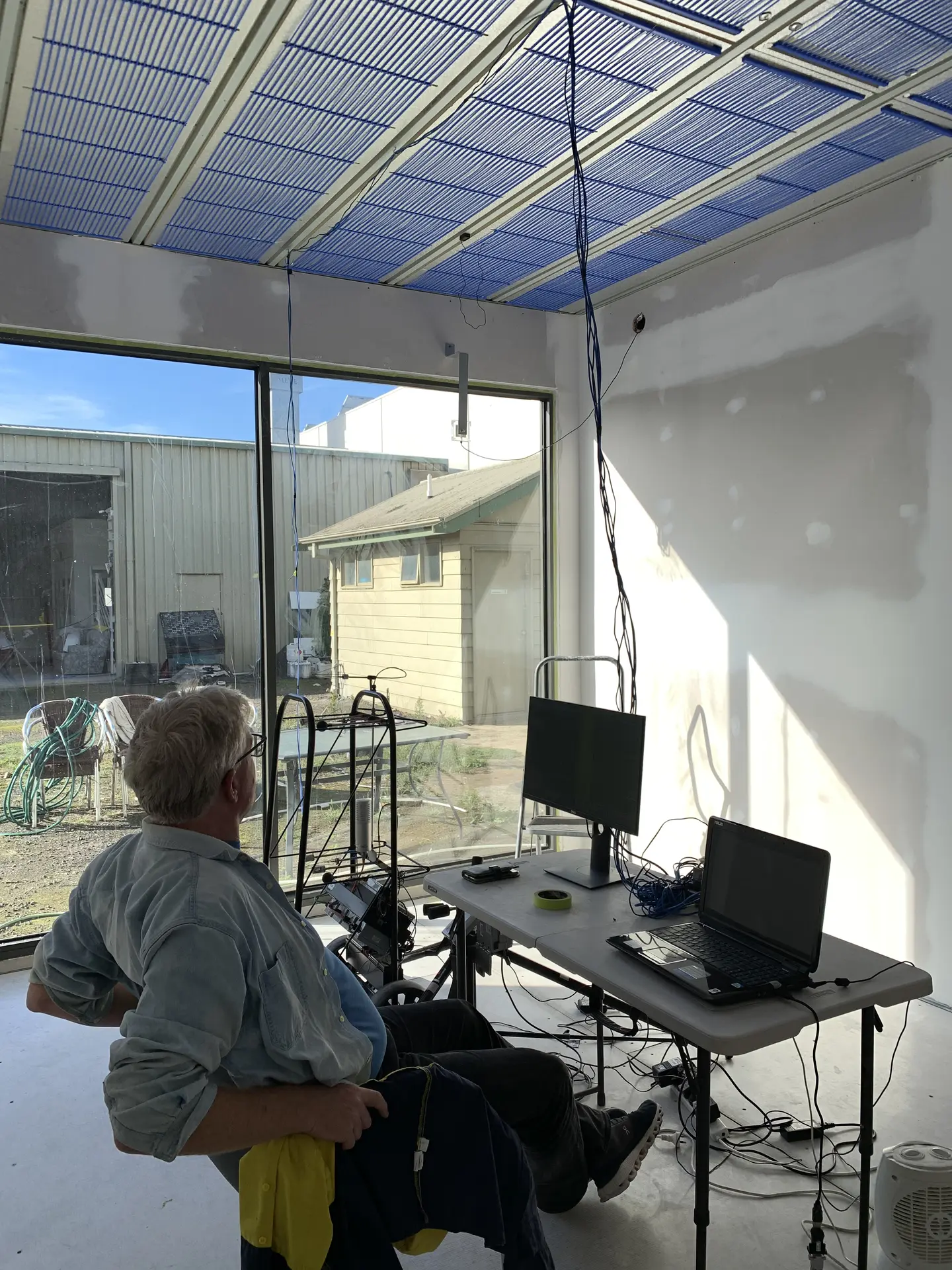
Hydronic means using water to move energy. Instead of blowing hot or cold air through ducts, these panels circulate water through tiles in your ceiling to heat and cool your space directly.
This technology started with a question that Dr Mark Luther carried through 27 years of architectural science research at Deakin University: what if a ceiling could heat, cool, and finish a room, all at once?
Nothing on the market could do it. Radiant ceiling systems overseas were expensive, limited in capacity, and not built for Australian construction. So our research team, led by Dr Luther and Dr Do Hung, whose PhD focuses on hydronic ceiling conditioning in commercial buildings, set out to design one from scratch.
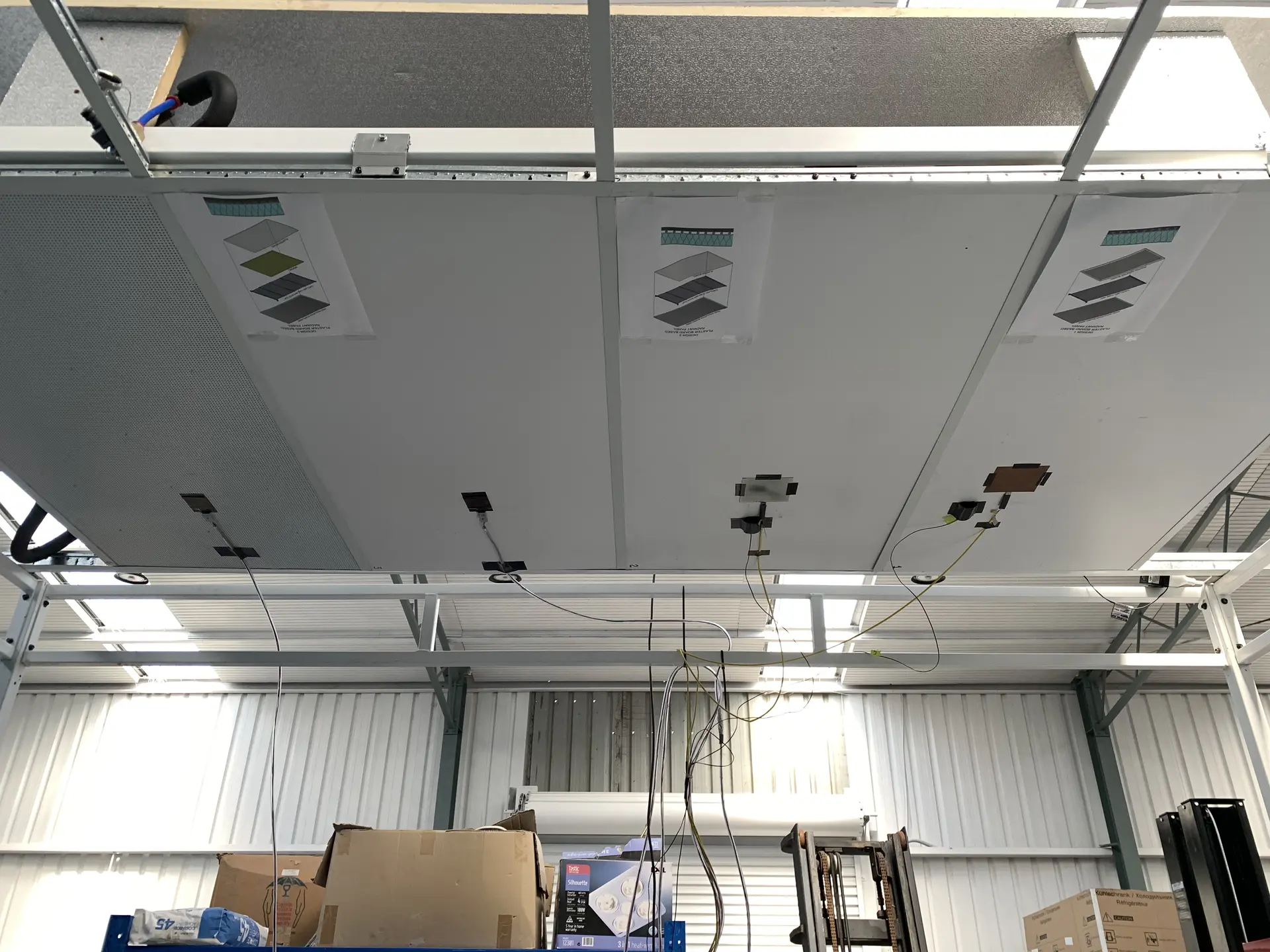
Every panel is designed, assembled, and tested at our purpose-built laboratory in Moolap, Geelong. The research behind them has been published in peer-reviewed journals including Energy and Buildings and Architectural Science Review. This page shares what that research shows.
Why the Ceiling?
The Most Effective Radiant Surface
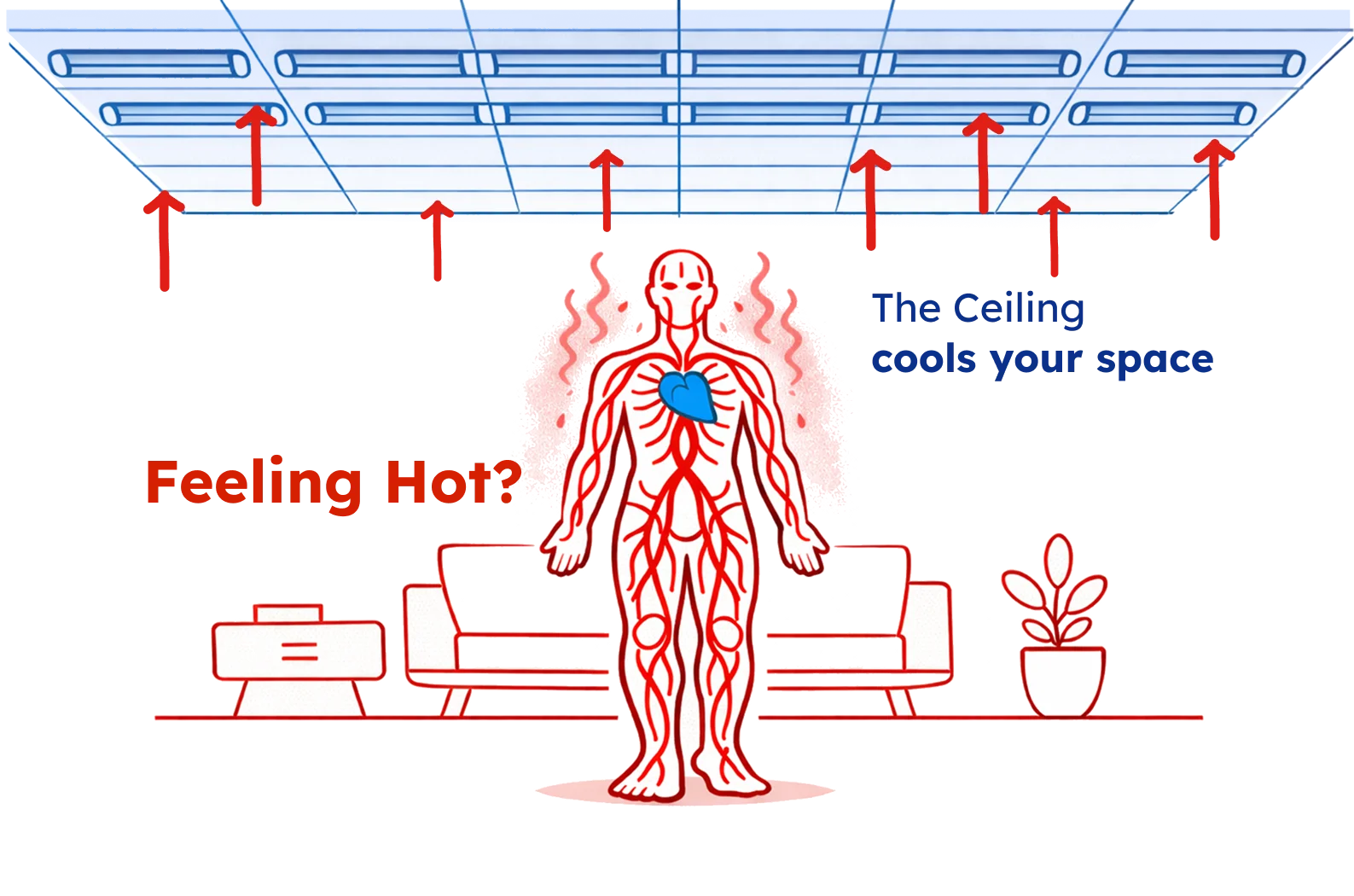
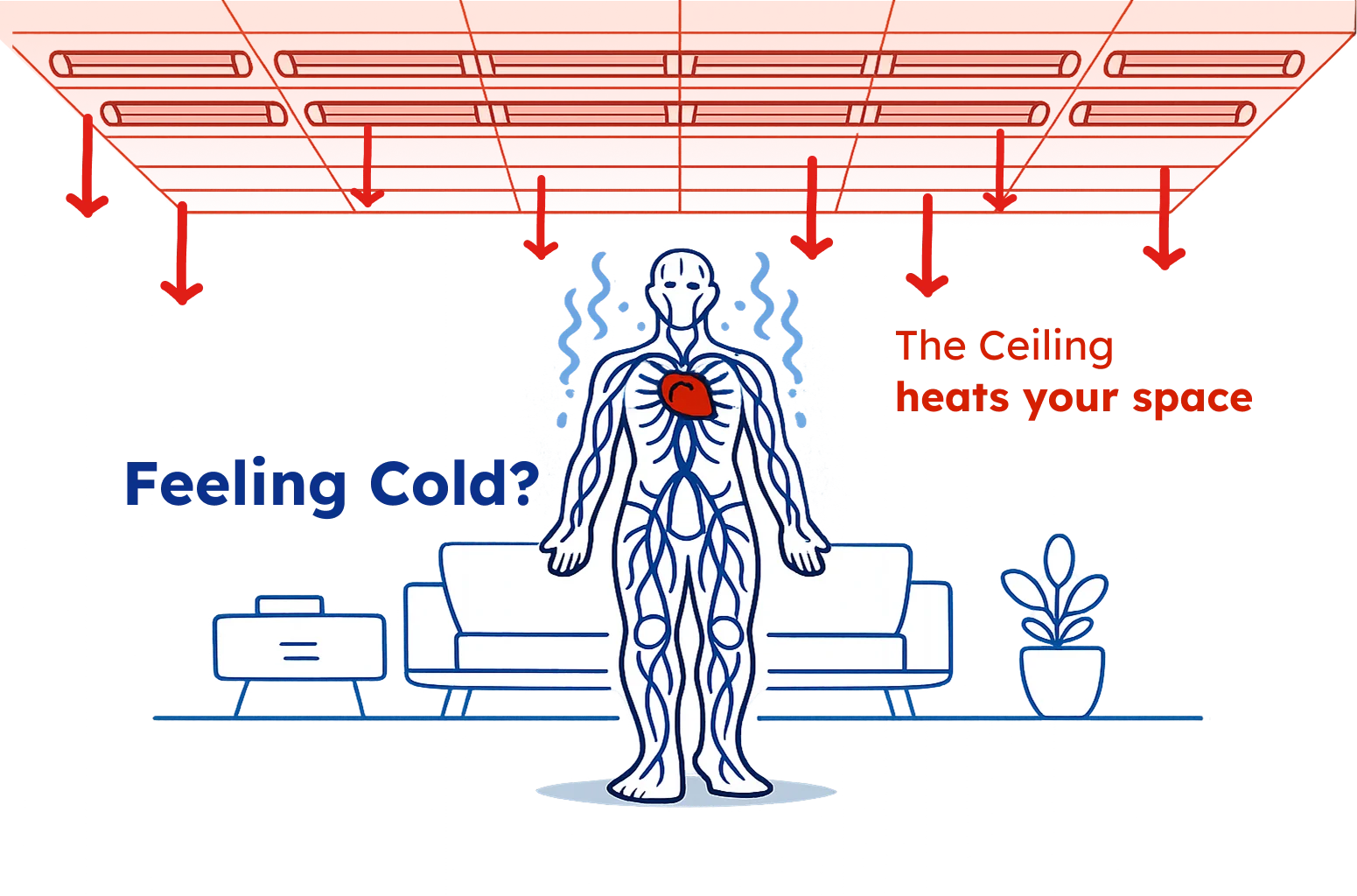
You feel the sun's warmth on your skin, even on a cool day. That's radiant energy, and your ceiling is the best surface to deliver it. Nothing blocks the path between the panel and you, so energy transfers evenly across the whole room.
Because it goes straight to you instead of heating the air first, you're comfortable at lower temperatures in winter and higher set points in summer. No dust blown around, no fan noise, and running costs sit at roughly one-third of ducted or split systems.
The mechanisms of energy transfer within the human body and its environment are through radiation, convection & exhalation (or breathing). All three work together in establishing a comfort balance.
Tested Results
Conditioning Capacity Performance
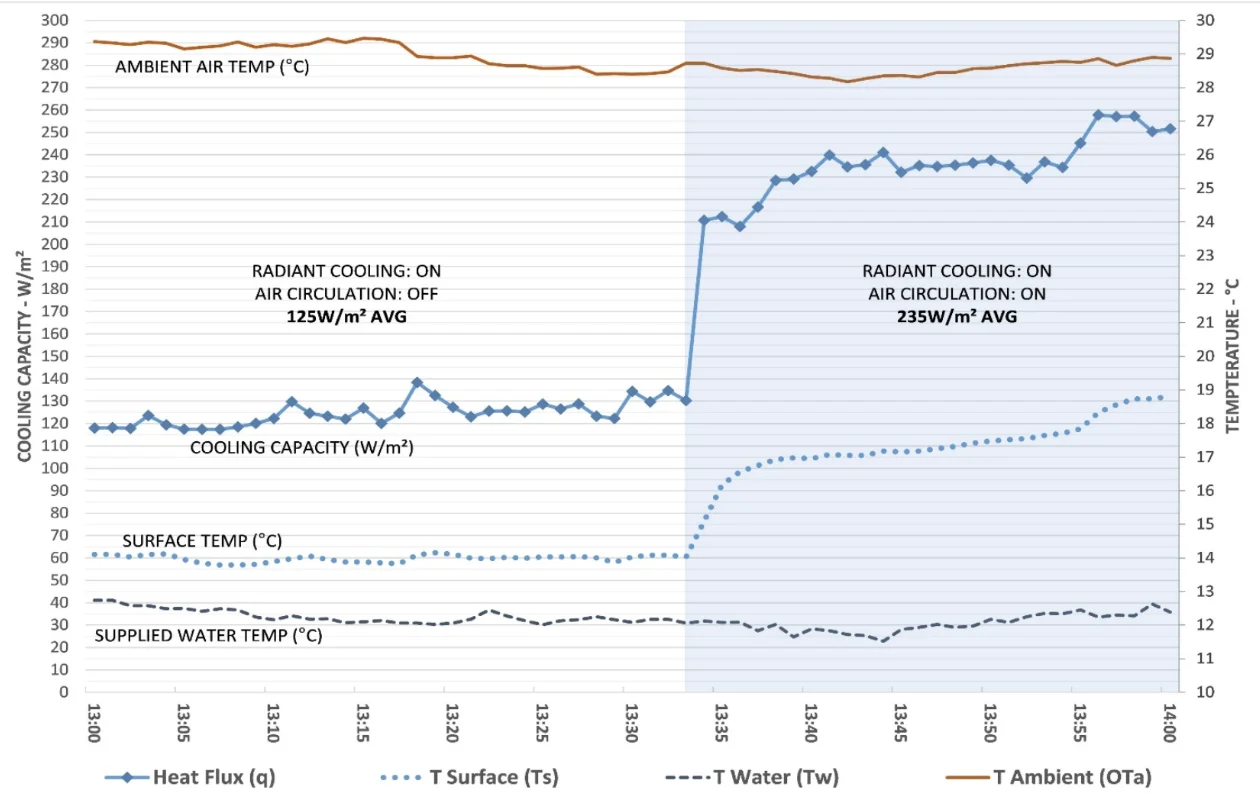
Real test data showing how our panels perform under still air and with gentle air circulation, and the difference it makes.
What This Graph Shows
The graph shows two test conditions: panels running with still air (left) and panels with a gentle breeze from a ceiling fan (right). That simple addition of air movement boosts output by 80%, from around 135 W/m² up to over 250 W/m².
The surface temperature stays consistent throughout, while the room temperature holds steady. So you get a lot more heating or cooling from the same panels, just by turning on a fan. No extra panels, no extra plumbing.
Technical Explanation
The panel system is flexible in the provision of conditioning capacity. It is within itself self-regulating and can also be enhanced by air circulation determined by user control. The tested results illustrate the performance of a panel under both still air and circulation cases, showing an increase of 80% conditioning capacity with circulation. Note the definition of air circulation is 0.25 m/sec on average within the space. Heat flux (blue dashed line) tracks cooling capacity in W/m², while T Surface, T Water, and T Ambient are monitored continuously to confirm stable operating conditions across both test phases.
This video explains the concept further
The Technology
Our patented hydronic panel offers:
(No. 2024227462)
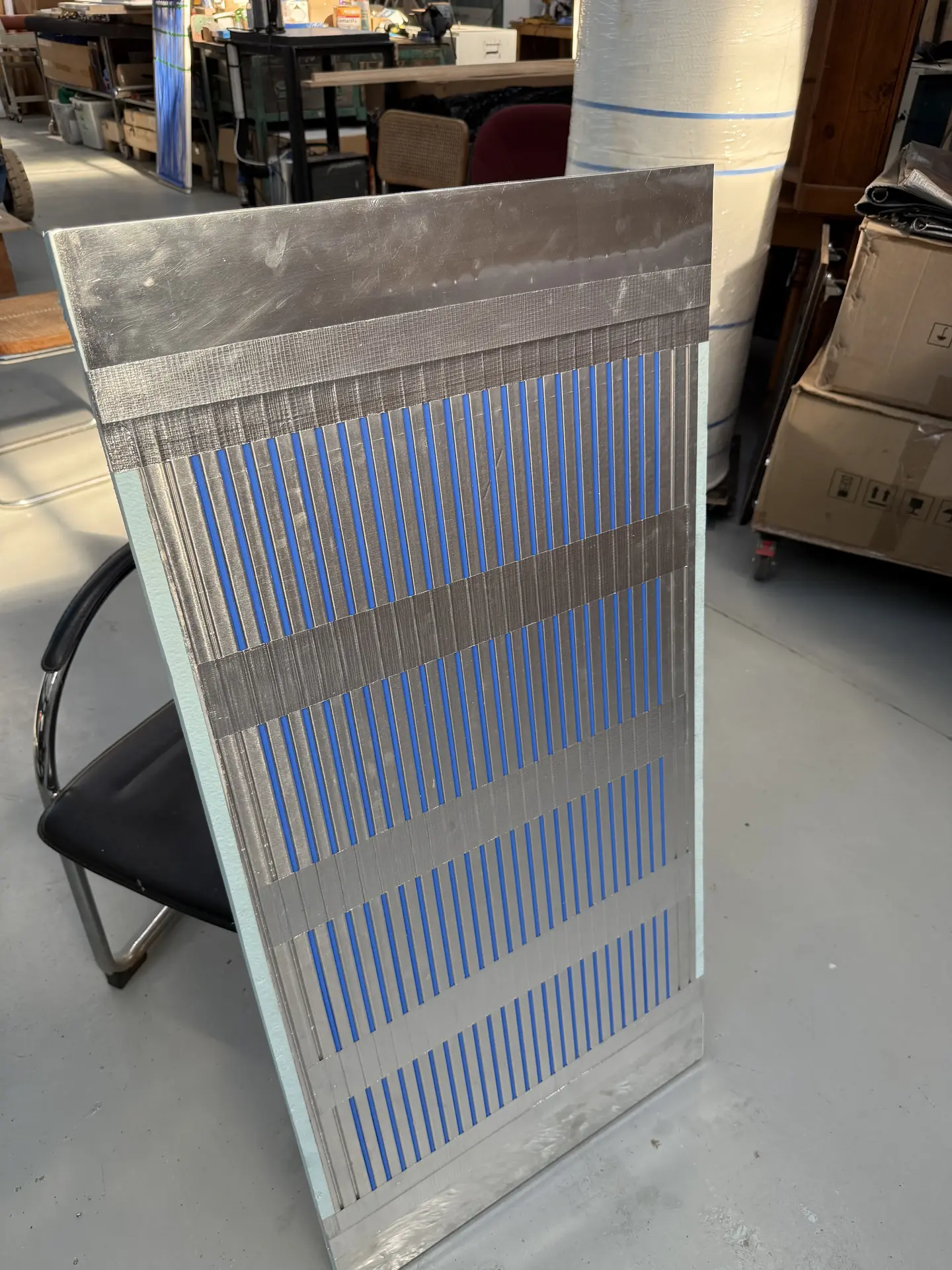
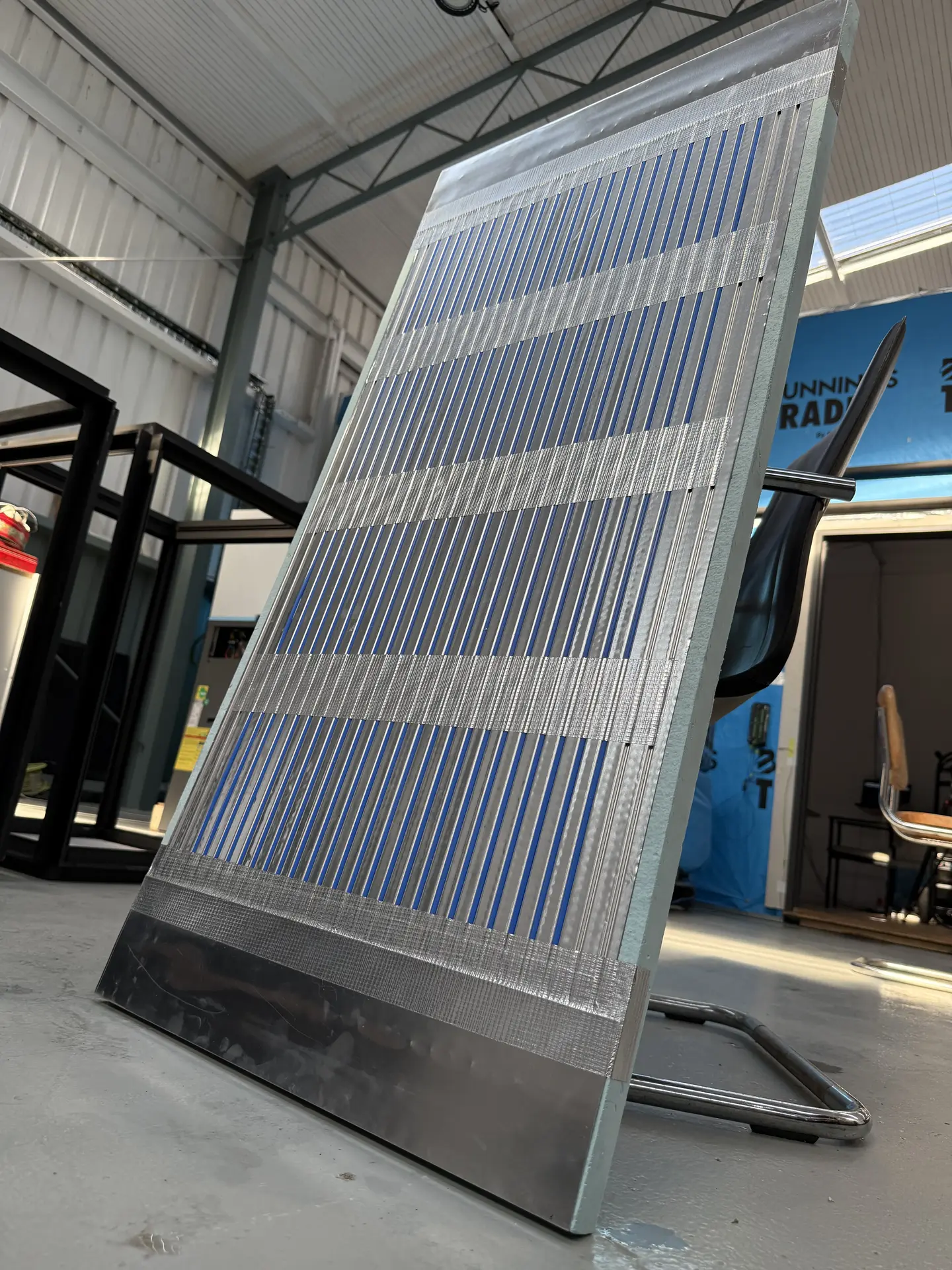
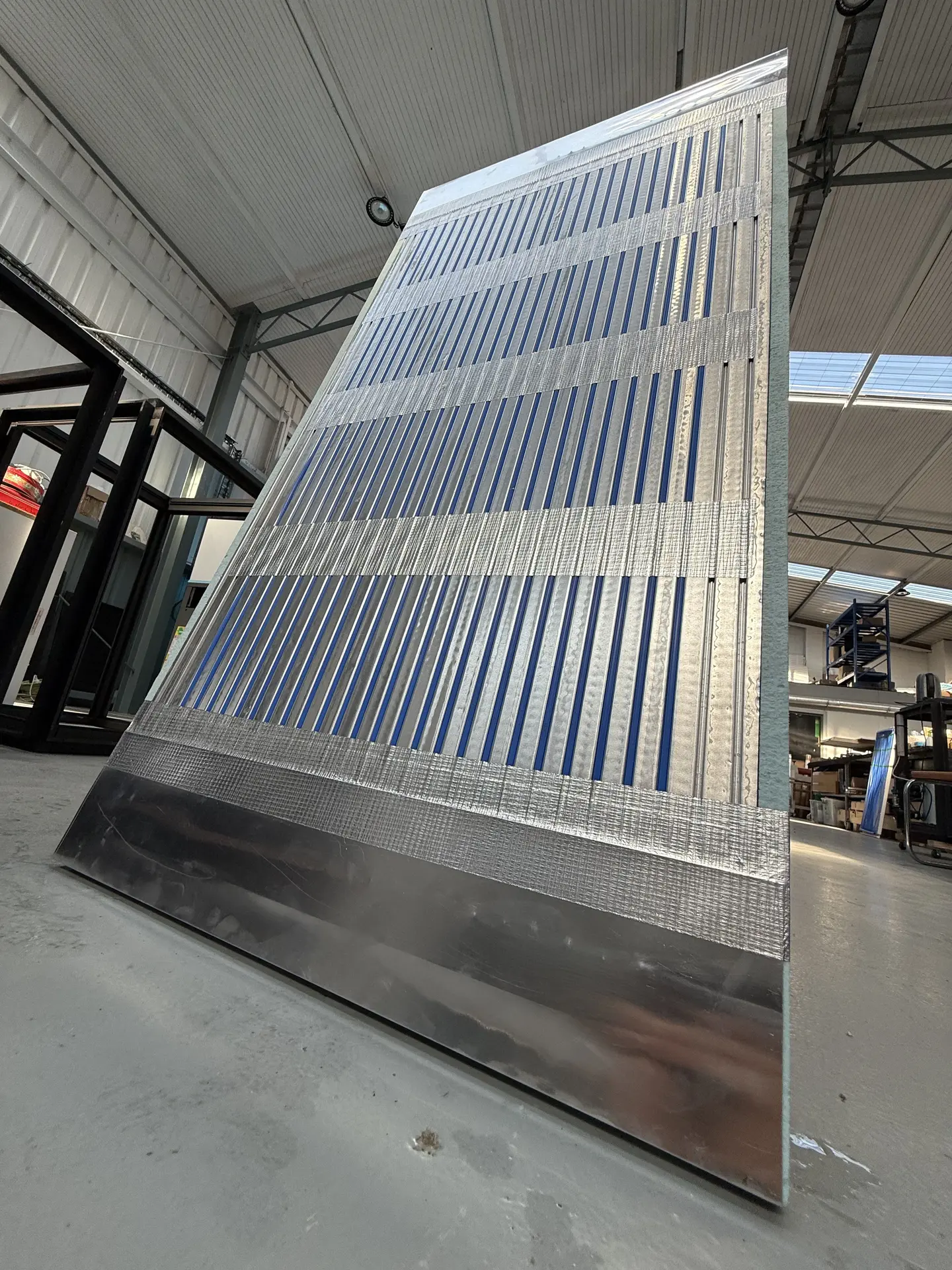
A 30mm rigid fire-resistant PIR insulation board directly opposite and adjacent to the conditioning side.
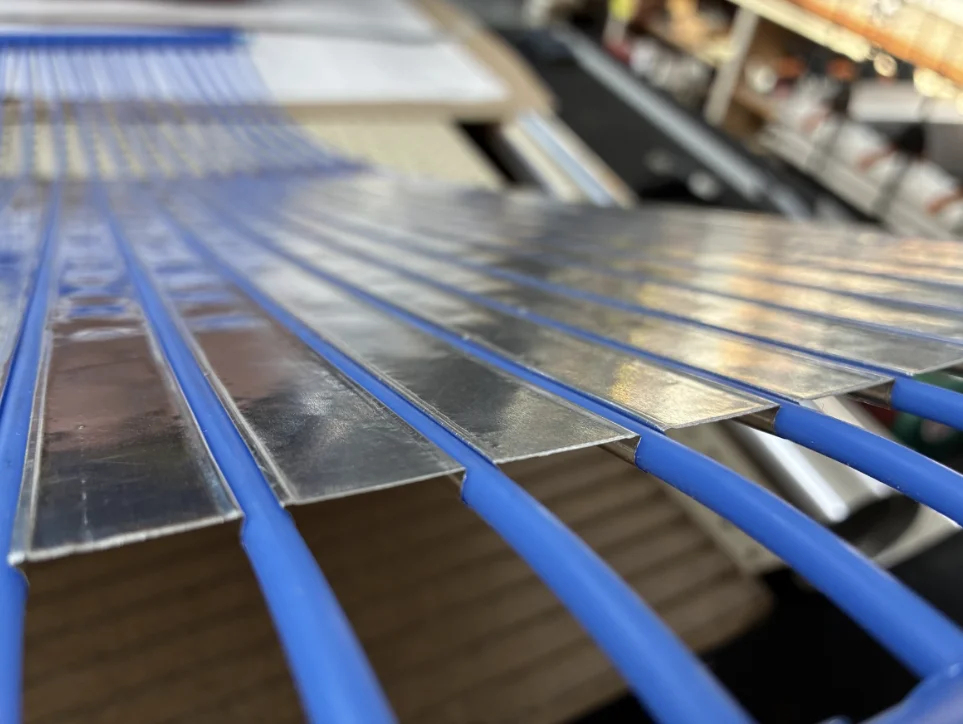
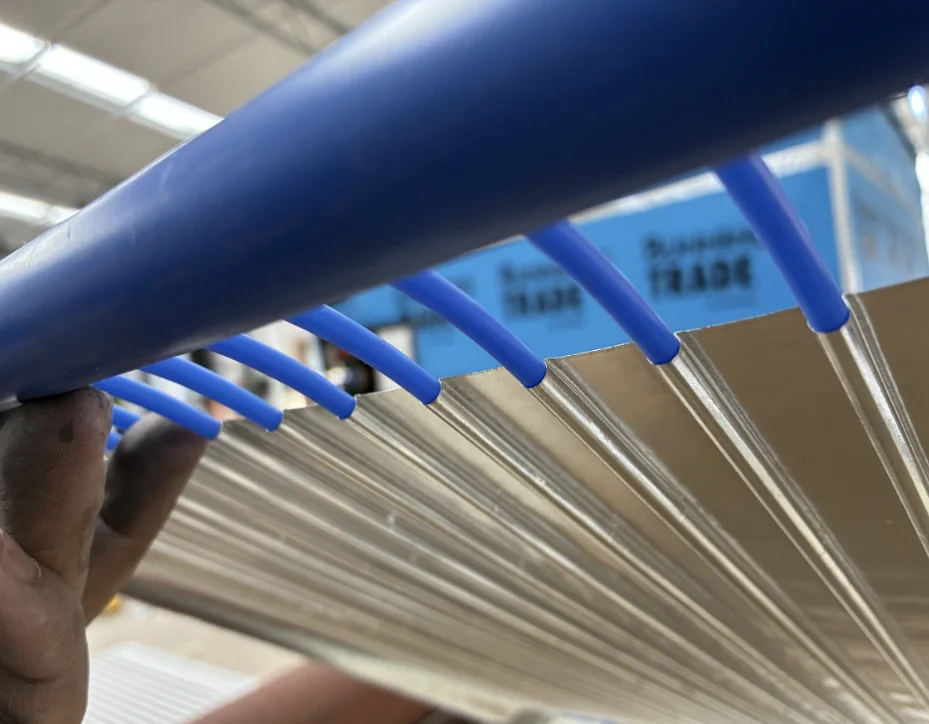
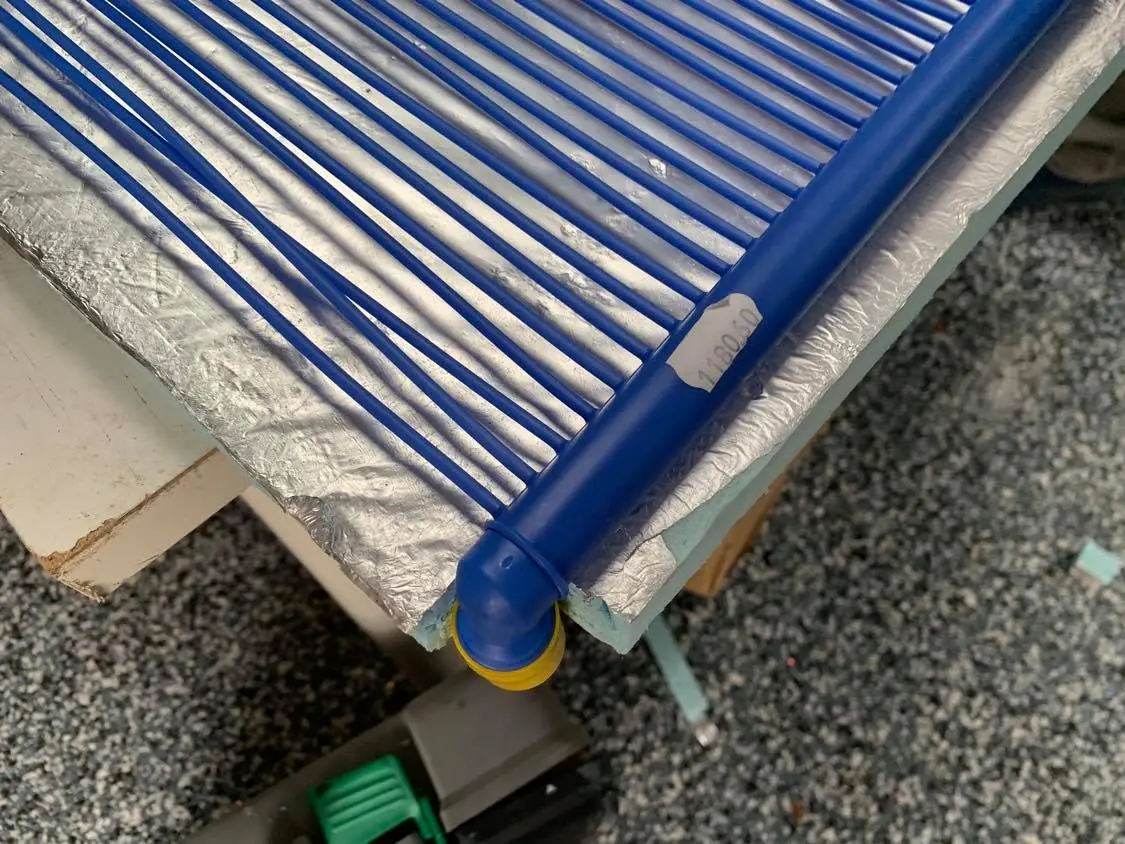
A multi-capillary tube mat encapsulated in highly conductive aluminium proving a rapid response time.
A specialised anti-condensation and conductive granular-aggregate finishing surface.
A lightweight 'snap & fit' modular solution – ideal for suspended ceilings.
A rapid and cost-effective installation process due to prefabrication, providing insulation, conditioning and finishing surfaces.
Our PATENTED product (No. 2024227462) offers assurance of a unique, high performing and unmatched system in the industry.
Our fabrication process relies on producing the encapsulation of multiple capillary tubes through an 'omega' shaped moulding. This unique achievement accounts for the tremendous success in the delivery of a completely uniform surface temperature.
It also accounts for the rapid response time of our conditioning system.
Proven Performance
Thermal Imaging Results
Tested in our purpose-built simulation room. Thermal imaging confirms uniform surface temperature distribution in both heating and cooling modes.
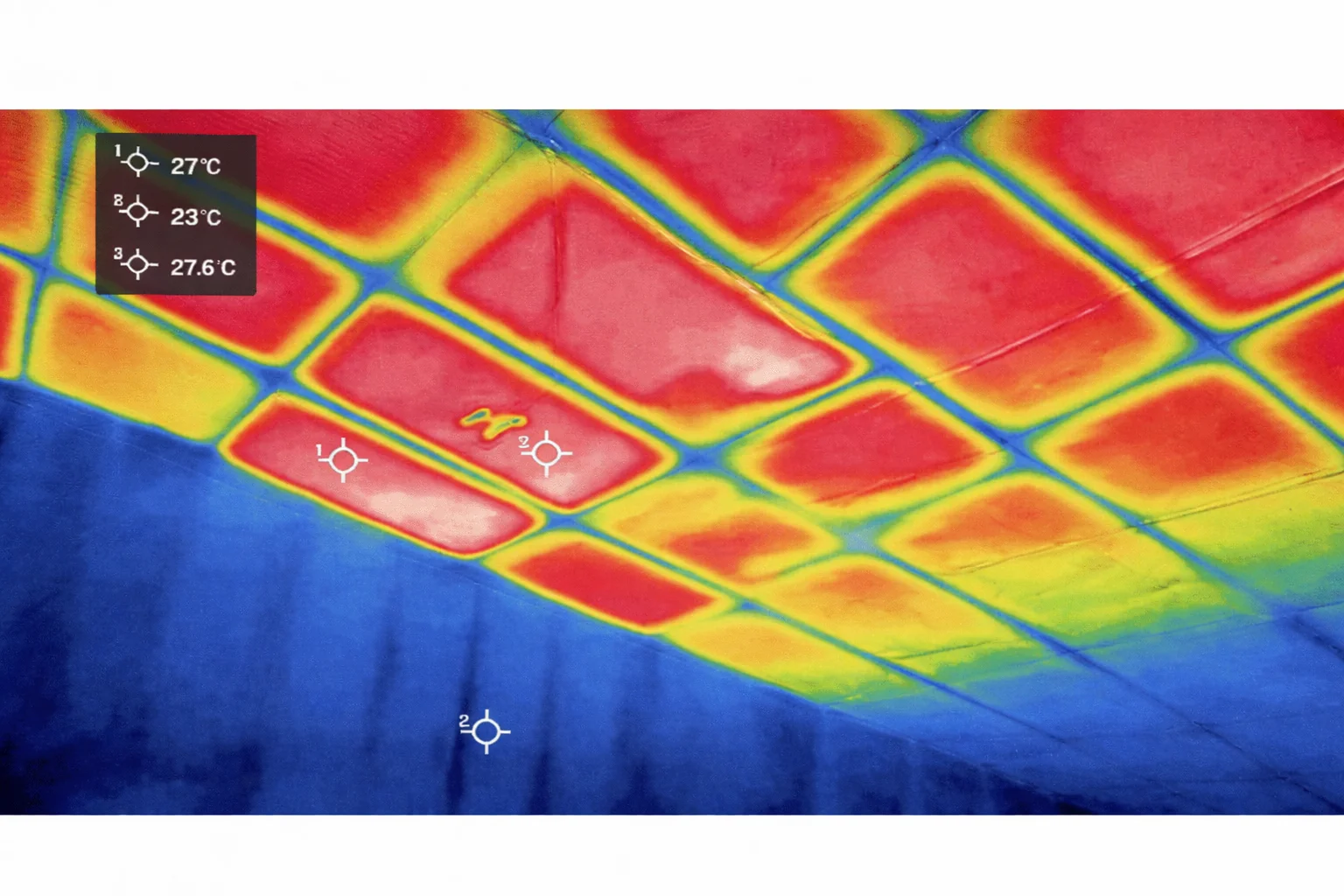
Thermal imaging at 27.6°C supply temperature shows consistent surface heat distribution across the full panel area. The red/orange thermal signature indicates radiative output is maintained uniformly, with sensor readings at three measurement points (27°C, 23°C, 27.6°C) confirming minimal variation across panel zones.
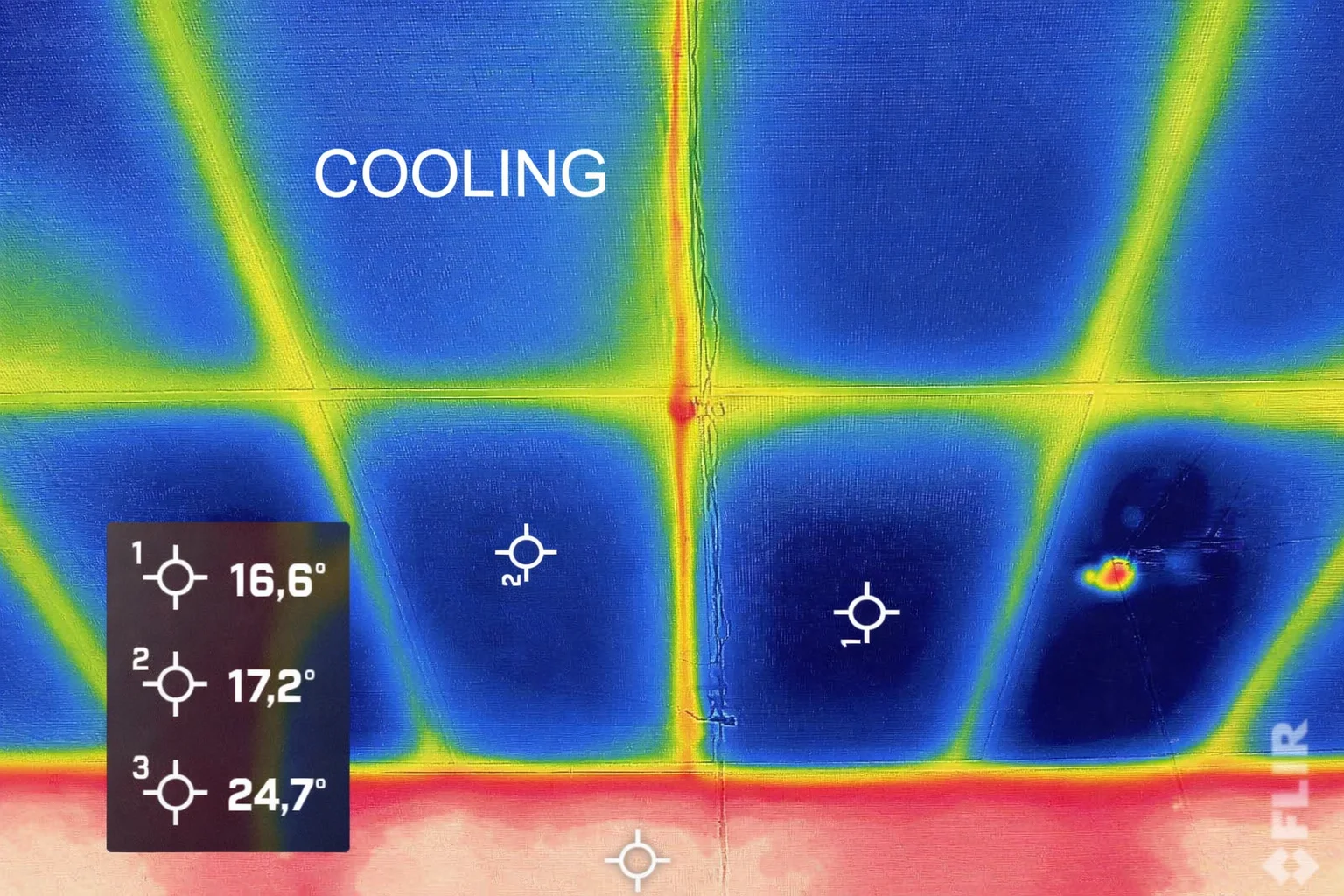
At a chilled water supply of approximately 14.4°C, the blue thermal signature confirms uniform surface cooling across all panel zones. Sensor readings of 16.6°C and 17.2°C demonstrate the capillary tube mat is maintaining consistent heat absorption, with the panel surface operating well above dew point to prevent condensation formation.
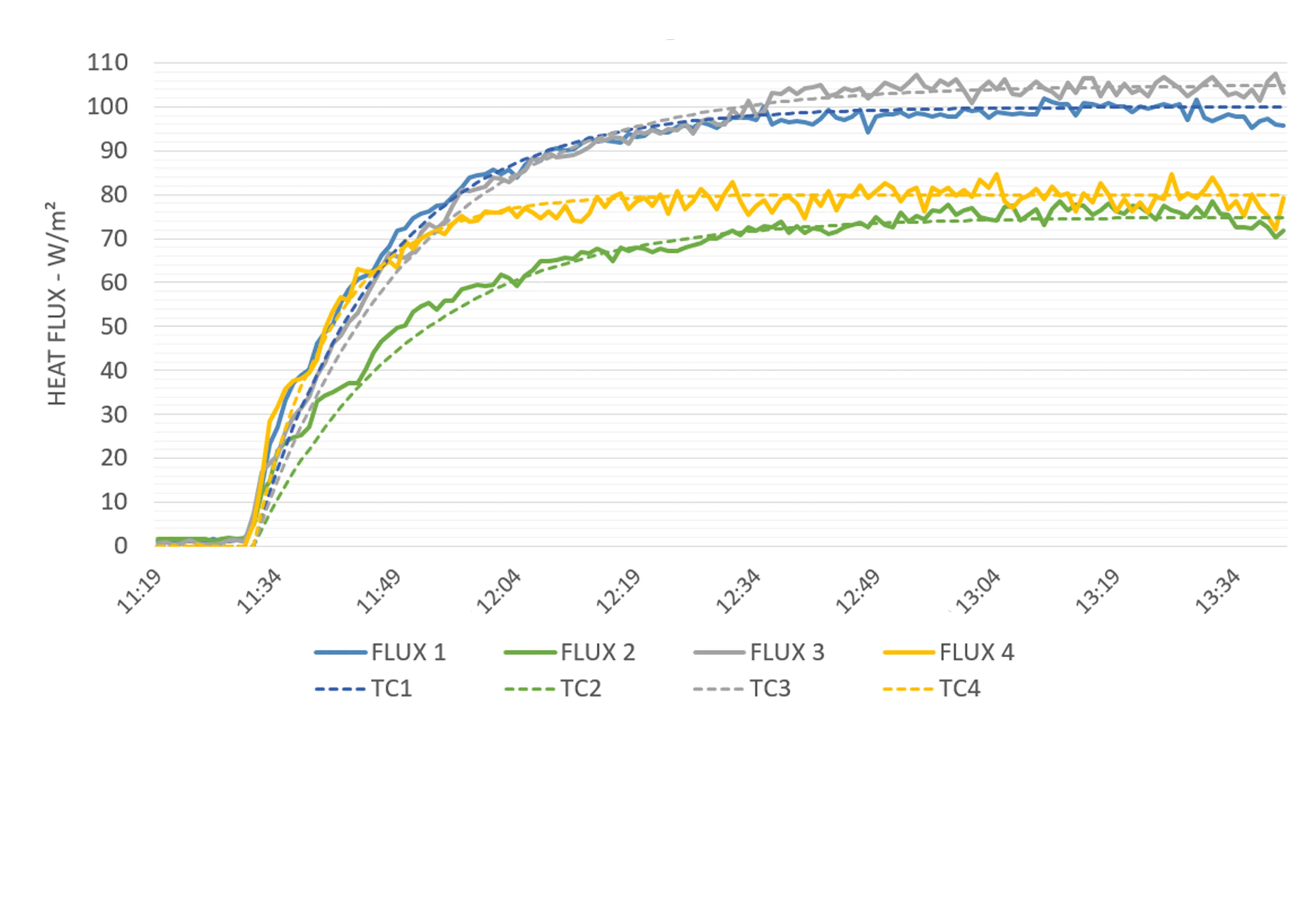
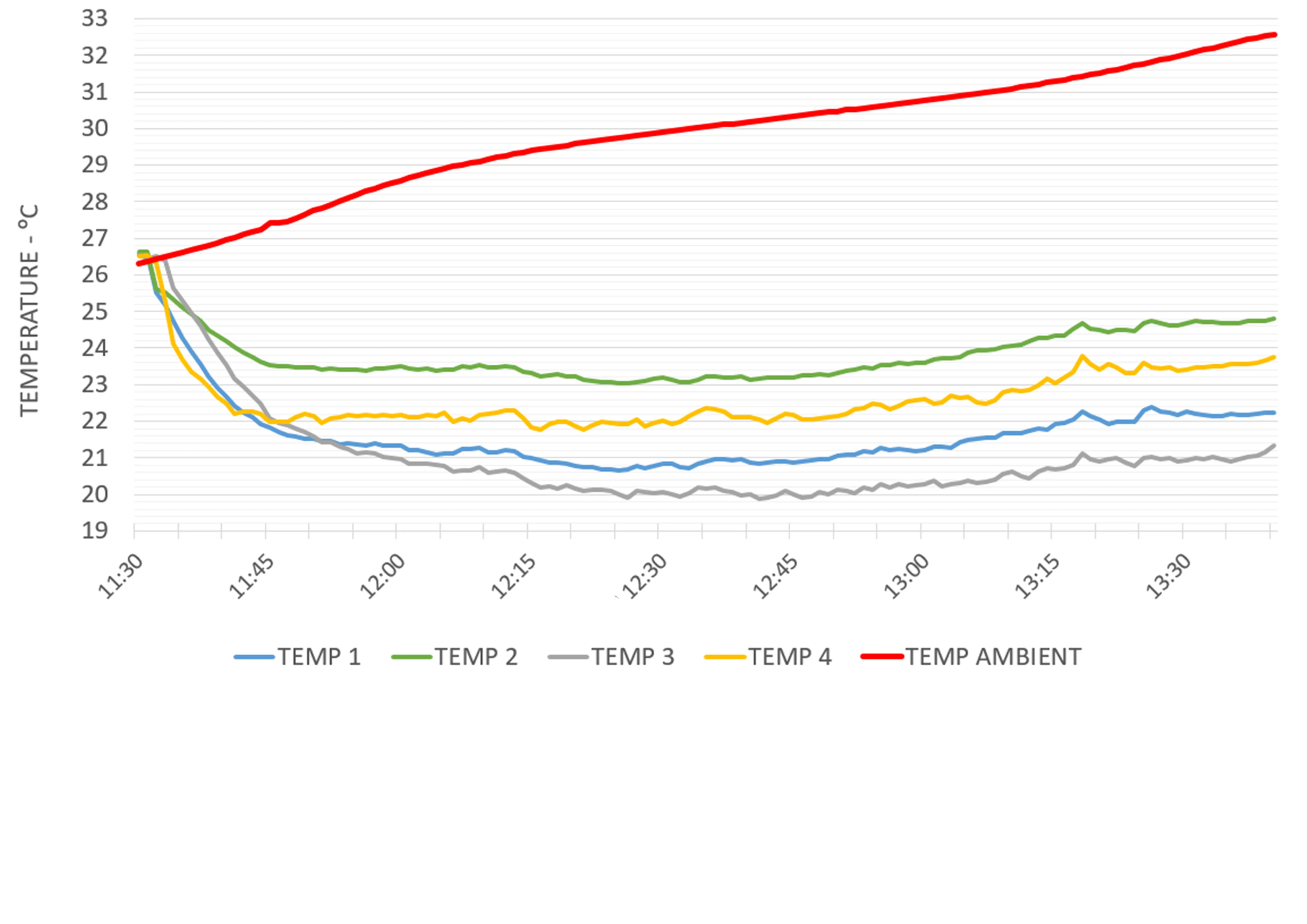
Full testing methodology and instrumentation details are available on our TESTCELL (Simulation Room) page.
Why Choose Our System
Technical Product Advantages
Lightweight Modular Design
80% lighter than heavy TABS systems. Installation takes about a third of the time compared to industry average.
Anti-Condensation & Efficiency
60% higher thermal radiation thanks to our aluminium and granular-aggregate composite. Zero condensation risk, tested across 90% humidity levels.
Cost Advantage
$165/m², less than half the industry average of ~$350/m². Built to last 20 years, compared to the typical 8-year lifespan of competing systems.
Rapid Response Time
Heats or cools 10x faster than underfloor systems. You will feel the difference in about 7 minutes, compared to 2 to 3 hours with conventional systems.
Dual Conditioning
Both cooling and heating from one system. Combines radiant and convective energy transfer for balanced, efficient climate control, not just blowing air around.
Enhanced Thermal Comfort
Consistent warmth or cooling across the whole room. No hot spots, no cold corners. Just turn on a ceiling fan to fine-tune airflow if you want.
Flow Design
'In and Across', Not Serpentine
Most hydronic systems run their tubes in a serpentine pattern. Water snakes back and forth in one long loop, and by the time it reaches the far end of the panel, it has already lost (or gained) heat. One side ends up warmer than the other.
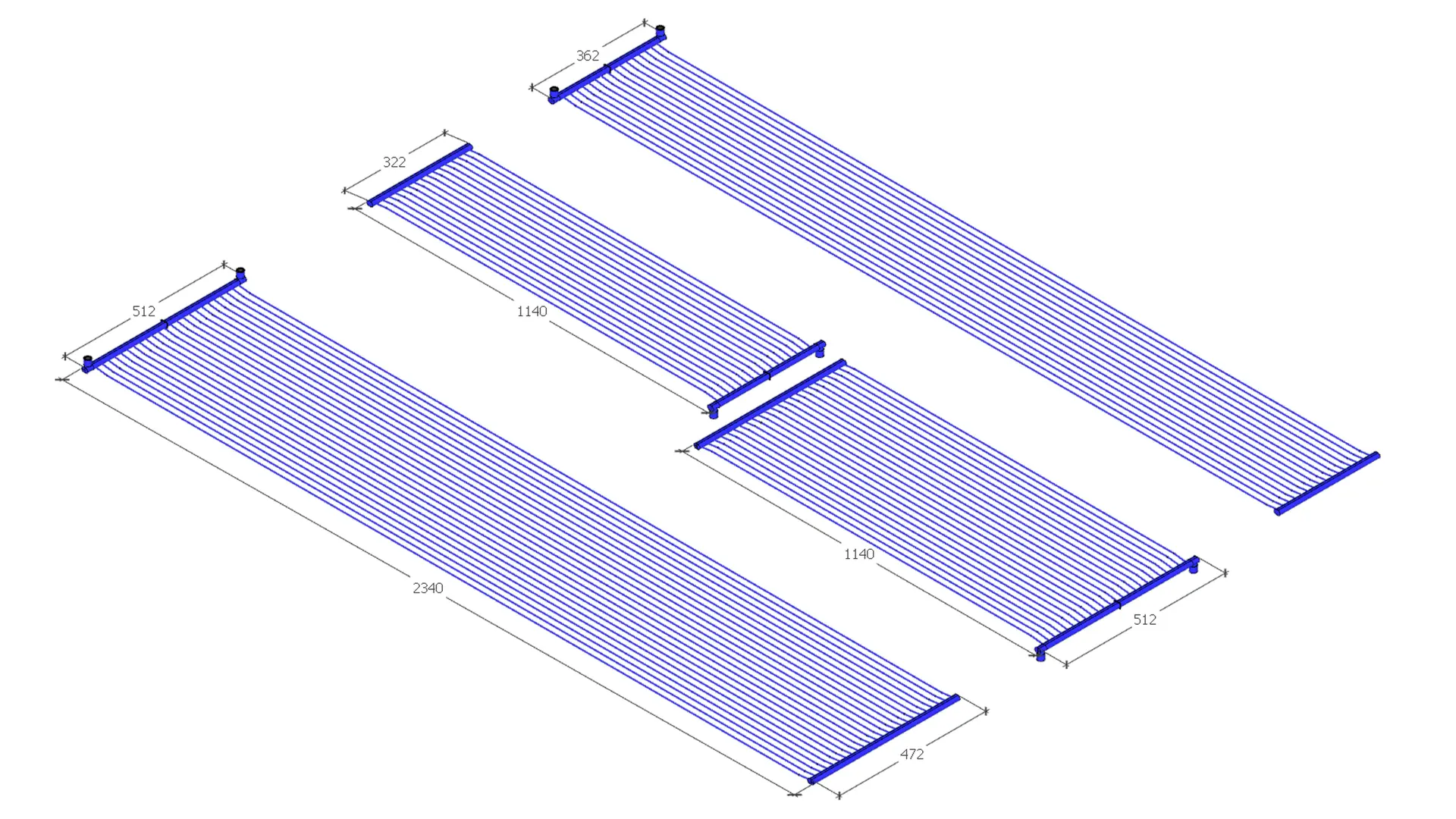
Our panels work differently. Water enters through a supply header and flows across multiple parallel tubes at the same time, then exits through a return header on the opposite side. Every tube gets water at the same temperature, all at once.
That is why our panels heat and cool rooms so quickly, and why the surface temperature is completely even from edge to edge. The whole panel activates together.
Technical Explanation
Our system utilises a canopy-to-canopy layout which is more effective in the delivery in maintaining a uniform and consistent temperature throughout the ceiling. Further enhancements are in the 40+ circulation changes in an hour.
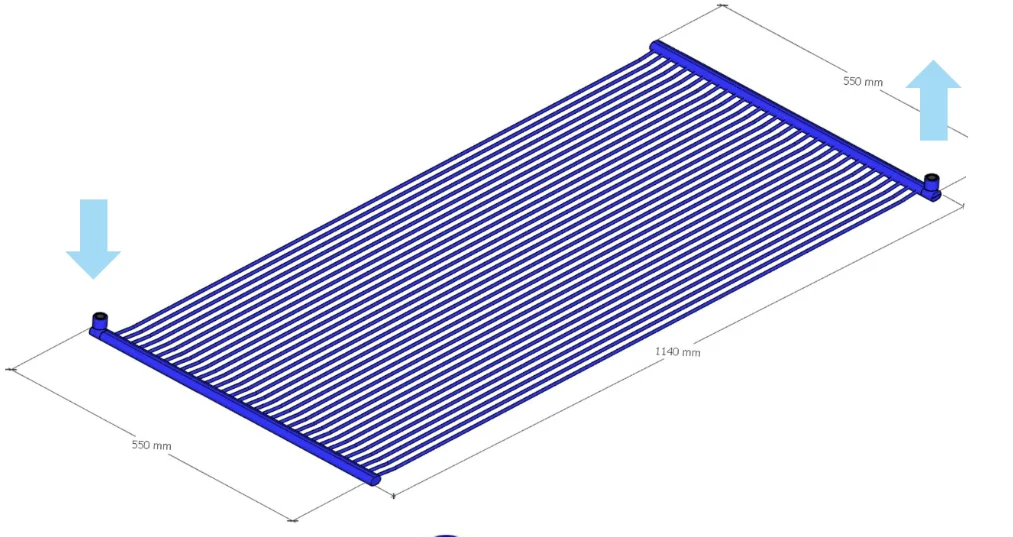 Parallel tube layout, uniform temperature
 Performance Advantages
Why This Panel Is Different
Designed, patented, and manufactured in Geelong. Tested against the leading radiant ceiling systems on the market.
Lower Cost
Priced significantly below competing radiant ceiling systems. Our product combines insulation and a non-condensing finished surface material, delivering more performance without compromising build quality.
More Capacity
Delivers substantially higher thermal output than competitive systems, accommodating a wider range of space and load requirements.
System Output Retained
Minimal heat transfer losses. The rigid insulation barrier keeps energy directed into the occupied space, not into the ceiling void.
Radiative Transfer
Achieves 50-90% radiative and 10-50% convective heat transfer, the ideal balance for occupant comfort and energy efficiency.
Dual Heating & Cooling
One system provides year-round climate control. No separate heating and cooling infrastructure required, reducing complexity and cost.
Fast Response, Dynamic Control
Adjusts quickly to changing thermal loads using an intelligent comfort model, not a conventional thermostat. Maintains consistent conditions without overshooting.
Applications
Where These Panels Are Used
Designed primarily for suspended ceiling retrofits in commercial and institutional buildings, anywhere a standard ceiling grid exists.
Offices & Workplaces
Silent, draught-free conditioning. No wall units, no ductwork, no ceiling space lost to bulky equipment.
Schools & Universities
Healthier indoor air with no dust circulation or dry forced-air. Ideal for classrooms and lecture halls with suspended ceilings.
Healthcare Facilities
Hygienic radiant conditioning with no moving air. Reduces airborne particle circulation, critical for hospitals and aged care.
Retail & Hospitality
Invisible conditioning that doesn't compete with interior design. Restaurants, shops, and hotels benefit from the silent, even comfort.
Government Buildings
Retrofit-friendly for heritage and older buildings with existing suspended ceilings. Meets energy efficiency targets without major structural work.
Residential
Premium whole-home comfort for new builds and renovations. Pairs with heat pump systems to replace gas heating entirely.
System Architecture
How It All Connects
The hydronic system uses modular, low-voltage components. A heat pump circulates temperature-controlled water through the ceiling panels via a central manifold.
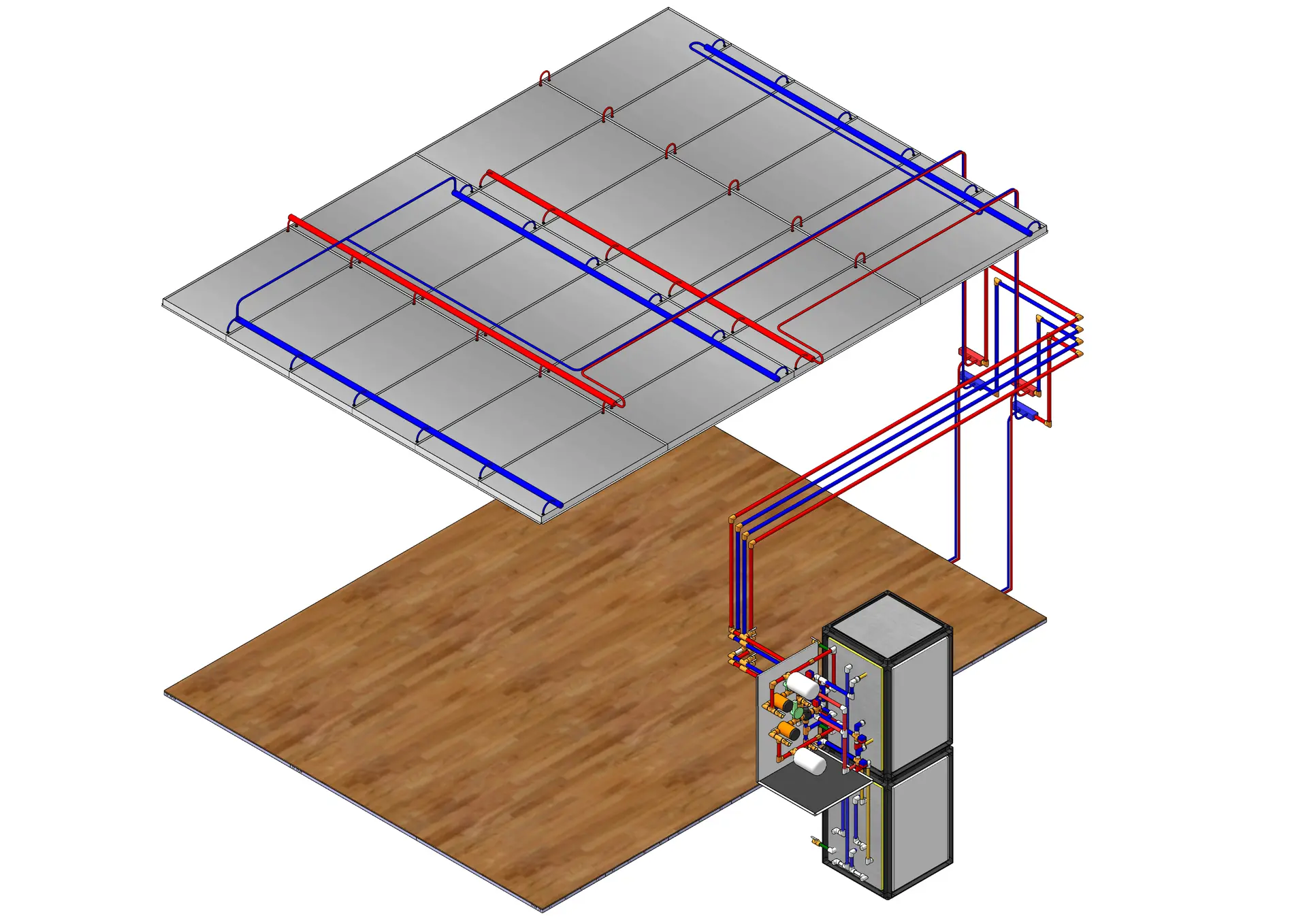
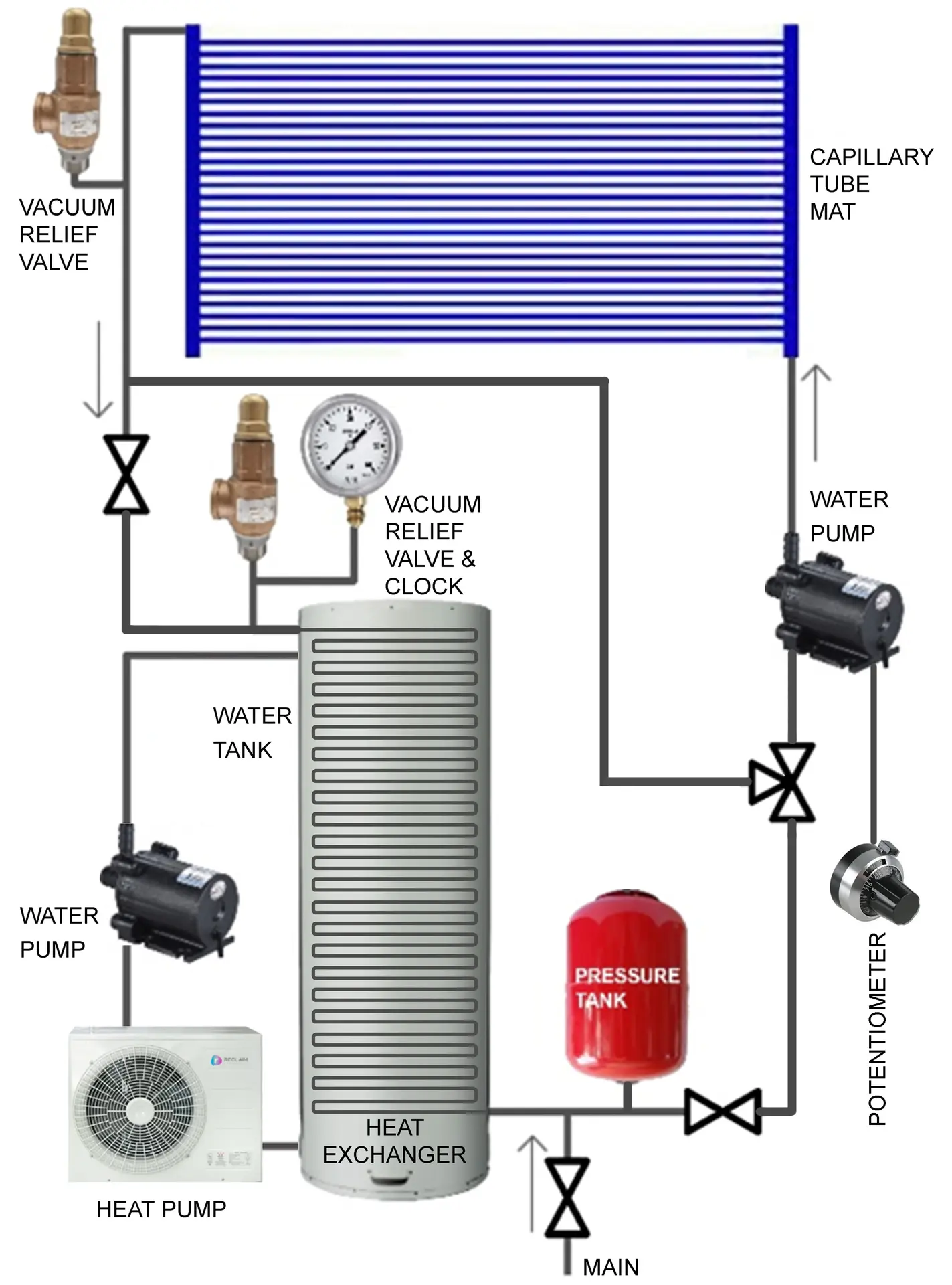
System Schematic
Heat pump drives water through the heat exchanger into the capillary tube mats via the circulation pump. Pressure tanks and vacuum relief valves ensure stable, safe operation.
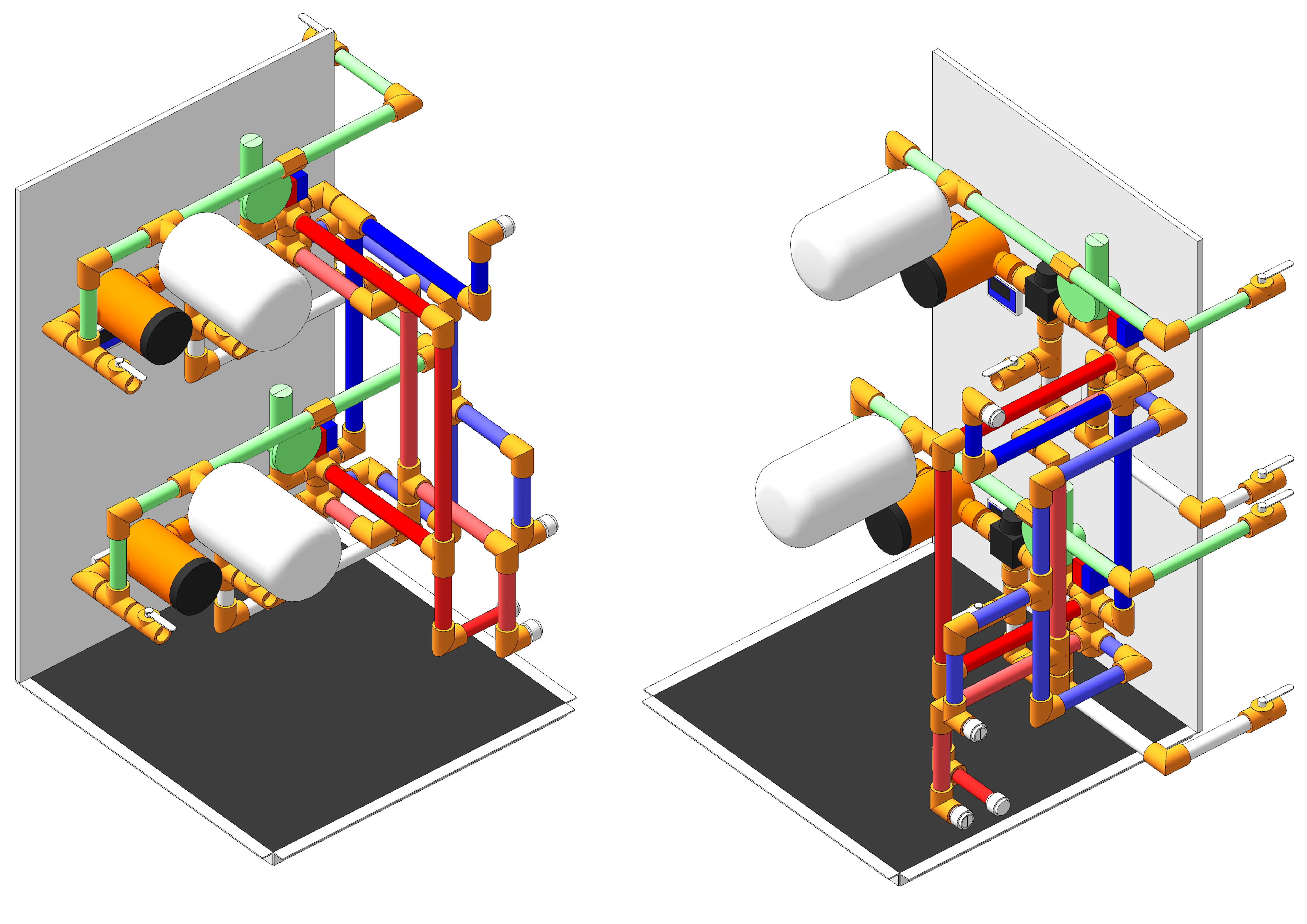
Hydraulic Manifold
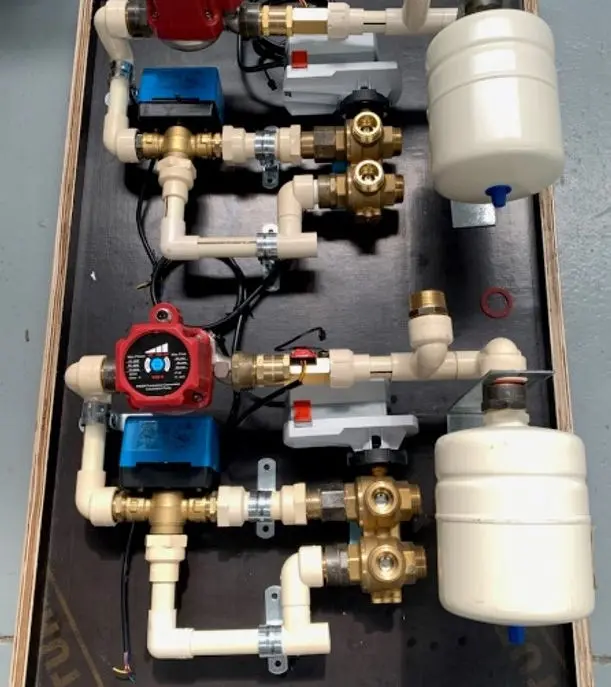
PPR piping with brass fittings. Switching actuators provide zone-by-zone control, and a system-wide flow meter delivers feedback for monitoring and balancing. All components run on 24V DC for safety.
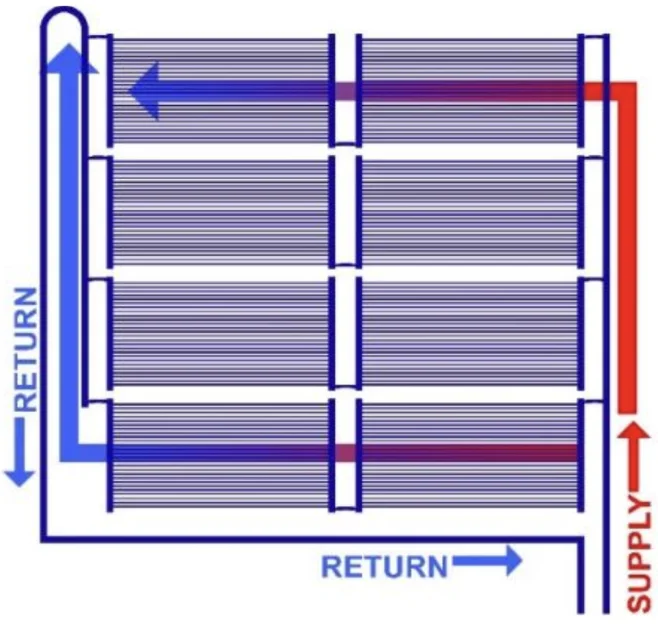
Flow Control
A system-wide flow meter provides precise monitoring and feedback control. The system is zoned to match the thermal load of each area, with flow balanced across the entire circuit.
System Integration
Powered by Heat Pumps
The hydronic panels use heated and chilled water from a heat pump, an efficient, renewable-energy-driven appliance that replaces gas boilers and conventional air conditioning in one unit.
Heat pumps produce 3-5 times more energy than they consume, making this system one of the most efficient ways to condition a building. Combined with solar PV, the running cost approaches zero.
If you're replacing a gas boiler or aging ducted system, hydronic ceiling panels paired with a heat pump are the modern alternative. Lower running costs, better comfort, and no gas connection required.
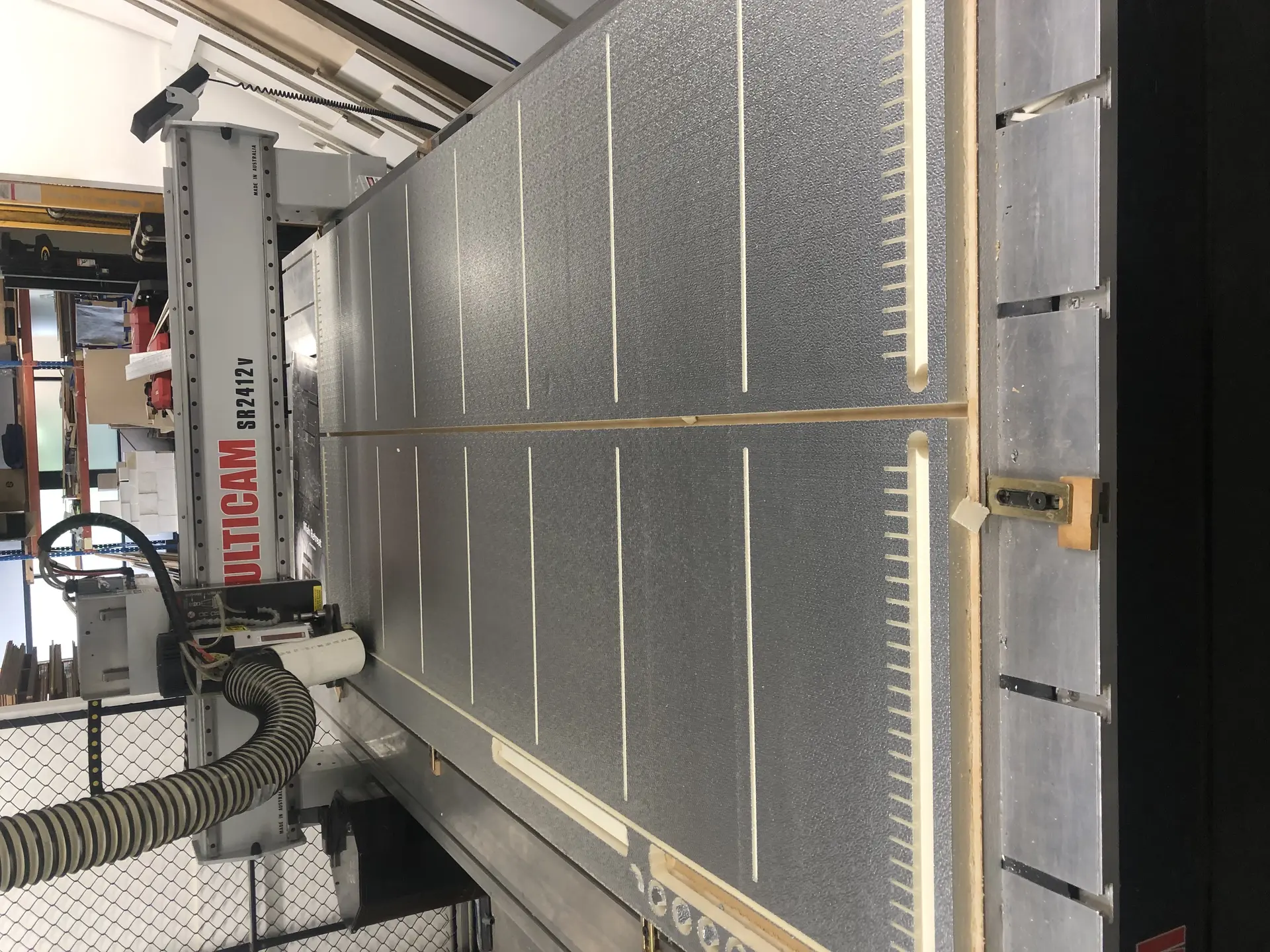
Installation
Standard Grid, Simple Install
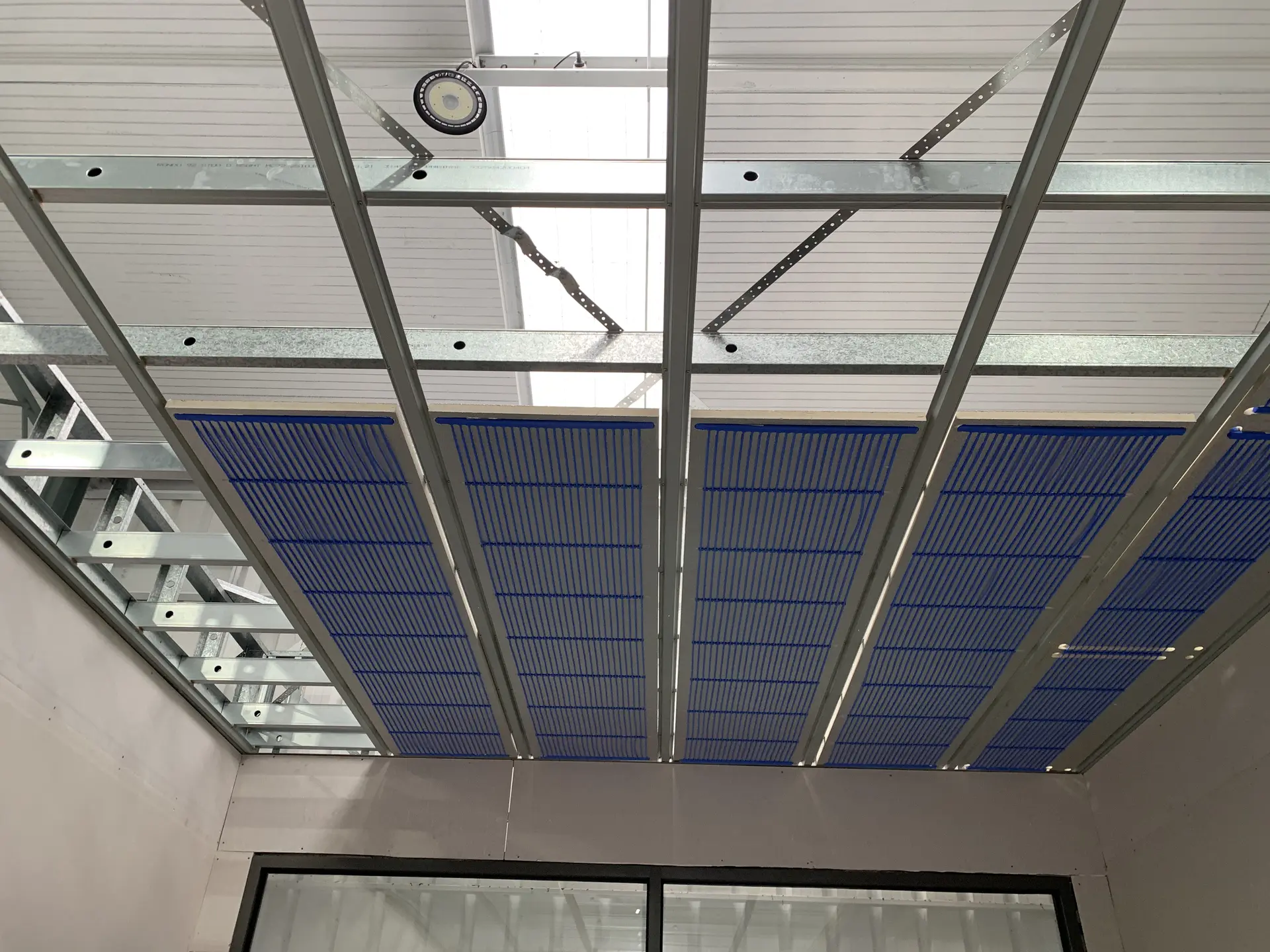
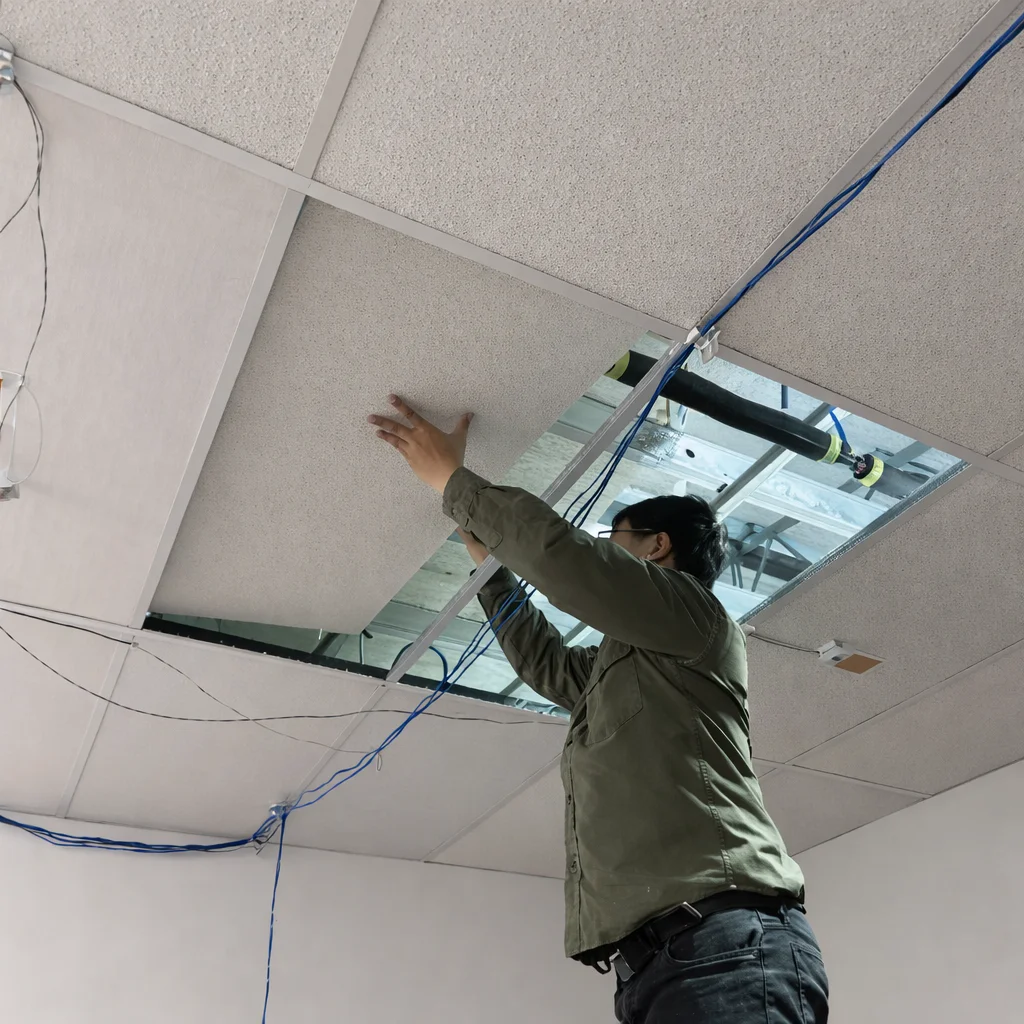
We sized the panels at 600 × 1200mm because that's the standard suspended ceiling grid used across Australia. It means these panels drop straight into existing ceiling infrastructure, the same way a conventional ceiling tile does. No custom framing, no specialist tools, no structural changes.
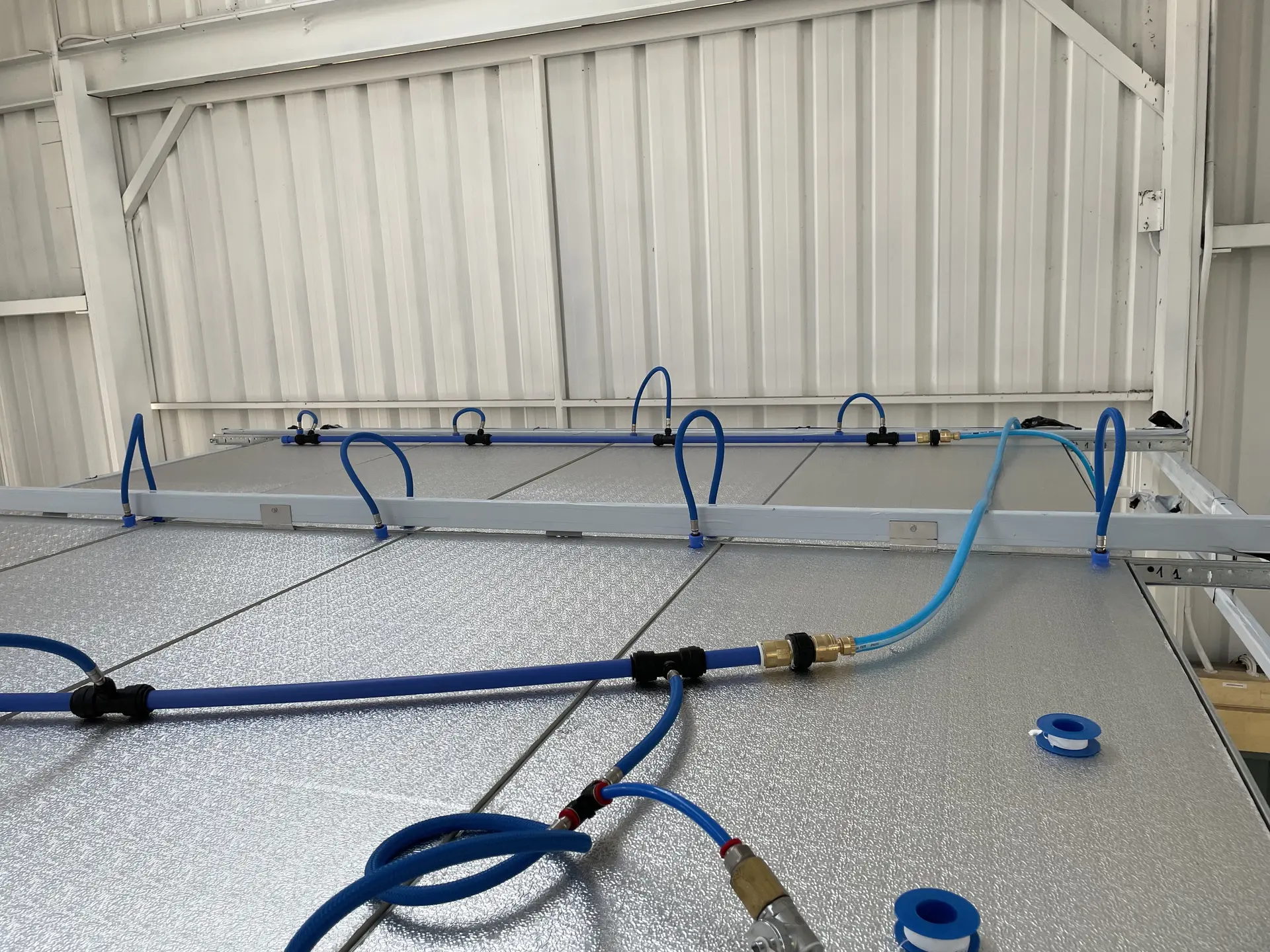
Water connections between panels use quick-connect fittings. A single manifold feeds all panels in a zone, with a system flow meter that provides feedback control and monitoring across the entire circuit.
Because the panels are modular, any single panel can be lifted out for maintenance or to access services above without disturbing the rest of the ceiling.
There are over 220 million m² of suspended ceilings in Australia alone. Retrofitting these ceilings with hydronic panels would lead to a 50-60% reduction in conditioning energy consumption. That's why we designed around the standard grid.
Interested in hydronic ceiling panels?
We work with architects, engineers and building professionals to design radiant ceiling systems for residential, commercial and institutional projects.
Get in Contact