Brand Partner
Atmoce
Extra-low voltage microinverters and battery storage. Installed by EES across Geelong, Torquay and the Surf Coast.
Who is Atmoce?
Atmoce is a Netherlands-based solar company (ATMOCE Holding B.V., Amsterdam) that makes microinverters and batteries. They've got R&D offices across Europe (Frankfurt, Freiburg, Lyon) plus teams in Shanghai, Bangkok, Sydney and Texas.
Their focus is residential solar, but with a twist: every Atmoce microinverter runs below 60 volts DC. That's extra-low voltage, the same category as your laptop charger. No high-voltage DC strings running across your roof, which wipes out the arc-flash fire risk that's been a persistent problem with string-inverter solar in Australia.
EES works directly with Atmoce's R&D team and their Australian BD network. We install Atmoce microinverter and battery systems across Geelong, Torquay and the Surf Coast, and we feed real-world install data back to their engineers.
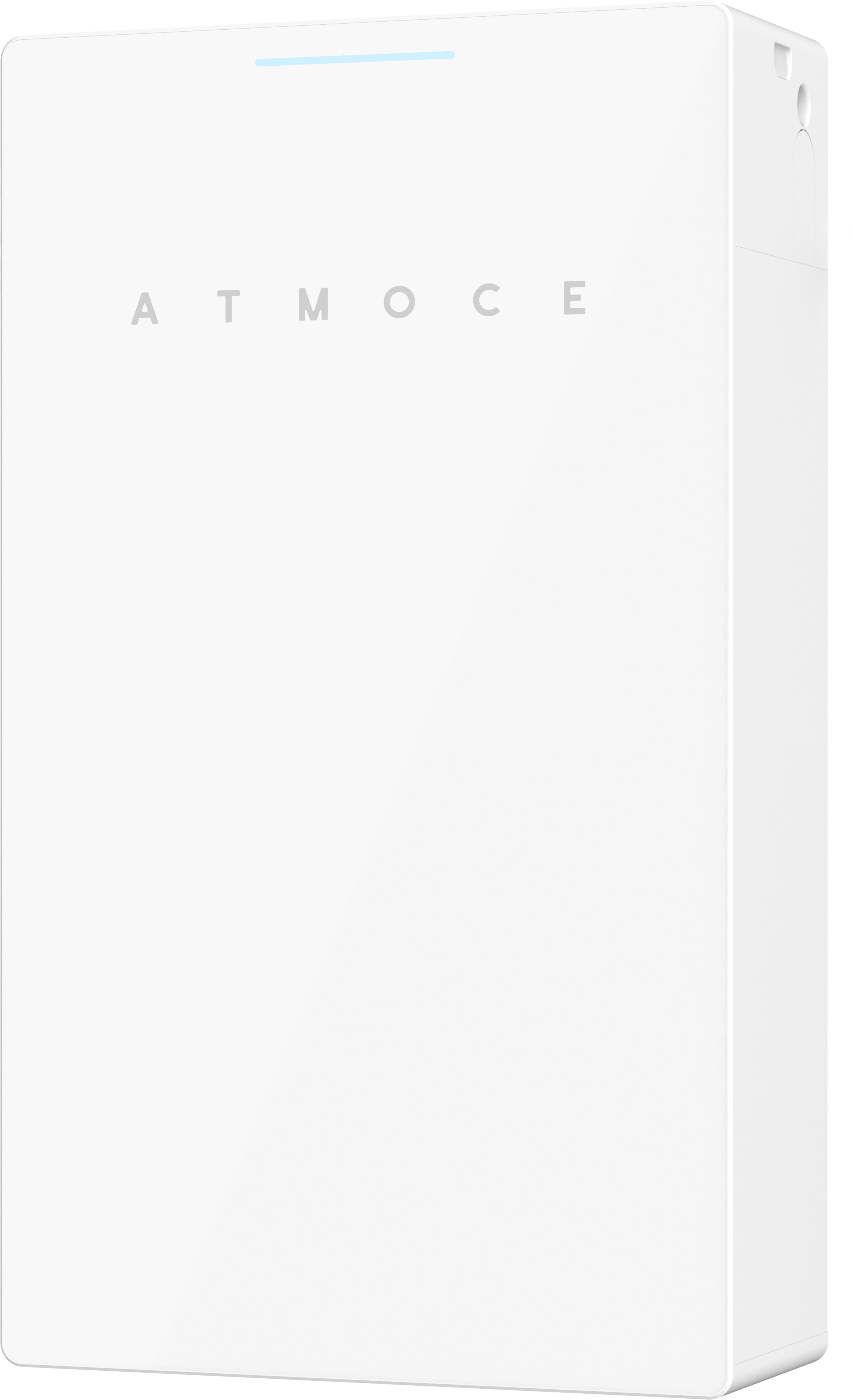
M-ELV Battery
The M-ELV is Atmoce's home battery, and it's specifically designed for retrofit installations. If you already have solar panels with a string inverter from any brand, this battery can be added without replacing your existing equipment.
| Capacity | 7 kWh |
| Max output | 5 kW |
| Chemistry | LiFePO4 (LFP) |
| Round-trip efficiency | >90% |
| Backup response | <10 milliseconds |
| Dimensions | 830 × 480 × 195mm |
| Weight | 73.5 kg |
| Warranty | 15 years |
The key is that it's AC-coupled. It connects to your AC switchboard and operates independently of your existing inverter. No compatibility concerns, no rewiring your existing solar setup. This makes it ideal for the millions of Australian homes with solar systems that are 5–10 years old and were never set up for storage.
For new installations, the Atmoce battery pairs with Atmoce microinverters and the M-Combiner for a fully integrated, extra-low voltage system from panel to switchboard.
Microinverters vs String Inverters
To understand what Atmoce does, it helps to understand the two main approaches to residential solar inverter technology.
String inverters are the conventional approach. All your panels wire together in series (a "string") and send high-voltage DC (typically 300-600V) to a single inverter box on your wall. This works, but has two significant downsides: if one panel underperforms (shade, dirt, pigeon mess), it drags the entire string down. And high-voltage DC wiring creates a genuine fire risk if connectors degrade.
Microinverters sit under each individual panel and convert DC to AC right at the source. Each panel operates independently with its own MPPT (maximum power point tracking). Shade on one panel? Zero impact on the others. A connector fails? One panel goes offline, not the entire system.
Atmoce takes this further by keeping all DC voltages below 60V, which is the threshold for extra-low voltage classification. At these voltages, the energy isn't sufficient to sustain a dangerous arc fault. This is why DC isolator fires, one of the most common failure modes in Australian solar installations, simply cannot occur with this architecture.
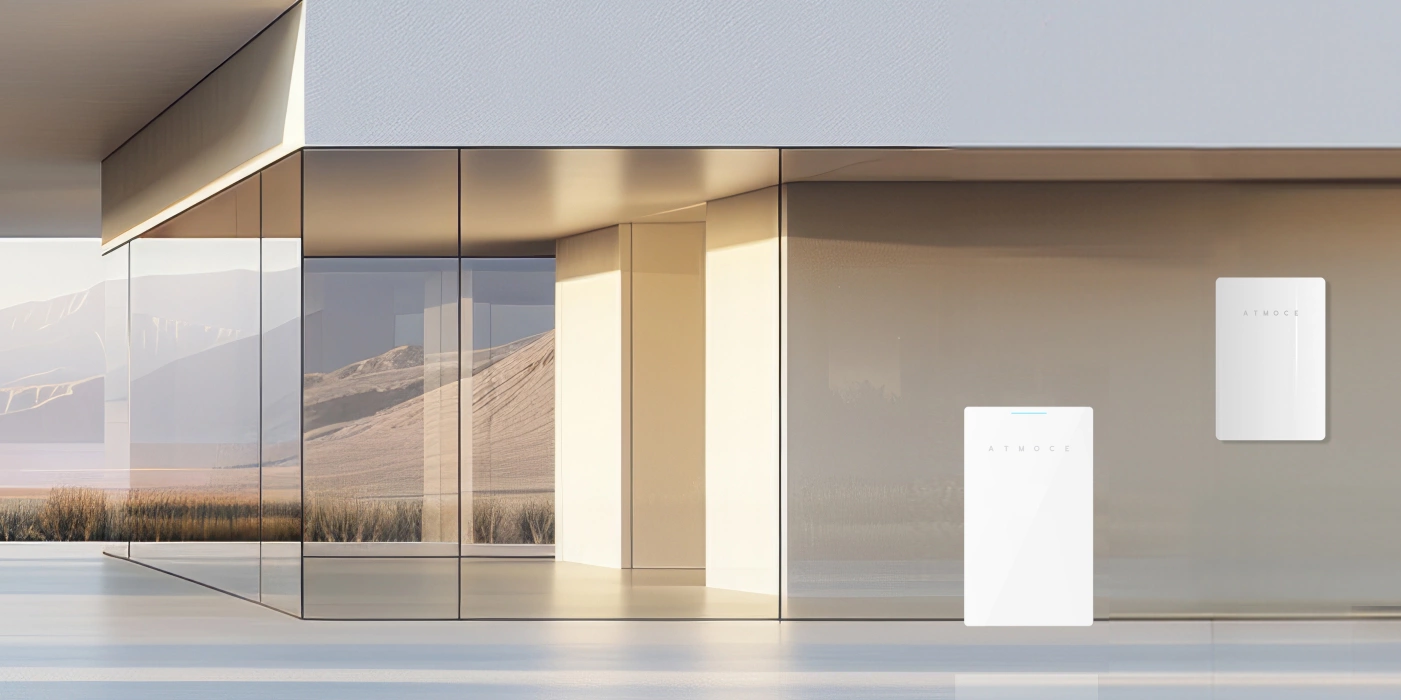
1-in-1 Microinverters
The MI series is Atmoce's core product: one microinverter per panel. Available in three output ratings:
| Models | MI 425W / 450W / 500W |
| MPPT range | 16–60V |
| Max PV input | 700W |
| Peak efficiency | 97.4% |
| MPPT efficiency | 99.9% |
| Weight | 1.3 kg |
| IP rating | IP67 |
| Warranty | 25 years |
Each unit includes galvanic isolation via a high-frequency transformer between the DC input and AC output as an additional safety layer. At 1.3kg, these are light enough to mount directly under the panel frame without adding meaningful roof load.
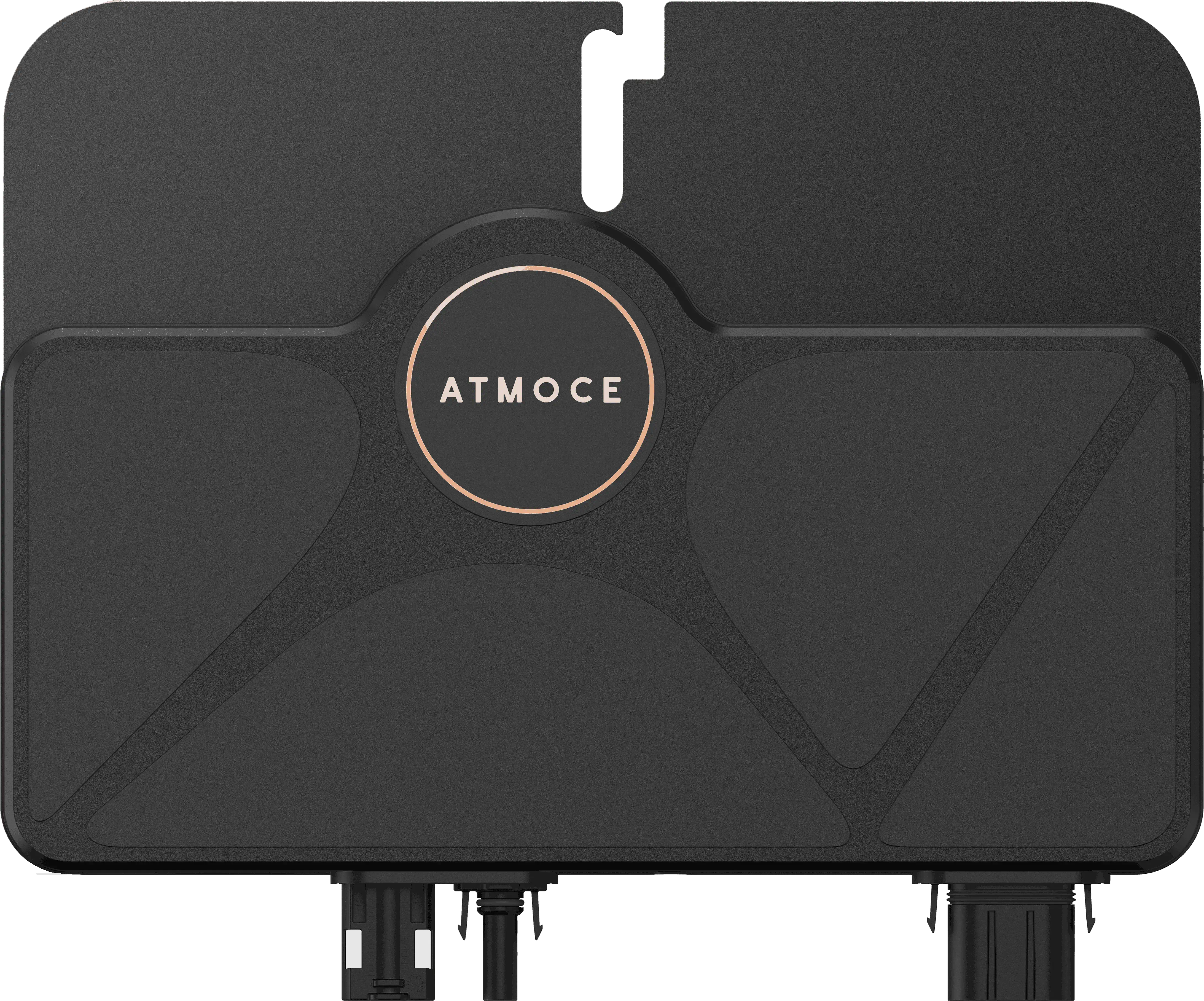
2-in-1 Microinverters
For installations where you want to reduce component count, Atmoce's 2-in-1 series handles two panels from a single microinverter, each with independent MPPT tracking.
| Models | MI-800 / 900 / 1000 / 1250 |
| MPPT range | 28–55V (varies by model) |
| Input voltage | 16–60V |
| Peak efficiency | 98.2% |
| Dimensions | 250 × 202 × 36mm |
| Weight | 2.2 kg |
| PLC range | 350 metres |
| Warranty | 25 years |
The MI-1250 is notable: Atmoce claims it's the world's first 1250W 2-in-1 microinverter. For a typical 20-panel system, you'd need 10 units instead of 20, halving the installation time and connection points while maintaining independent panel-level performance.
System Components
Beyond the microinverters and battery, Atmoce builds the full supporting ecosystem:
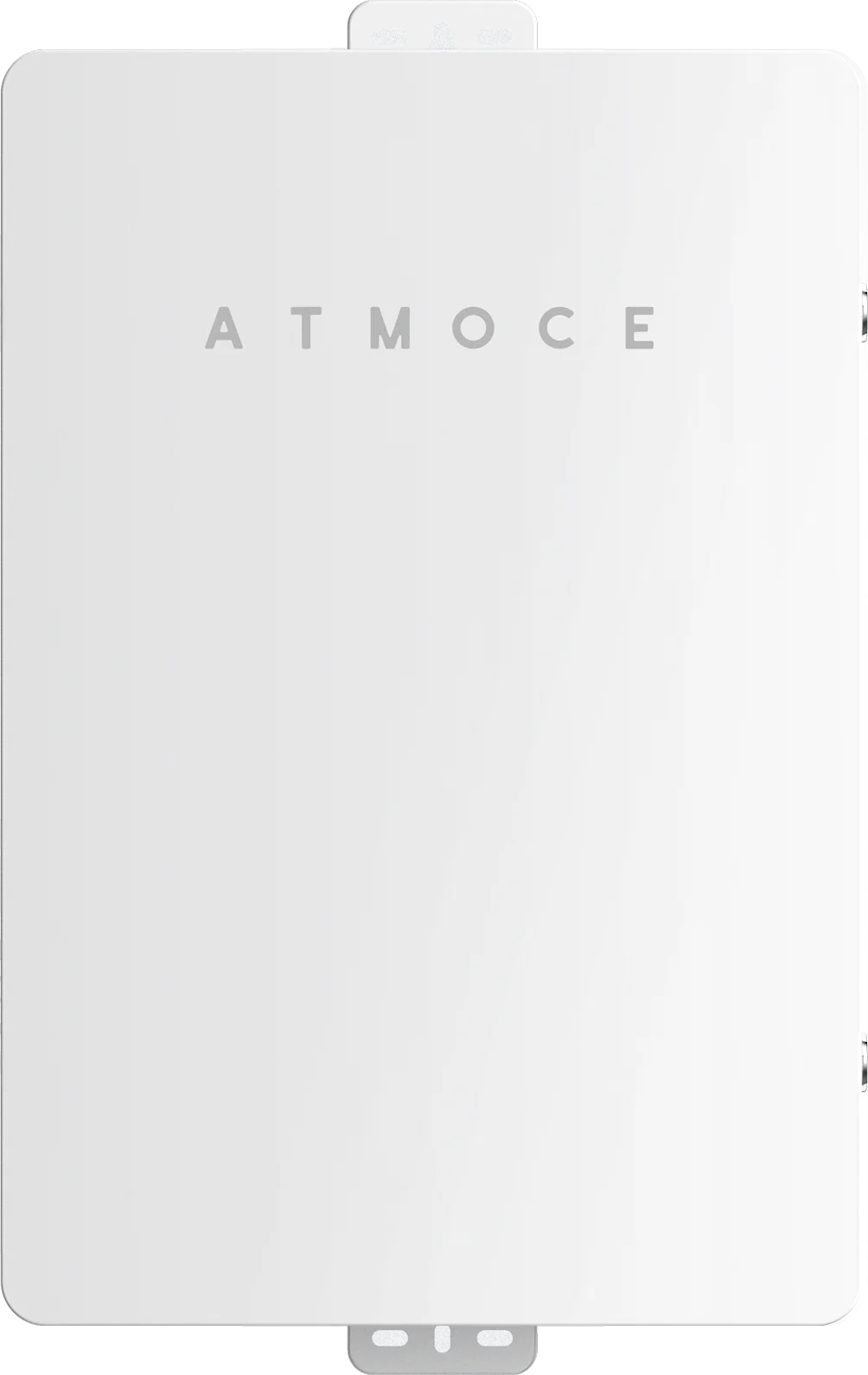
Pre-wired enclosure integrating gateway, relay, sensors, and breakers. IP65 rated. Available in single-phase (5–10kW PV) and three-phase (30kW PV) configurations. Reduces installation time significantly by consolidating what would normally be multiple separate components.
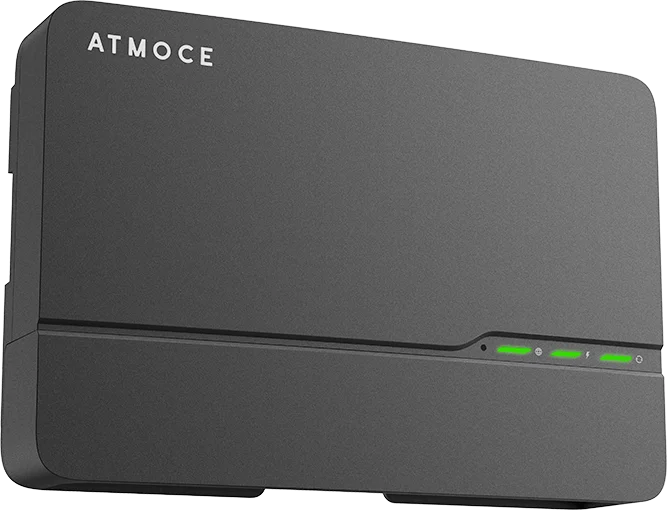
The brains of the system. Supports up to 90 microinverters via PLC communication. Connects via Wi-Fi, Ethernet, BLE, RS485, or CAN. Sends data to the Atmoce Cloud platform where you can monitor every individual panel in real time through the Atmozen app.
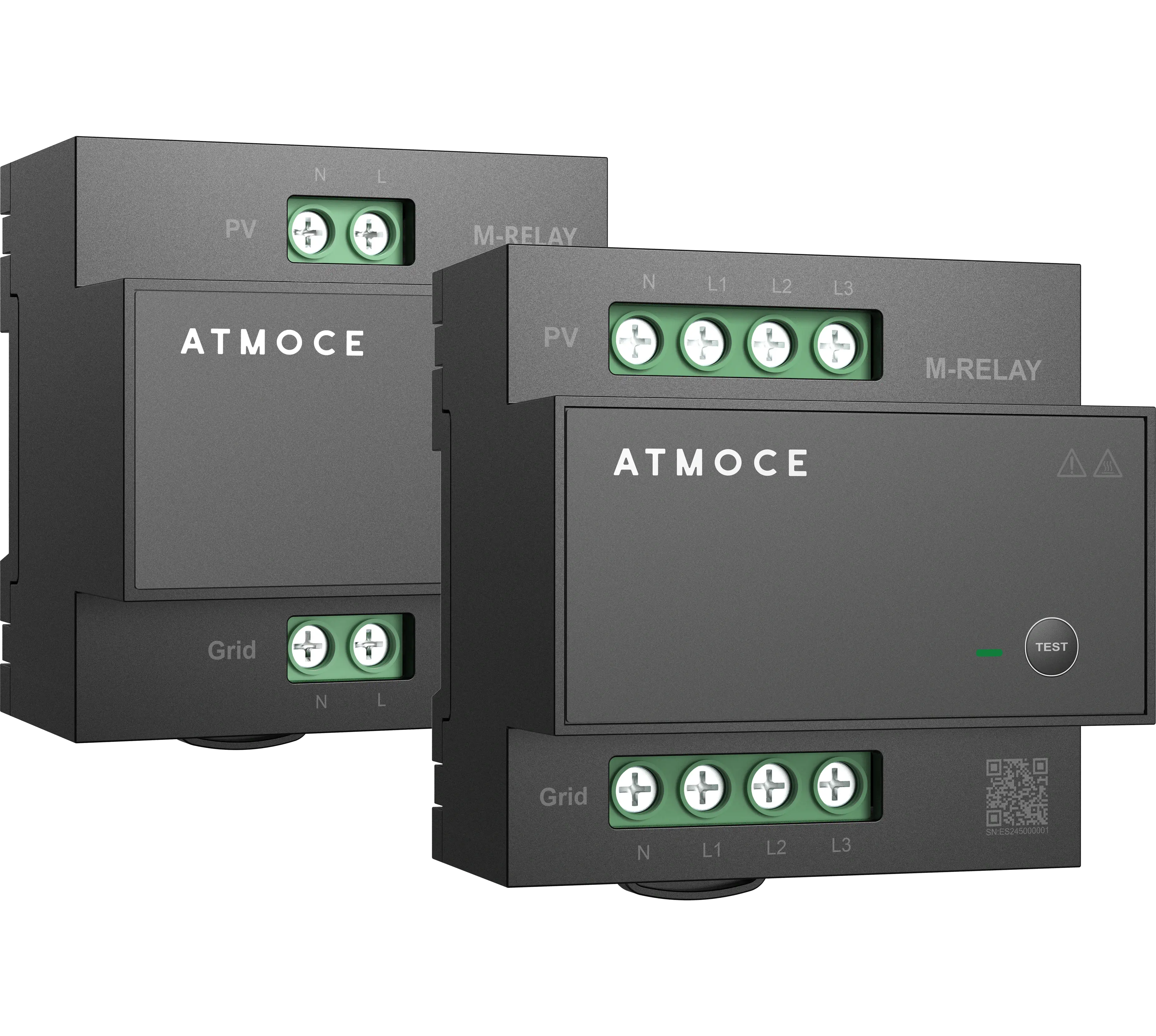
Grid safety disconnect that provides compliant isolation in the event of a grid fault. Required for grid-connected installations and integrated into the M-Combiner in pre-wired configurations.
Panel-Level Monitoring
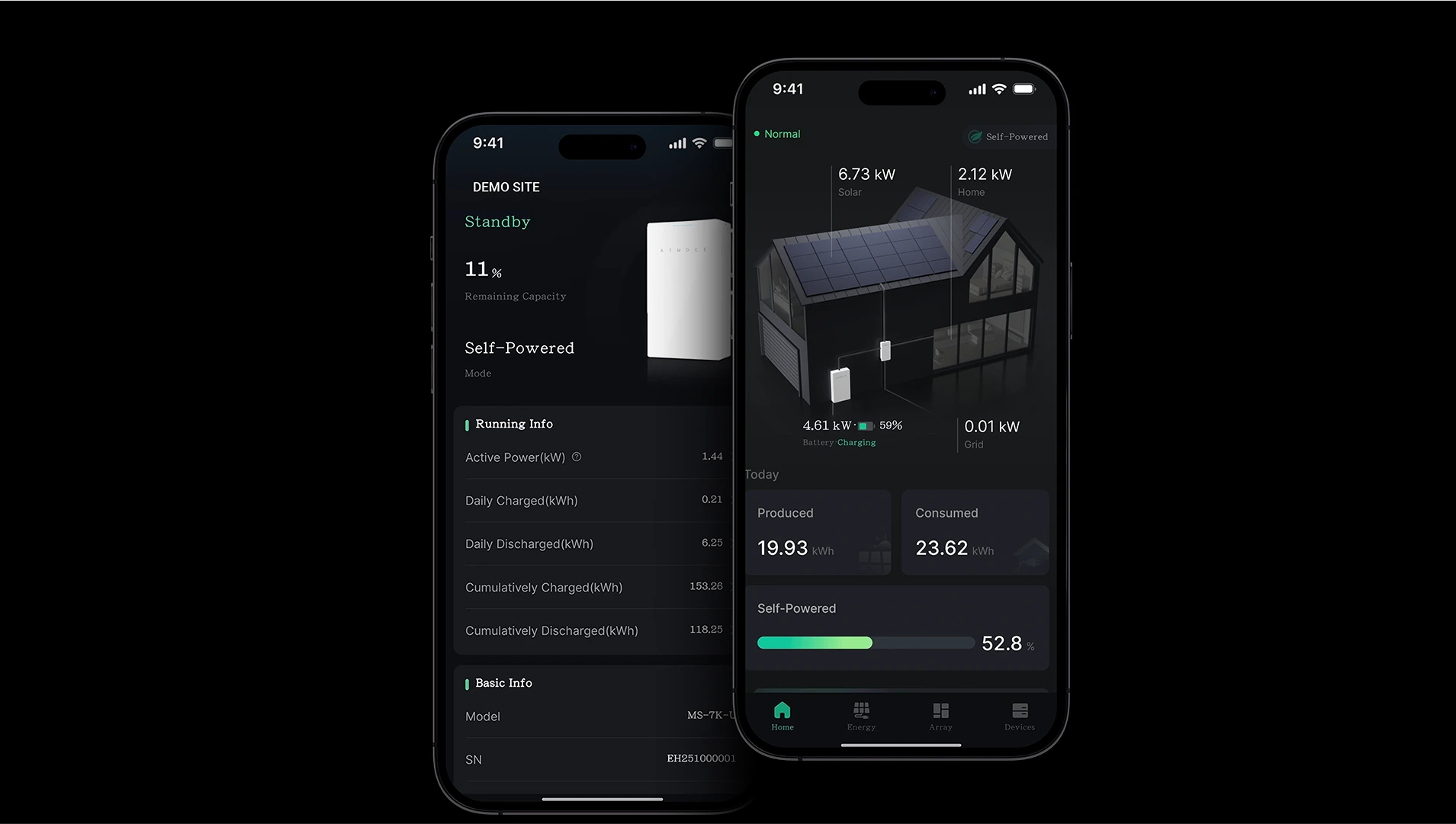
One of the most practical advantages of microinverters is that every panel reports its own data. With a string inverter, you see total system output and have to guess where problems are. With Atmoce, you know exactly which panel is producing what, in real time.
The Atmoce Cloud platform and Atmozen app give you:
- Real-time production data for every individual panel
- Historical performance graphs and energy analytics
- Automatic alerts if any panel drops below expected output
- Remote diagnostics, so we can often identify issues without a site visit
For EES, this is valuable from a servicing perspective. If a customer calls about reduced output, we can check the monitoring dashboard, identify the exact panel, and arrive on site knowing exactly what we're dealing with. No guesswork, no wasted truck rolls.
Certifications and Standards
Atmoce holds the following certifications relevant to Australian and international installations:
- EN 50549-1:2019: European grid connection standard (Certificate No. U24-0899)
- EU Commission Regulation 2016/631: requirements for grid connection of generators
- ENA system reference designations: UK Energy Networks Association (ATMOC/16197/V2/A1)
- IP67 on microinverters, IP65 on combiners
- Galvanic isolation on all microinverter DC/AC boundaries
- Over 1,000,000 hours of reliability verification testing
Atmoce has an Australian office in Sydney and is actively working toward full CEC approval for the Australian market. We verify all compliance requirements before every installation.
Common Questions
What is a microinverter and why does it matter?
A microinverter sits under each panel and converts DC to AC right at the source. This means each panel operates independently, so shade or dirt on one panel doesn't affect the rest. It also eliminates high-voltage DC wiring, removing the most common fire risk in solar installations.
Are Atmoce products approved for use in Australia?
Atmoce holds EN 50549-1:2019 compliance and international grid connection certifications. They have an Australian office in Sydney and are expanding their Australian market presence. We verify all compliance requirements on every installation.
Do I need one microinverter per panel?
Not necessarily. The 1-in-1 models handle one panel each (425–500W). The 2-in-1 models handle two panels (800–1250W) while maintaining independent MPPT for each panel. The 2-in-1 approach halves the component count.
Can I add the battery to my existing solar system?
Yes. The M-ELV battery is AC-coupled, so it connects to your switchboard independently of your existing inverter. It works with any brand. This is the key selling point for retrofit installations.
What if a microinverter fails?
Only that one panel stops producing. Every other panel continues normally. With a string inverter, a single component failure can take down the entire system. Panel-level monitoring identifies the exact unit immediately.
What's the warranty?
Atmoce microinverters carry a 25-year product warranty. The Atmoce M-ELV battery carries a 15-year warranty. Atmoce has completed over one million hours of reliability testing on the microinverter platform. EES provides a separate workmanship warranty on every installation.
Is Atmoce available in Australia?
Yes. Atmoce has an Australian office in Sydney, holds EN 50549-1:2019 compliance and international grid connection certifications, and is working toward full CEC approval for the local market. EES installs Atmoce microinverter and battery systems across Geelong, Torquay and the Surf Coast right now.
How much does an Atmoce system cost?
Atmoce pricing depends on system size and whether you're after microinverters only, a retrofit Atmoce battery for your existing solar, or a full integrated setup. We'll look at your roof and your power bills and give you a fixed Atmoce price on the day, no consulting-ese, no surprises. Book a free quote to get numbers for your place.
What's the difference between Atmoce 1-in-1 and 2-in-1 microinverters?
The Atmoce 1-in-1 microinverters (425, 500 W models) handle a single solar panel each. The Atmoce 2-in-1 microinverters (800, 1250 W) handle two panels from a single unit, with independent MPPT on each side, so you still get panel-level performance, just with half the component count and a quicker install. Which one suits you comes down to roof layout and budget.
Interested in an Atmoce system?
We'll take a look at your roof, your power bills, and work out whether Atmoce microinverters or a retrofit Atmoce battery is the right call for your home.