Industrial & Large-Scale Commercial Solar in Geelong & Regional Victoria
Engineering, procurement, and construction for C&I and corporate energy systems.
Beyond SME
Solar & Battery at Scale
Industrial and large commercial buildings have fundamentally different energy demands to small businesses: higher consumption, three-phase power, demand charges, complex electrical infrastructure, and operating schedules that require detailed engineering analysis.
EES operates as an EPC (Engineering, Procurement and Construction) provider for commercial solar and battery projects. We coordinate the full delivery process, from initial energy analysis and electrical engineering through procurement, installation, and commissioning.
As Environmental Energy Services continues to grow our team of qualified A-grade electricians and apprentices, we are building the workforce and capability to competently deliver on large-scale commercial and industrial projects.
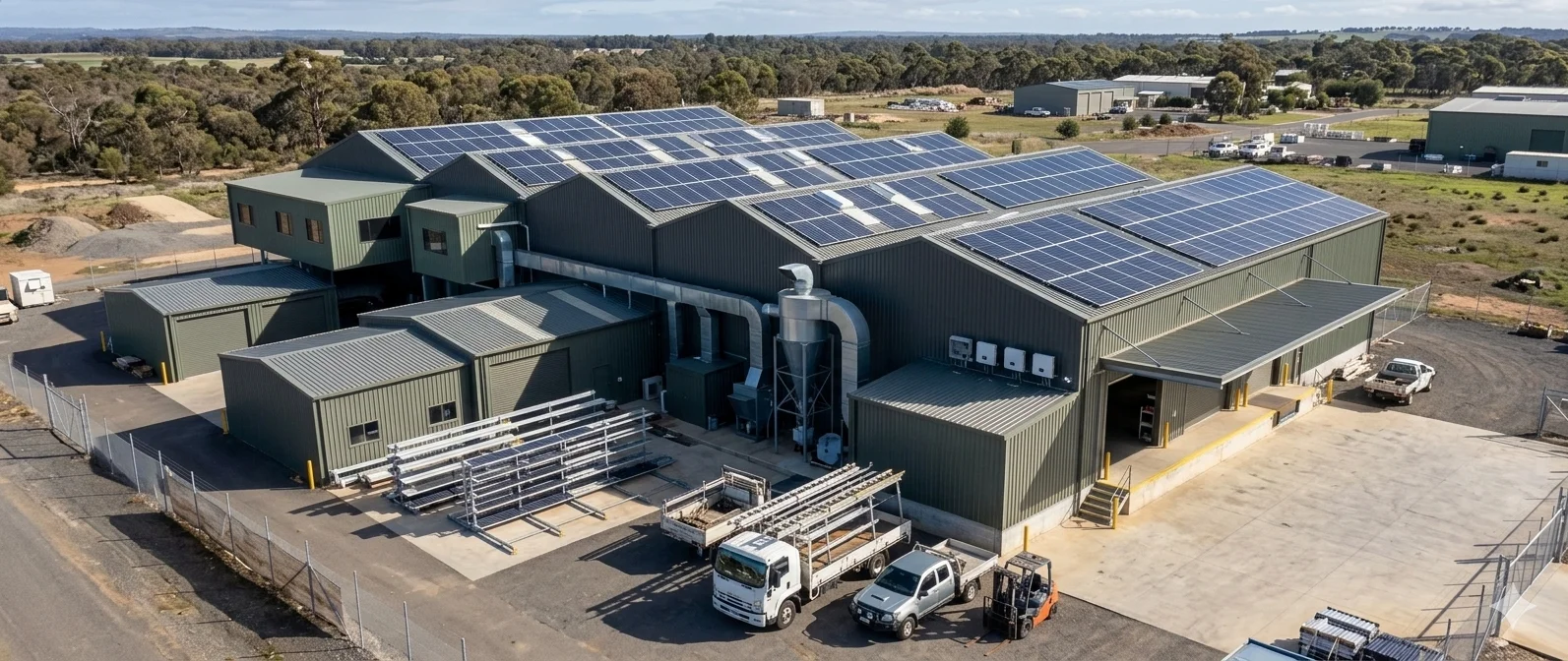
Market Segments
Commercial & Industrial Sectors
C&I: Commercial & Industrial
Systems from 100 kW to 1 MW solar, 250 kWh to 1 MWh battery storage. Warehouses, manufacturing facilities, and large commercial premises. A market we are growing into as our team expands.
Corporate
Systems from 1 MW+ solar, 1–5 MWh battery. Board-level ESG reporting, FCAS market participation, and complex electrical engineering. A future capability as we scale.
EV Infrastructure
Utility-scale electric vehicle charging stations aligned with the Victorian Government EV roadmap and national standards for bi-directional EV charging infrastructure.
Battery Storage at Scale
Demand Reduction & Grid Services
At the C&I and corporate level, battery storage does more than offset grid consumption. It reduces your maximum demand charge, often the single largest component on a commercial power bill, by shaving peak load during your most expensive 15-minute windows.
For larger installations, a portion of battery capacity can participate in the FCAS (Frequency Controlled Ancillary Services) market. This means your battery sits partially idle, ready to respond within one second to frequency deviations in the national grid, either absorbing excess power or discharging to stabilise supply.
FCAS participation requires specialist metering equipment, DNSP coordination, and a registration fee. It's only feasible at scale, typically requiring a 1000 kVA transformer and sufficient electrical infrastructure, but it creates an additional revenue stream from an otherwise idle asset.
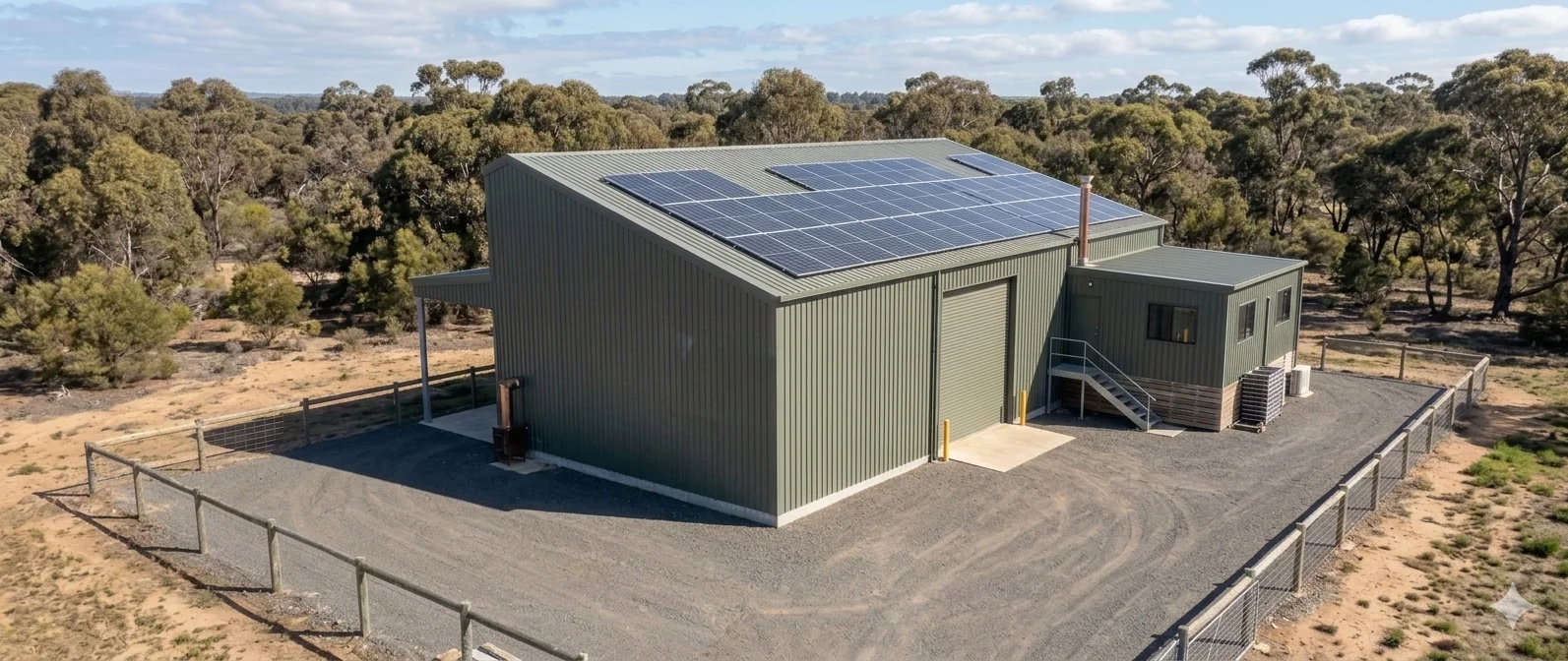
How To Pay
Financing Large-Scale Solar
Industrial and corporate solar projects have different financial structures to residential or SME. We work with your finance team to structure the project around your capital position and tax strategy.
CapEx
Best long-term savingsPay for the system outright with capital expenditure. No interest, no repayments. Maximum savings and full Division 40 depreciation benefits from day one.
- Highest total savings over system life
- Full Division 40 depreciation benefits
- Own the system from day one
- No ongoing financial obligations
Financing
Zero upfront costFinance the system with a structured repayment plan. Depreciation expenses and interest amortisation both reduce taxable income, making this an efficient use of capital.
- Zero upfront cost, and you still own the system
- Depreciation and interest amortisation reduce taxable income
- Typical terms of 5–7 years
- System pays for itself, then generates free power
Power Purchase Agreement
No capital outlayA third-party PPA provider installs the system at zero cost. You purchase the electricity it generates at a rate guaranteed to be lower than your current retailer. After the agreement period (typically 10–15 years), you own the system outright.
- Zero installation cost — the PPA provider funds the system
- Electricity rate locked below current retail
- Benefits for tenants: lower operating costs, less dependency on retailers
- Benefits for landlords: free capital improvement, roof rental income, happier tenants
PPAs generally become economical at system sizes of 150 kW and above. Suitability depends on your current electricity rate, site conditions, lease terms, and the PPA provider's assessment.
Feasibility
Paid Feasibility Studies for Large Projects
C&I and corporate-scale solar isn't a back-of-napkin calculation. These projects require electrical engineering analysis, complex modelling tools, DNSP coordination, structural assessment for wind and weight loading, and real man-hours.
For projects at this scale, a paid feasibility study is required before we provide a formal proposal. This involves detailed interval data analysis, protection schematics, grid protection board design, and coordination with the relevant Distribution Network Service Provider.
These aren't the kind of answers we can give over the phone. But the investment in a proper feasibility study ensures the system is engineered correctly for your specific site, load profile, and commercial objectives.
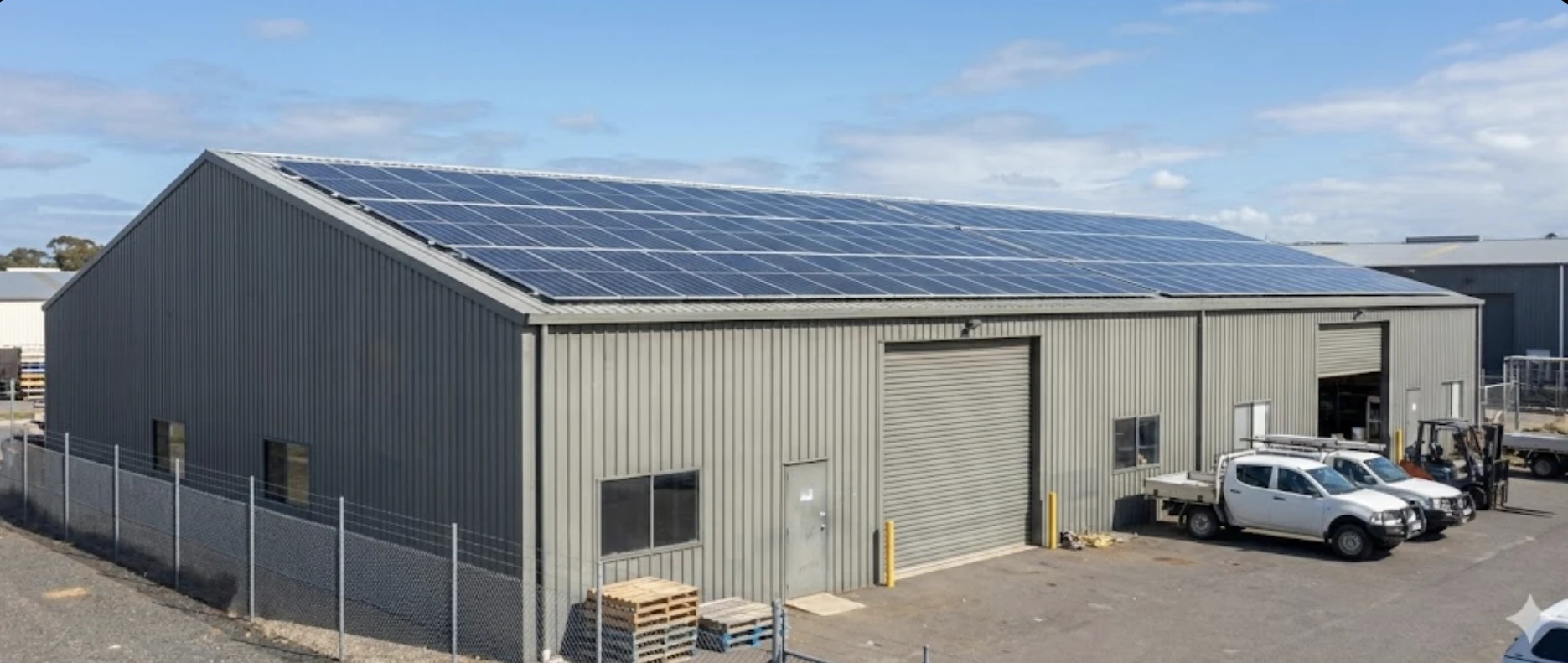
Our Process
How We Deliver Industrial Projects
Paid engineering study covering energy analysis, interval data modelling, structural assessment, electrical engineering, and DNSP coordination. This is the foundation for the entire project.
Engineered for your specific load profile, building layout, grid connection requirements, and export limitations. Electrical engineers prepare protection schematics and grid protection boards.
Grid connection applications, DNSP approvals, LGC paperwork, permits, and procurement of all equipment. We coordinate the full supply chain.
Scheduled entirely around your operations. For facilities that can't afford downtime, we coordinate switchboard shutdowns during off-hours and stage the installation to minimise disruption.
Full system testing, FCAS registration where applicable, monitoring setup, and handover. Every system is monitored from day one.
Compliance
Standards & Accreditation
Industrial and C&I installations require strict compliance with Australian electrical and energy standards. We coordinate with structural engineers, electrical engineers, and the relevant network providers.
Industrial Solar & Battery Systems in Geelong & Regional Victoria
As Environmental Energy Services continues to grow, we are building the capability to deliver on large-scale commercial and industrial energy projects. Our current focus is on SME-scale installations, but we are actively engaging with business owners and key stakeholders across the greater Geelong area to develop our commercial and industrial offering.
We plan to offer boutique commercial solutions to non-conventional commercial projects which often require complex electrical engineering to meet AS/NZS 4777 standards, grid protection requirements, and other technically complex design specifications that go beyond standard residential or small commercial systems.
Future target markets include utility-scale electric vehicle infrastructure charging stations, aligned with the Victorian Government's electric vehicle roadmap and the national roadmap for bi-directional EV charging. As we gain the workforce and expertise, this will become a niche capability within our commercial offering.
We also use platforms such as Estimate One to engage in tendering processes where we can offer unique and boutique solutions to unconventional sites, delivering systems above and beyond standard rooftop solar installations.
